24/7 Water Damage Restoration in St. Louis
When water invades your St. Louis home, every minute counts. Our IICRC-certified technicians respond rapidly from our Saint Charles headquarters with commercial-grade extraction equipment to stop damage, prevent mold, and restore your property. Serving downtown St. Louis, Central West End, Tower Grove, and the entire metro area.
St. Louis Water Damage Experts: Protecting Historic Homes and Modern Properties
From century-old brownstones in Lafayette Square to high-rises in Clayton, we understand the unique challenges St. Louis properties face.
St. Louis presents unique water damage challenges that require local expertise. The city's rich architectural heritage includes thousands of historic homes built between 1870 and 1940, featuring plaster walls, original hardwood floors, balloon-frame construction, and brick foundations that respond differently to water intrusion than modern building materials. When a pipe bursts in a Tower Grove South Victorian or a sump pump fails in a Benton Park bungalow, restoration requires technicians who understand these older construction methods and can preserve historic character while eliminating moisture.
Our Saint Charles-based team responds to water damage emergencies throughout St. Louis city and county. We typically arrive within 60 minutes for emergencies in downtown St. Louis, the Central West End, Forest Park Southeast, and surrounding neighborhoods. Response times to Clayton, University City, Webster Groves, Kirkwood, and other county locations remain excellent thanks to our strategic positioning and Highway 70 access. When you call our 24/7 emergency line, you reach a live dispatcher who immediately assesses your situation and sends the nearest available crew with appropriate equipment.
Water damage in St. Louis often originates from aging infrastructure. Many neighborhoods still have clay sewer pipes from the early 1900s that crack and allow groundwater intrusion. Combined sewer systems in older areas can back up during heavy rains, sending sewage into basements. The region's frequent severe thunderstorms cause flash flooding, roof leaks, and sump pump failures. Winter brings frozen pipe risks when temperatures drop suddenly, particularly in older homes with inadequate insulation. Whatever the source, rapid response and professional restoration are essential to minimize damage and prevent mold growth in Missouri's humid climate.
Under 60-Minute Response
Rapid dispatch from Saint Charles to St. Louis city and county locations
IICRC Certified
Technicians trained in historic and modern water damage restoration
Historic Home Specialists
Preserving St. Louis architectural heritage during restoration
Rapid Water Mitigation & Flooded Basement Cleanup in St. Louis
Comprehensive water damage restoration services tailored to St. Louis homes, from emergency extraction to complete structural drying and sanitization.
Immediate Response for Burst Pipes, Sump Pump Failures & Flash Flooding
St. Louis weather keeps homeowners on their toes. Severe thunderstorms can dump inches of rain in hours, overwhelming sump pumps and storm drains. Winter cold snaps freeze pipes in poorly insulated homes, particularly in the city's historic neighborhoods where original plumbing runs through exterior walls. When disaster strikes near Forest Park, in the Central West End, or anywhere in the metro area, our 24/7 emergency dispatch ensures help is on the way within minutes. Crews dispatched from Saint Charles typically reach St. Louis city locations within 60 minutes, arriving with truck-mounted extraction equipment ready to begin work immediately. Every hour of delay allows water to penetrate deeper into structural materials and increases restoration costs.
Advanced Structural Drying with Industrial Equipment
Removing standing water is only the first step. Moisture trapped in walls, floors, and structural cavities must be completely eliminated to prevent mold growth and structural damage. St. Louis's humid summers make this particularly challenging, as ambient humidity can slow or even reverse the drying process. Our industrial-grade LGR (low-grain refrigerant) dehumidifiers are designed specifically for water damage restoration, removing far more moisture than consumer equipment. High-velocity air movers create strategic airflow patterns that accelerate evaporation from hardwood floors, plaster walls, and other materials common in St. Louis homes. For historic properties, we use specialized drying techniques including floor mat systems that save original hardwood without causing warping or cupping.
Complete Water Extraction and Sanitization
Water from sewer backups, outdoor flooding, and some appliance failures carries dangerous contaminants that require professional sanitization. St. Louis's aging combined sewer system, particularly in neighborhoods like Soulard, Benton Park, and Shaw, can overflow during heavy rains, introducing sewage into basements. This Category 3 black water contains bacteria, viruses, and parasites that pose serious health risks. Our extraction process uses dedicated equipment for contaminated water, followed by thorough antimicrobial treatment of all affected surfaces. We remove and properly dispose of materials that cannot be safely sanitized, including carpet padding, wet insulation, and drywall below the flood line. Complete sanitization eliminates health hazards and prevents the mold growth that St. Louis humidity would otherwise encourage.
Direct Insurance Billing and Documentation
Dealing with insurance after water damage adds stress to an already difficult situation. Our team has extensive experience working with insurance companies serving St. Louis homeowners, including State Farm, Allstate, Farmers, American Family, and others. We provide comprehensive documentation that adjusters need: moisture readings from professional meters, thermal imaging showing hidden water, detailed photographs, and itemized damage assessments. We understand the distinction between water damage covered by standard policies and flood damage requiring separate flood insurance. For most claims, we can bill your insurance company directly, reducing your out-of-pocket burden while your claim processes. Our goal is making restoration as stress-free as possible so you can focus on your family.
Water Emergency in St. Louis?
Call immediately for emergency dispatch to your location.
Serving Downtown, Central West End, Tower Grove, Clayton, University City, and all St. Louis Metro
Certified IICRC Water Damage Restoration Process
Our restoration process follows IICRC standards developed through decades of industry research, adapted for the unique challenges of St. Louis properties and climate.
Emergency Contact & Comprehensive Damage Assessment
When you call our 24/7 emergency line, our dispatcher gathers critical information about your situation: the source and extent of water, how long water has been present, and any immediate safety concerns. For active flooding, we prioritize dispatch to stop damage as quickly as possible. Upon arrival, our IICRC-certified technicians conduct a thorough assessment that determines the scope of restoration needed.
We evaluate the category of water (from clean Category 1 to contaminated Category 3), the class of water damage based on evaporation load, and the specific materials affected. For St. Louis homes, this assessment accounts for older construction methods including plaster walls, original hardwood floors, and limestone foundations common in historic neighborhoods. Using professional moisture meters and thermal imaging cameras, we identify water intrusion invisible to the naked eye, including moisture behind walls, under floors, and in ceiling cavities. This assessment forms the foundation of our restoration plan and provides the detailed documentation insurance companies require.
Water Extraction Using Truck-Mounted Vacuum Systems
Water extraction is the most time-critical phase of restoration. Every hour that water remains accelerates damage and creates conditions for mold growth. Our extraction process begins with submersible pumps that quickly remove standing water from flooded basements and first floors. For significant flooding, these commercial pumps remove thousands of gallons per hour, rapidly reducing water levels.
Once standing water is controlled, our truck-mounted extraction systems pull remaining water from carpets, pads, and flooring with commercial-grade suction that consumer equipment cannot match. Specialized tools allow extraction from hardwood floors, a critical capability for St. Louis homes where original hardwood is both valuable and vulnerable to water damage. Weighted extraction tools ensure maximum water removal from carpeted areas. The goal is removing as much water as physically possible before the drying phase, because water remaining in materials takes far longer to evaporate. For St. Louis homes with multiple flooring layers common in renovated properties, we may need to access subflooring to ensure complete extraction.
Moisture Mapping and Thermal Imaging to Find Hidden Water
Water follows gravity and capillary action into spaces invisible to the naked eye. In St. Louis homes with balloon-frame construction, water can travel from the basement to the attic through wall cavities. Plaster walls wick moisture differently than modern drywall. Multi-layer flooring in renovated homes can trap water between layers. Finding and documenting all moisture is essential for complete restoration and insurance documentation.
Our technicians use professional-grade moisture meters with both pin-type probes for penetrating readings and pinless sensors for non-invasive scanning. Thermal imaging cameras reveal temperature differentials that indicate moisture presence behind walls, under floors, and in other concealed spaces. We create detailed moisture maps documenting readings throughout affected areas, establishing baseline conditions and tracking progress throughout the drying process. This documentation proves invaluable for insurance claims and ensures no moisture pockets are missed. For historic St. Louis homes where invasive testing must be minimized, thermal imaging is particularly valuable for non-destructive moisture detection.
Antimicrobial Treatment and Odor Removal
Wet environments create ideal conditions for mold and bacteria growth, particularly in St. Louis's humid climate. Water from sewer backups, outdoor flooding, and some appliance failures carries dangerous contaminants requiring professional treatment. Even clean water from supply lines can become contaminated if it sits for more than 24 hours. Antimicrobial treatment is essential for protecting your family's health and preventing mold colonization during the drying process.
We apply EPA-registered antimicrobial agents designed specifically for water damage restoration. These treatments kill bacteria and inhibit mold growth on all affected surfaces while drying continues. For Category 3 contaminated water, we remove and properly dispose of porous materials that cannot be effectively sanitized, following strict IICRC protocols to prevent cross-contamination of unaffected areas. Odor removal addresses the musty smells that accompany water damage. Our hydroxyl generators and thermal fogging equipment neutralize odors at the molecular level rather than simply masking them. The result is a home that is not only dry and safe but also smells clean and fresh.
Water Damage Restoration Across St. Louis Neighborhoods
St. Louis is a city of distinct neighborhoods, each with unique architectural character and specific water damage vulnerabilities. The historic homes of Soulard, Benton Park, and Lafayette Square feature beautiful brick construction, but their age means original clay sewer laterals, limestone foundations susceptible to water infiltration, and balloon-frame construction that allows moisture migration between floors. The Central West End and Shaw neighborhoods showcase stunning Victorian and Edwardian homes with original plaster, hardwood floors, and intricate millwork that require specialized preservation techniques during restoration.
North St. Louis neighborhoods including Hyde Park, Old North, and the Ville face challenges from aging infrastructure and combined sewer systems prone to backup during heavy rains. South city neighborhoods like Tower Grove South, Tower Grove East, and Dutchtown include both historic homes and mid-century construction with their own unique characteristics. County communities from Clayton and University City to Kirkwood and Webster Groves span the full range of construction eras and styles.
Understanding these differences matters for effective water damage restoration. Plaster dries differently than drywall. Original hardwood requires different treatment than engineered flooring. Limestone foundations respond differently to water than poured concrete. Our technicians know St. Louis construction and adjust their approach accordingly. Whether you are in a 1890s Compton Heights mansion or a 1960s Richmond Heights ranch, we bring appropriate expertise and equipment.
St. Louis City Neighborhoods We Serve:
- Downtown, Soulard, Benton Park
- Central West End, Forest Park Southeast
- Tower Grove South, Tower Grove East, Shaw
- Lafayette Square, Compton Heights
- The Hill, Dogtown, Southampton
St. Louis County Areas We Serve:
- Clayton, University City, Maplewood
- Webster Groves, Kirkwood, Shrewsbury
- Richmond Heights, Brentwood, Ladue
- Creve Coeur, Town and Country, Frontenac
- Affton, Lemay, Mehlville
Protecting St. Louis Historic Homes and Modern Properties
DIY water cleanup often creates more problems than it solves. Professional restoration protects your home, your health, and your insurance claim.
When faced with water damage, many St. Louis homeowners consider handling cleanup themselves to save money. While this is understandable, amateur water damage cleanup frequently leads to far greater costs down the road. The most critical issue is hidden moisture. Water seeps into wall cavities, under floors, behind cabinets, and into structural components where it is invisible without professional detection equipment. St. Louis homes with plaster walls, balloon-frame construction, and multiple flooring layers are particularly prone to hidden water retention.
This hidden moisture creates ideal conditions for mold growth. In St. Louis's humid climate, mold can begin colonizing wet materials within 24 to 48 hours. By the time visible mold appears, often weeks or months after the original water event, extensive hidden colonization has already occurred. What might have been a $3,000 water damage restoration becomes a $15,000 or $20,000 mold remediation project. Professional drying with proper monitoring prevents this cascade of damage.
Historic St. Louis homes require additional care. Original hardwood floors can be saved if properly dried, but improper techniques cause warping, cupping, and permanent damage. Plaster walls release moisture differently than drywall and require adjusted drying approaches. Ornate millwork and architectural details in Central West End and Lafayette Square homes represent irreplaceable craftsmanship that professional restoration can preserve but amateur efforts may destroy. Our technicians understand these materials and techniques.
DIY Water Cleanup Risks
- X Hidden moisture leads to mold within 24-48 hours
- X Improper drying damages historic hardwood floors
- X Contaminated water poses serious health risks
- X Plaster walls require specialized treatment
- X Insurance claims denied due to improper documentation
Professional Restoration Benefits
- Thermal imaging detects all hidden moisture
- Specialized techniques preserve historic materials
- Antimicrobial treatment prevents mold
- Industrial drying ensures complete moisture removal
- Documentation supports insurance claims
Complete Restoration Services in St. Louis
Water damage often requires additional services. We provide comprehensive restoration under one roof.
Mold Remediation St. Louis
Water damage that is not properly dried leads to mold growth within 24-48 hours. Our IICRC-certified mold remediation services safely remove mold and restore healthy indoor air quality.
Learn More About Mold RemediationBasement Waterproofing St. Louis
Prevent future water damage with professional basement waterproofing. Interior drainage systems, sump pump installation, and foundation repairs keep your basement dry permanently.
Learn More About Basement WaterproofingWater Damage Restoration Results in St. Louis
See the transformations we have achieved for St. Louis homeowners. From flooded basements to burst pipe damage, our team restores properties to better-than-before condition.
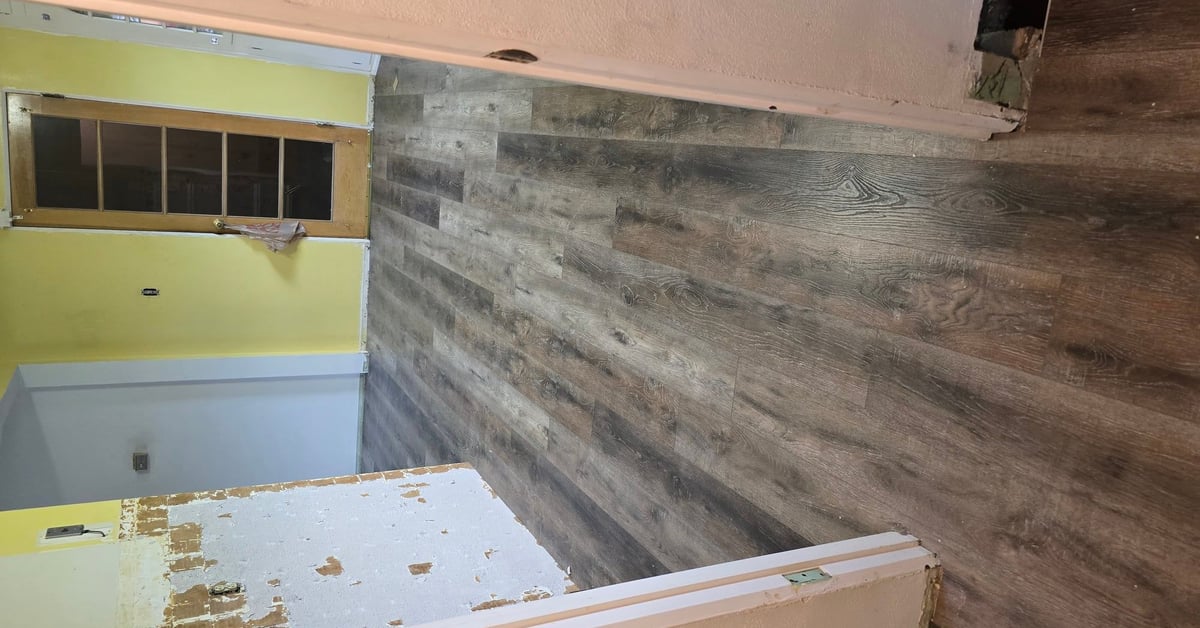
Basement Flooring Restoration Work in Progress
Overhead view into a basement area during renovation, featuring partially installed dark wood-grain laminate or vinyl plank flooring covering most of the floor space. Yellow painted drywall walls on both sides, an open wooden door with glass panels, a white bathtub or shower enclosure in the corner, exposed subfloor in patches, minor debris, and construction edges visible. Suggests water damage restoration with flooring replacement underway.
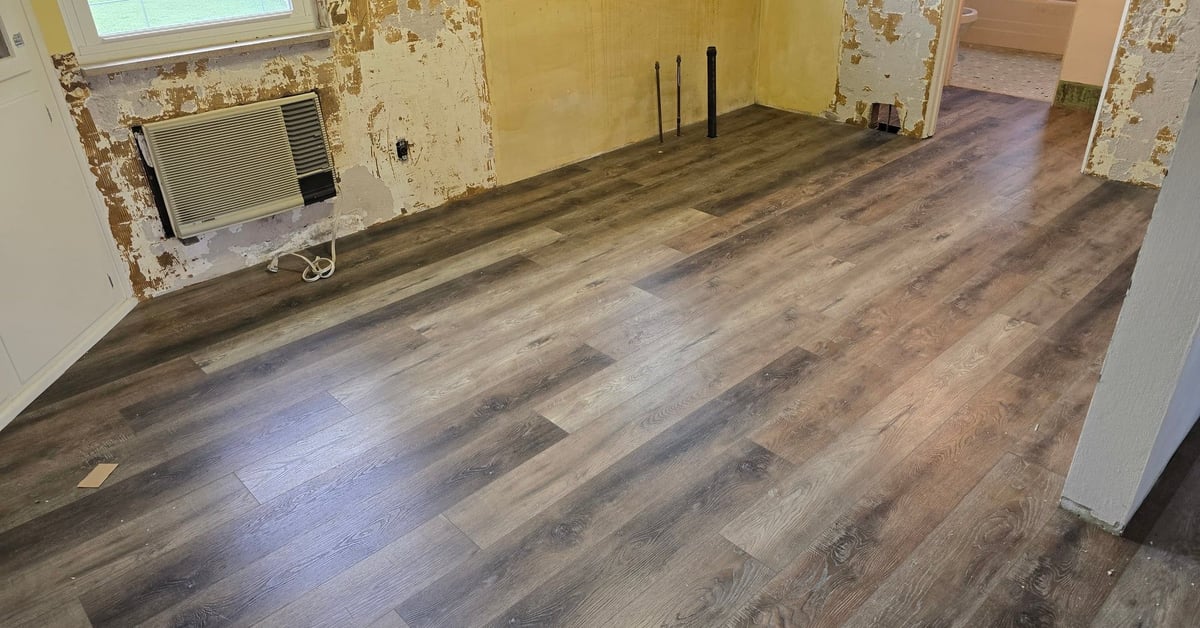
Water Damaged Bathroom Walls with New Flooring
A room undergoing restoration shows severely damaged walls with peeling yellowed plaster and exposed wooden studs, particularly around a window-mounted air conditioning unit. Freshly installed dark laminate flooring with a wood-grain pattern covers the entire floor. An open doorway reveals an adjacent bathroom featuring a white bathtub and tiled walls. Two metal poles stand in one corner, and minor debris is present, indicating active renovation work likely due to prior water damage.
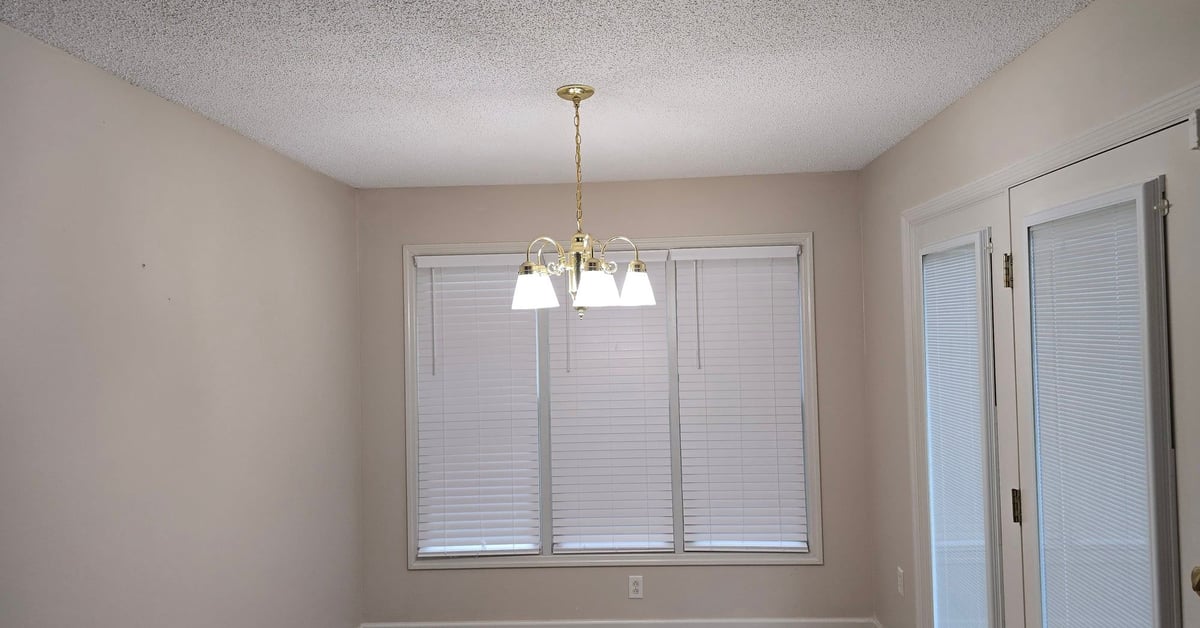
Empty Dining Room with Chandelier and Blinds
A spacious, empty dining room featuring light beige walls, a textured popcorn ceiling, a centered gold-toned four-arm chandelier with glass shades hanging from a chain, three large windows on the left covered with white horizontal blinds, a glass-paneled door on the right with blinds, and brown ceramic tile flooring. The room is clean, well-lit from natural light, and appears freshly restored with no visible damage or furnishings.
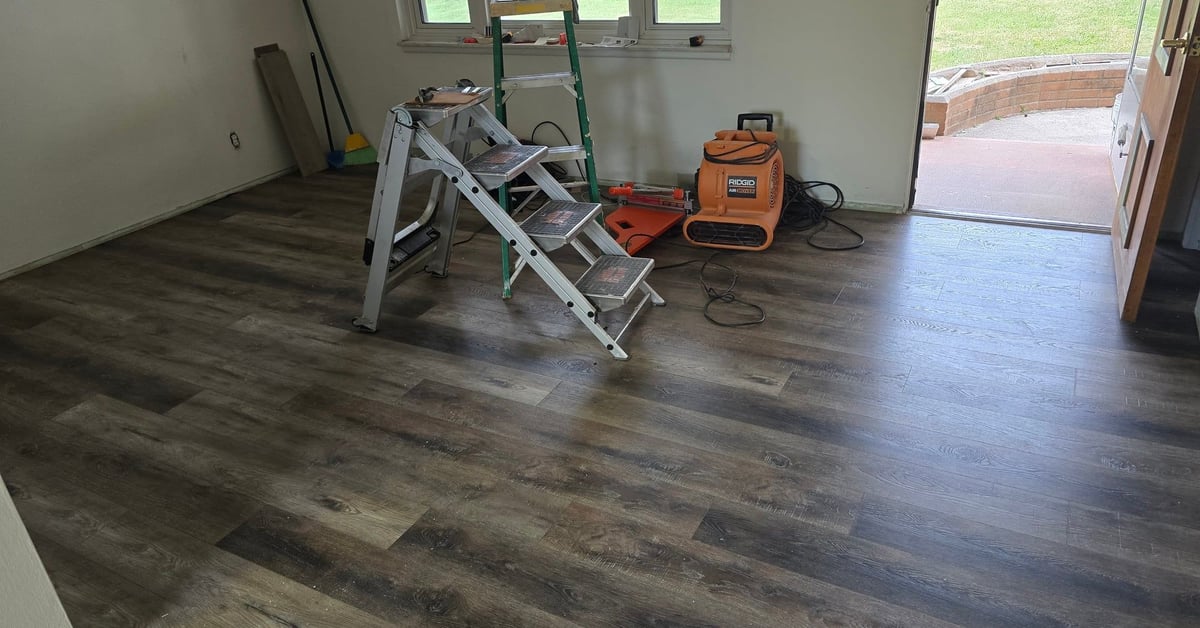
Room Restoration with New LVP Flooring and Equipment
Spacious empty room during restoration work, featuring freshly installed gray luxury vinyl plank (LVP) flooring throughout. An orange commercial air mover/dehumidifier is plugged in and operating in one corner, with orange extension cords nearby. Two aluminum ladders—one extended and one folded—are leaning against the wall, along with a broom, cardboard sheet, and minor wall patch. White walls, large window with view of grass outside, open door showing red truck parked on gravel driveway. Clean, well-lit space with visible electrical outlets and switch plate.
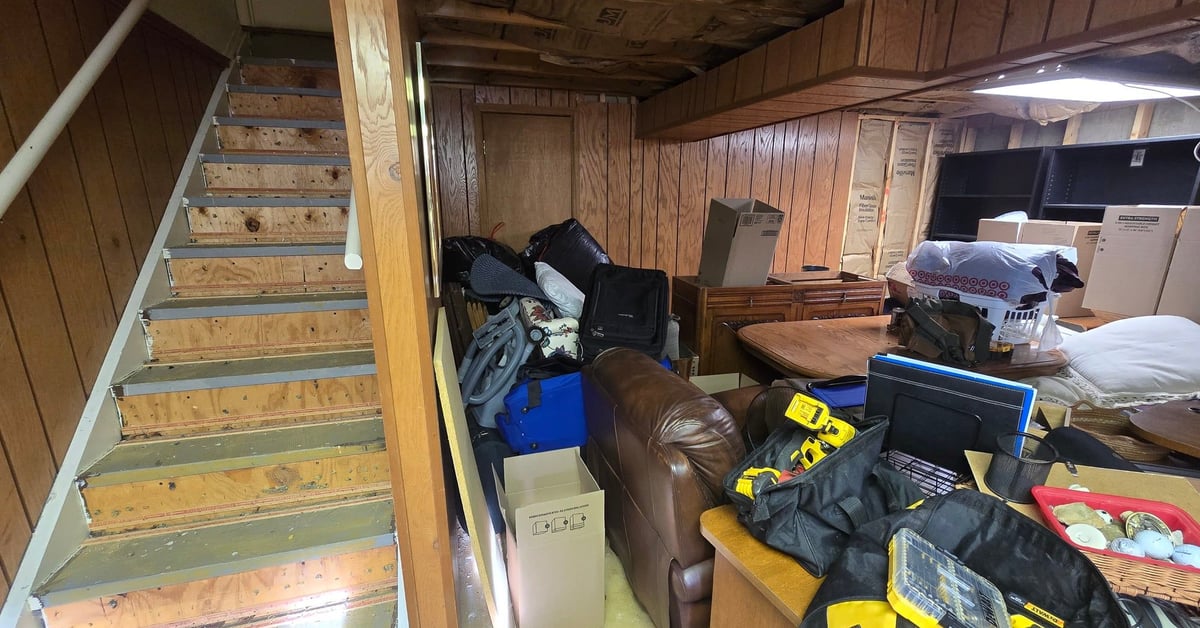
Cluttered Basement Before Restoration Work
A cluttered unfinished basement with wooden paneled walls, exposed wooden beams and pink insulation on the ceiling. A wooden staircase with railing descends from the left side. The floor space is filled with household items including a brown leather armchair, wooden desk cluttered with tools like a yellow drill and cases, multiple cardboard boxes, blue plastic bins, black garbage bags, pillows, baskets, and scattered debris. Fluorescent lighting illuminates the area, suggesting preparation for cleanup or restoration.
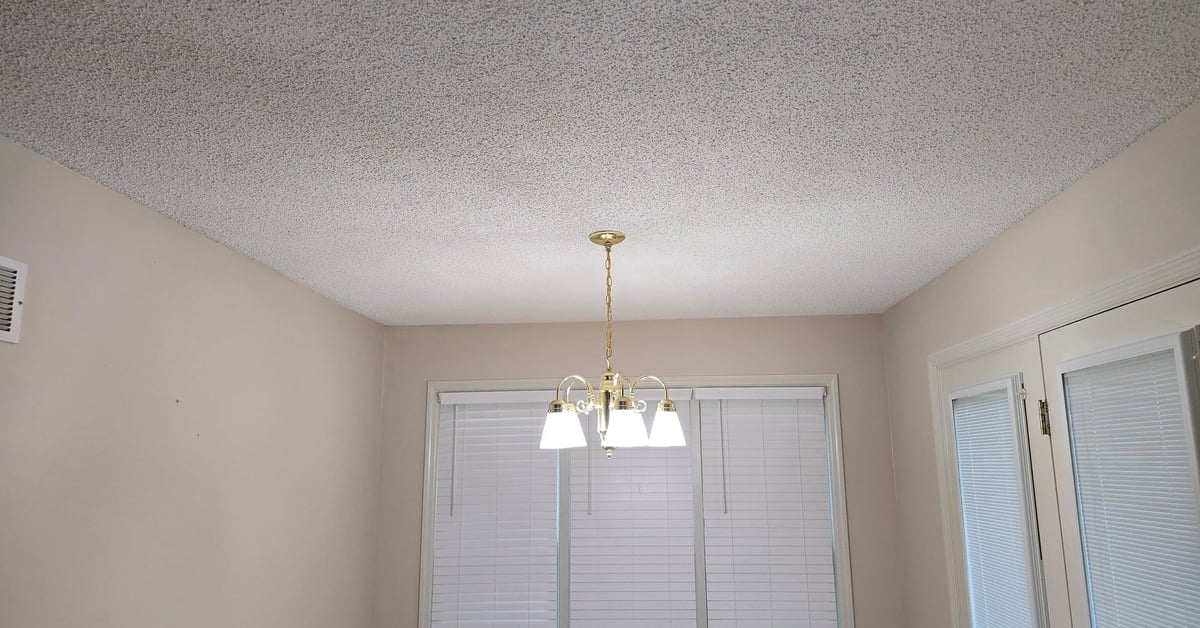
Clean dining room with chandelier and beige walls
A spacious, empty dining room featuring a textured popcorn ceiling, elegant gold chandelier with four bulb fixtures, light beige walls, large triple window covered with white horizontal blinds, and glass-paneled French doors. The room is well-lit, spotless, and appears freshly restored with no signs of damage or ongoing work.
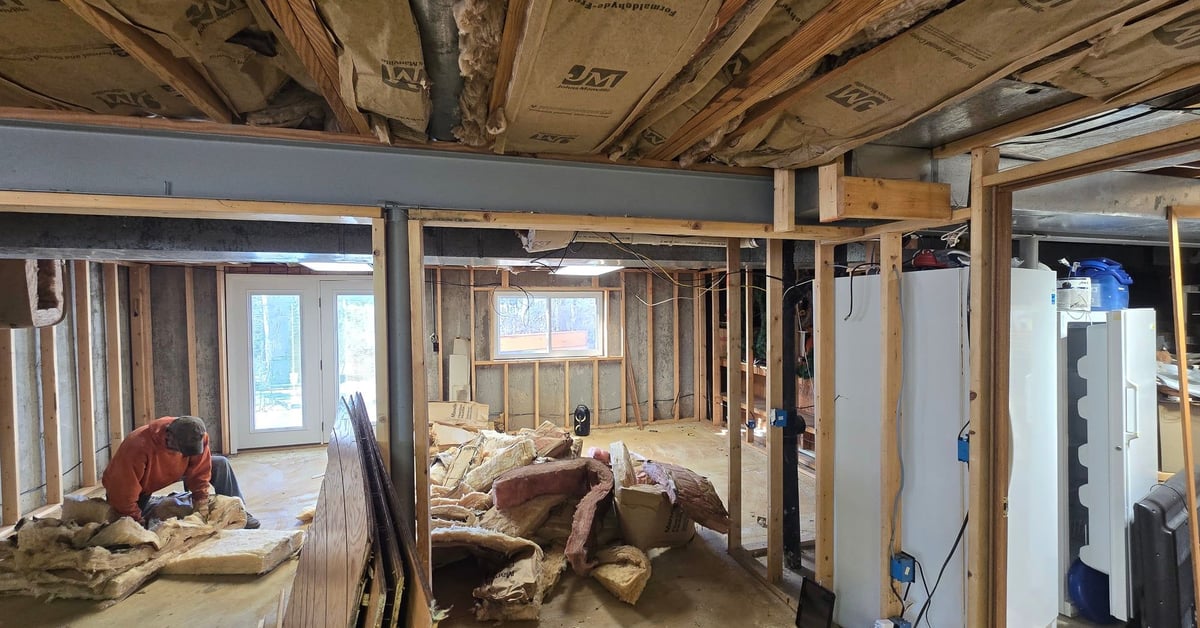
Worker Remodeling Basement with Framing and Insulation
In this basement renovation scene, a worker dressed in an orange uniform and protective gear kneels on the plywood subfloor, working on construction materials. The ceiling features exposed wooden joists wrapped in pink fiberglass insulation batts, some labeled. Walls are framed with wooden studs and metal beams, with partial drywall installation on some sections. Construction debris including wood scraps, insulation remnants, and tools litters the floor. Framed windows and doors allow natural daylight, and white cabinets or shelving units stand along one wall near blue storage bins.
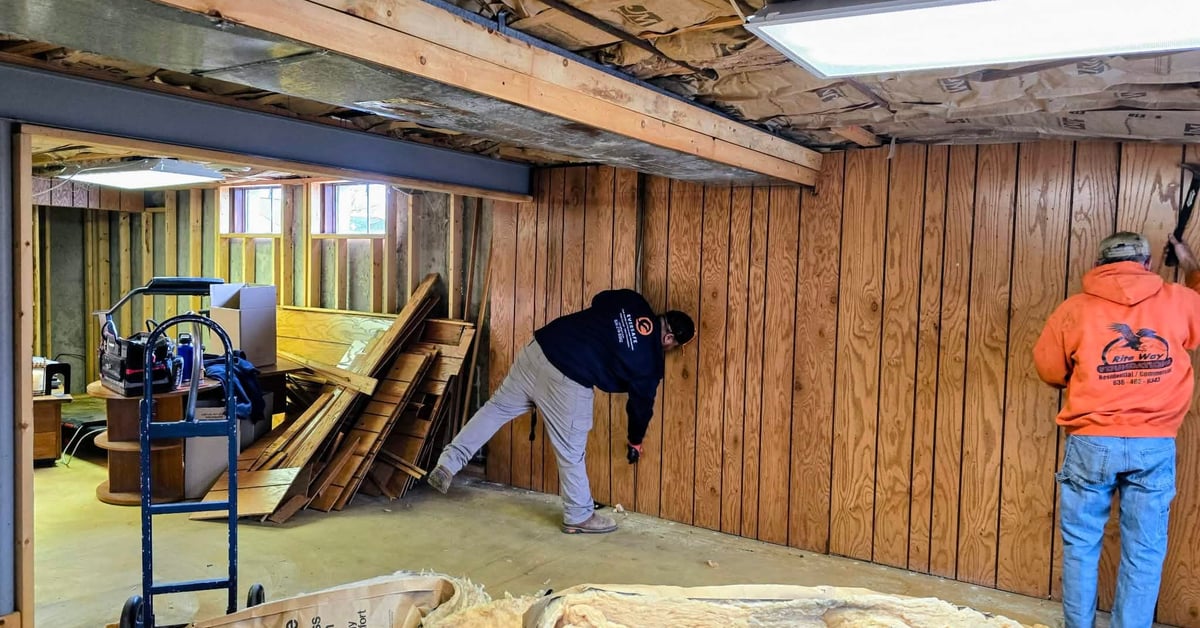
Workers Performing Basement Mold Remediation
In a dimly lit basement with wood-paneled walls partially removed, two workers from Eversafe Restoration LLC are actively engaged in remediation work. One technician, dressed in a blue hoodie, gray pants, and gloves, is crouched low, inspecting or removing sections of wood paneling and exposed pink fiberglass insulation from the wall. The other worker, wearing an orange hoodie and blue jeans, stands nearby observing. Scattered debris including wood scraps, insulation pieces, and plywood sheets lie on the concrete floor. Overhead, exposed wooden beams, yellow electrical wiring, and ductwork are visible under fluorescent lighting. This scene depicts ongoing mold remediation or water damage restoration efforts.
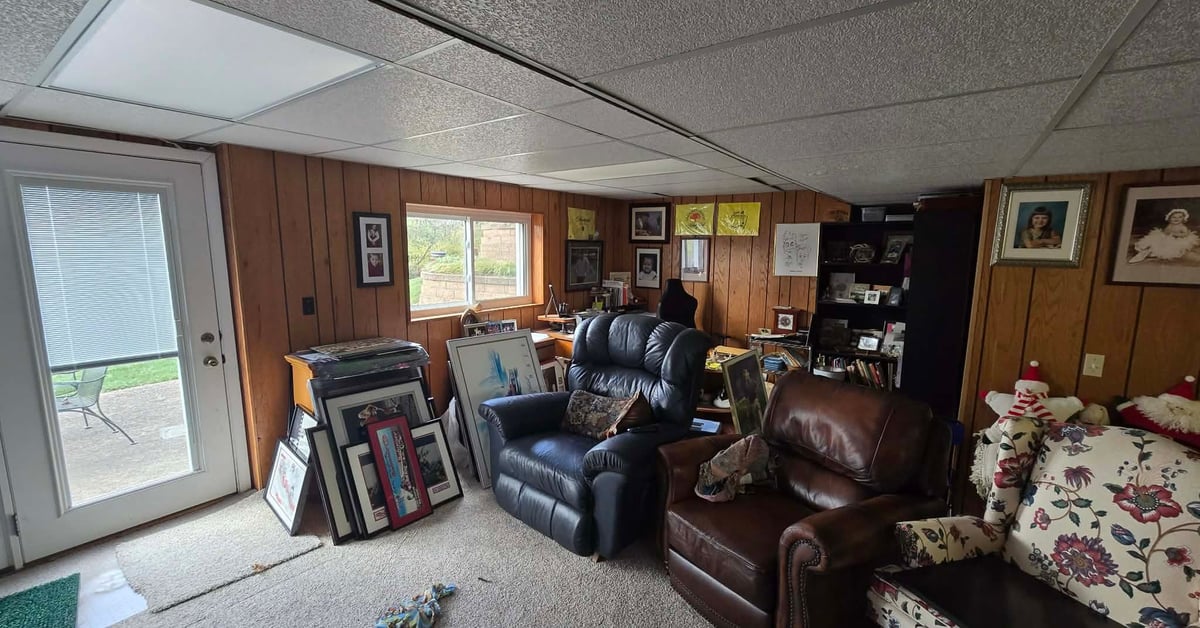
Cozy Basement Family Room with Recliners and Decor
A comfortably furnished basement living room featuring wood-paneled walls, a drop ceiling with fluorescent light panels, and beige carpeted flooring. Two black leather recliner chairs are positioned in the center, one occupied by a small dog. Surrounding furniture includes bookshelves stocked with books and decorative frames, multiple framed pictures and artwork on the walls, a side table with a lamp, scattered toys on the floor, and a glass door with blinds leading to an outdoor area. The room appears clean, organized, and inviting.
What St. Louis Homeowners Say
Hear from homeowners across St. Louis who trusted us with their water damage emergencies. We are honored to have helped them restore their properties and peace of mind.
"Chad fixed my mold. He explained to me exactly how the mold happened and why it would not happen again. He was very kind to me. I explained I was suffering from a medical level of anxiety and he was very understanding. Every day, Chad made sure to communicate clearly and keep me informed throughout the entire process."
Bob Gaines
3 months ago
"Eversafe Restoration was incredible to work with. We had unexpected water damage and Chad responded quickly and professionally. He explained everything clearly and made sure we understood the repair process. The crew was efficient and thorough. Highly recommend!"
Andrea Herron
6 months ago
"They took care in giving me the best service. Very detailed oriented in repairing and finishing moisture damage in my home. They did such an excellent job, I won't think twice about calling Eversafe for anymore restoration needs I have in the future!"
Ryan McGovern
6 months ago
"11/10 would recommend! Great job, great price, and it took them no time at all."
Corey Holmes
3 months ago
"Did a great job."
Matt Guthrie
6 months ago
"Excellent service from start to finish. Professional and reliable."
Destiny Boschert
6 months ago
Water Damage Restoration Questions for St. Louis Homeowners
Get answers to the most common questions about water damage restoration costs, insurance coverage, and our restoration process in St. Louis.
How much does water damage restoration cost in St. Louis?
Water damage restoration costs in St. Louis typically range from $1,200 to $7,500 for residential properties, though the final price depends on several critical factors. The square footage of the affected area is the primary cost driver. A small bathroom with a toilet overflow costs far less than a flooded finished basement in a Central West End brownstone. The category of water significantly impacts pricing as well. Category 1 clean water from a supply line break requires less intensive treatment than Category 3 contaminated water from sewage backups or the Mississippi River flooding, which demands full sanitization, antimicrobial treatment, and often removal of porous materials. St. Louis's older housing stock presents unique challenges. Many homes in neighborhoods like Tower Grove, Shaw, and Soulard feature original hardwood floors, plaster walls, and balloon-frame construction that require specialized drying techniques. We provide transparent pricing with free on-site assessments. Minor water extraction jobs start around $500, while major restoration projects involving structural drying, demolition, and reconstruction can exceed $10,000. Most homeowner insurance policies cover sudden water damage from burst pipes or appliance failures. We work directly with major carriers including State Farm, Allstate, and Farmers, handling documentation and billing to reduce your stress during an already difficult situation.
Do you offer 24 hour water damage restoration?
Yes, Eversafe Restoration provides true 24/7/365 emergency water damage restoration services throughout St. Louis city and county. When you call our emergency line at (636) 219-9302, you reach a live dispatcher, not a voicemail or answering service. We understand that water emergencies do not wait for business hours. A pipe can burst at 2 AM on Christmas morning, and you need help immediately, not when offices open after the holiday. Our crews are dispatched from our Saint Charles headquarters, and we typically arrive at St. Louis city locations within 60 minutes of your call. For emergencies in downtown St. Louis, the Central West End, or neighborhoods near Forest Park, response times are often faster due to proximity to major highways. We maintain fully stocked service vehicles with extraction equipment, dehumidifiers, and air movers so crews can begin work immediately upon arrival. Every hour that water sits increases damage exponentially and creates conditions for mold growth. Our rapid response commitment exists because we know that getting equipment running quickly can mean the difference between salvaging your hardwood floors and replacing them entirely.
What should I do immediately after a pipe burst?
When a pipe bursts in your St. Louis home, taking the right immediate actions can significantly reduce damage and restoration costs. First and most critically, locate and shut off your main water valve. In most St. Louis homes, this is located in the basement near the front wall, often near the water meter. Turning this valve clockwise will stop water flow throughout your entire home. If the burst pipe is near electrical outlets, appliances, or your electrical panel, turn off electricity to the affected area at your breaker box. Never wade through standing water that may be in contact with electrical sources. Next, call Eversafe Restoration at (636) 219-9302 for immediate water removal. While waiting for our crew to arrive, you can take additional protective steps. Move furniture and valuables away from standing water if you can do so safely. If water is actively dripping through a ceiling, place buckets underneath to prevent further spread. Do not attempt to use your household vacuum to remove water, as this creates an electrocution hazard. Document the damage with photos and video for your insurance claim before cleanup begins. Our technicians will guide you through next steps when they arrive and can help you file your insurance claim with proper documentation.
Is a flooded basement dangerous?
A flooded basement presents multiple serious dangers that St. Louis homeowners must take seriously. The most immediate risk is electrical shock. Water conducts electricity, and basements typically contain electrical panels, outlets, appliances like water heaters and furnaces, and sometimes HVAC equipment. Standing water in contact with any electrical source creates lethal shock potential. Never enter a flooded basement until you have confirmed electricity is off at the main panel, and if the panel is in the flooded area, call your utility company to disconnect power before entering. Beyond electrical hazards, flooded basements threaten your home's structural integrity. The clay-heavy soils common throughout St. Louis create significant hydrostatic pressure against foundation walls during flooding. This pressure can cause walls to crack, bow inward, or fail completely. Even after water recedes, saturated soil continues exerting pressure for days. Floodwater also weakens concrete and mortar over time, particularly in older St. Louis homes with limestone or brick foundations. Health risks multiply rapidly after flooding. Within 24 to 48 hours, mold begins growing on wet surfaces. In Missouri's humid summers, mold colonization accelerates dramatically. Floodwater also carries bacteria, sewage, chemicals, and other contaminants that pose respiratory and skin infection risks. Children, elderly family members, and those with respiratory conditions are particularly vulnerable. Professional extraction, sanitization, and drying are essential to protect both your home's structure and your family's health.
Will my insurance pay for water damage?
Most St. Louis homeowner insurance policies cover water damage from sudden and accidental events such as burst pipes, appliance failures, and roof leaks during storms. However, coverage details vary significantly between policies, and understanding these distinctions can save you thousands of dollars. Standard policies typically cover water damage from internal sources: a supply line failure, a water heater rupture, an overflowing washing machine, or a burst pipe during a cold snap. If your sump pump fails and your basement floods, coverage depends on whether you have sump pump failure endorsement on your policy. Gradual leaks and maintenance-related damage are generally not covered. If a slow leak under your sink has been dripping for months, insurance may deny the claim because it could have been prevented with proper maintenance. Flood damage from external sources such as rising rivers, storm surge, or surface water runoff requires separate flood insurance, typically obtained through FEMA's National Flood Insurance Program. Properties near the Mississippi River or in low-lying areas of St. Louis should carry flood insurance even if not required. Eversafe Restoration works directly with major insurance carriers including State Farm, Allstate, Farmers, American Family, and others. We provide detailed documentation including moisture readings, photographs, damage assessments, and itemized work reports that adjusters need. We can bill insurance companies directly in most cases, and our experience with local adjusters helps ensure your claim is processed smoothly.
How long does the drying process take?
Professional structural drying after water damage typically requires 3 to 5 days in most St. Louis homes, though several factors influence this timeline. The type and age of building materials significantly impacts drying time. Modern drywall dries faster than the plaster walls common in older St. Louis homes in neighborhoods like Lafayette Square, Compton Heights, and the Central West End. Hardwood floors require careful, controlled drying to prevent warping and cupping. Older homes with balloon-frame construction or multiple layers of flooring can hold moisture in hidden cavities that take longer to dry completely. Environmental conditions play a critical role. St. Louis summers bring high humidity that slows natural evaporation, while our industrial LGR dehumidifiers counteract this by creating controlled low-humidity environments. The extent of water penetration matters as well. Surface moisture from a small spill dries much faster than water that has soaked into wall cavities, subfloors, and insulation. Throughout the drying process, our technicians monitor progress using professional moisture meters and thermal imaging cameras. We take readings at multiple points daily and adjust equipment placement as needed. Drying is complete only when moisture levels in all affected materials return to acceptable ranges, typically matching the moisture content of unaffected areas in the same property. Rushing this process risks mold growth and structural damage, which is why professional monitoring with documented readings is essential.
How can I fix a wet basement in St. Louis?
Fixing a wet basement in St. Louis requires addressing both the immediate water problem and the underlying causes of water intrusion. For active flooding with standing water, the first step is professional water extraction using commercial-grade pumps and truck-mounted equipment. Consumer wet-dry vacuums cannot remove water fast enough to prevent damage in serious flooding situations. Once water is extracted, industrial dehumidifiers and air movers begin the drying process while antimicrobial treatments prevent mold growth. Long-term basement waterproofing solutions depend on the source of water intrusion. St. Louis homes commonly experience basement water from several sources. Hydrostatic pressure from the region's clay-heavy soils pushes groundwater through foundation walls and floor joints during heavy rains. Interior waterproofing systems including French drains, sump pumps, and vapor barriers address this pressure by channeling water to drainage systems before it enters your living space. Exterior waterproofing with foundation membrane systems stops water at the source but requires excavation around your foundation. Sump pump health is critical in St. Louis basements. If your sump pump is more than 10 years old, runs constantly during rain, or has not been tested recently, it may fail when you need it most. We recommend battery backup systems for power outage protection and regular maintenance testing. Many wet basement problems also involve poor surface drainage. Ensuring gutters discharge water away from your foundation and grading slopes away from your home can prevent much basement water intrusion.
Do you handle sewage cleanup?
Yes, Eversafe Restoration provides specialized sewage cleanup services throughout St. Louis, addressing one of the most hazardous types of water damage. Sewage backups are classified as Category 3 or black water, the most contaminated category under IICRC standards. This water contains human waste, bacteria, viruses, parasites, and other dangerous pathogens that pose serious health risks. Professional cleanup is essential, not optional. Sewage backup causes in St. Louis include city sewer line overflows during heavy rains, tree root intrusion into lateral lines, septic system failures, and toilet or drain backups. The city's aging sewer infrastructure, much of it dating to the early 1900s, combined with combined sewer systems in older neighborhoods means sewage backups occur with unfortunate frequency during major rain events. Our sewage cleanup process follows strict IICRC protocols. Technicians wear full PPE including respirators and protective suits. All standing sewage is extracted using specialized equipment designated only for contaminated water. We remove and properly dispose of porous materials that cannot be sanitized, including carpet, padding, drywall below the flood line, and insulation. Non-porous surfaces and structural materials undergo thorough antimicrobial treatment. Specialized odor removal using hydroxyl generators or thermal fogging eliminates the persistent odors that sewage leaves behind. We document everything for insurance purposes, as most policies cover sudden sewage backup damage. If you experience a sewage backup, evacuate the affected area immediately, avoid touching contaminated materials, and call us for emergency response.
Still have questions?
We're here to help you find the answers.
Serving St. Louis from Saint Charles
Our Saint Charles headquarters provides rapid response throughout St. Louis city and county. We typically arrive within 60 minutes for water damage emergencies via Highway 70 and Interstate 64.
Hours
Monday - Friday: 9am - 6pm
Saturday: 9am - 5pm
Sunday: Closed
Water Damage in St. Louis? Call Now.
Every hour counts when water invades your home. Our Saint Charles-based crews respond to St. Louis emergencies around the clock with commercial-grade equipment ready to begin extraction immediately. Do not wait until tomorrow.
Ready to Restore Your St. Louis Property?
Our Saint Charles team serves St. Louis 24/7 for emergency water damage restoration, flooded basement cleanup, and complete property restoration. Call now for immediate assistance or request a free inspection.