Professional Basement Waterproofing in St. Louis
Protect your home from water damage with comprehensive basement waterproofing solutions designed for St. Louis's challenging clay soils and heavy rainfall. From interior drainage systems to foundation crack repair, we permanently solve wet basement problems for homeowners throughout the metro area.
Basement Waterproofing Experts: Solving St. Louis's Unique Water Problems
From historic homes in Lafayette Square to newer construction in West County, we understand the specific challenges St. Louis basements face.
St. Louis basements face water intrusion challenges unlike almost anywhere else in the country. The region sits on soil composed primarily of dense clay that expands dramatically when saturated and contracts during dry periods. This constant expansion and contraction creates hydrostatic pressure against foundation walls that can exceed 500 pounds per square foot during heavy rains. That pressure forces water through concrete, cracks, and the vulnerable joint where basement floors meet walls. Without proper waterproofing, nearly every St. Louis basement will eventually experience water problems.
Historic homes throughout St. Louis city present additional waterproofing challenges. Neighborhoods like Soulard, Tower Grove, the Central West End, and Lafayette Square feature beautiful homes built between 1870 and 1940 with limestone, brick, or rubble stone foundations never designed for modern waterproofing. Many have experienced decades of water intrusion that has degraded mortar joints and created pathways for continued moisture infiltration. These foundations require specialized techniques that address their unique construction while preserving historic character.
Eversafe Restoration brings decades of combined experience solving basement water problems specific to the St. Louis metro area. Our team understands local soil conditions, foundation types, and weather patterns that affect basement waterproofing decisions. We provide free on-site assessments that identify the source of your water problems and recommend solutions tailored to your home's construction and your budget. From emergency water intrusion repair to comprehensive waterproofing systems, we keep St. Louis basements dry.
Clay Soil Expertise
Solutions designed specifically for Missouri's expansive clay soils and hydrostatic pressure
Historic Home Specialists
Preserving St. Louis architectural heritage while solving modern water problems
Lifetime Warranties
Comprehensive warranties backed by a local company committed to St. Louis
Comprehensive St. Louis Foundation Waterproofing Solutions
Complete waterproofing systems engineered for the specific challenges of St. Louis soil conditions, weather patterns, and foundation types.
Custom Foundation Sealing for St. Louis Soil Conditions
St. Louis's clay-heavy soils behave unlike soil in most other regions. During wet periods, clay expands by up to 30 percent, creating enormous lateral pressure against foundation walls. During dry spells, it contracts and pulls away from foundations, creating voids that channel water directly to basement walls during the next rain. Our foundation sealing techniques account for this constant soil movement. We use flexible waterproofing membranes that maintain their seal despite soil expansion and contraction, combined with drainage board materials that create permanent pathways for water to flow away from your foundation rather than through it. For historic St. Louis foundations built before modern waterproofing techniques existed, we apply specialized coatings compatible with limestone, brick, and rubble stone construction. These breathable sealants allow moisture vapor to escape while preventing liquid water penetration, protecting both the waterproofing barrier and the historic masonry beneath.
Heavy-Duty Vapor Barriers and Waterproof Membranes
Hydrostatic pressure is the primary cause of basement water intrusion in St. Louis. When soil becomes saturated during heavy rains or snowmelt, groundwater creates upward pressure against your basement floor and lateral pressure against walls. This pressure forces water through any available pathway, including microscopic pores in concrete. Our vapor barriers and waterproof membranes block this water intrusion at the source. For interior applications, we install heavy-duty moisture barriers rated for continuous hydrostatic pressure, creating an impermeable layer between wet soil and your living space. These commercial-grade materials far exceed the thin plastic sheeting sold at hardware stores. For exterior applications, rubberized asphalt membranes provide permanent protection when properly installed against clean foundation walls. We also offer spray-applied liquid membranes that cure to form seamless waterproof coatings, particularly effective for foundations with irregular surfaces or complex geometries.
Exterior Excavation and Sealing for Permanent Protection
Exterior waterproofing addresses water at the source before it reaches your foundation walls. While more involved than interior solutions, exterior waterproofing provides the most comprehensive protection available. The process begins with excavating soil away from your foundation down to the footer level, typically 7 to 9 feet deep for full basements. This excavation exposes the exterior foundation wall for cleaning, repair, and waterproofing. After cleaning and repairing any cracks or damaged areas, we apply waterproofing membrane systems designed for permanent below-grade installation. These membranes include multiple layers: a primer to ensure adhesion, the waterproof membrane itself, and often a protection board that shields the membrane from backfill damage. Drainage board materials create channels for water to flow down to footer drains rather than pooling against the waterproofing. New footer drains direct water to a sump system or daylight drain, ensuring groundwater never accumulates around your foundation. While exterior waterproofing requires significant excavation and landscaping restoration, it provides protection that typically lasts the lifetime of your home with minimal maintenance.
Crack Injection and Structural Reinforcement
Foundation cracks are common in St. Louis due to soil movement, but they require expert assessment to determine whether they indicate structural problems or simply provide water entry points. Our technicians evaluate each crack's orientation, width, any associated wall movement, and location to prescribe appropriate repairs. Vertical cracks typically result from concrete curing shrinkage or minor settlement and respond well to injection repair. We use epoxy for maximum structural restoration or polyurethane for cracks that may experience minor movement. The injection process fills cracks completely from interior surface through the foundation wall, eliminating both current leaks and potential future water paths. Horizontal cracks and stair-step cracks in block foundations indicate hydrostatic pressure or structural movement requiring more than simple sealing. Carbon fiber strap systems bonded to foundation walls provide tremendous reinforcement to resist further movement. For foundations with significant bowing, steel I-beam systems anchored to footer and floor joists can arrest and gradually reverse wall movement. Historic St. Louis foundations often require tuckpointing deteriorated mortar in addition to crack repair, restoring both structural integrity and water resistance.
Wet Basement in St. Louis?
Call for a free inspection and waterproofing estimate.
Serving St. Louis City, Clayton, University City, Webster Groves, Kirkwood, and all metro areas
Interior Drainage Systems & Sump Pump Installation
Engineered drainage solutions that manage St. Louis's heavy rainfall and high water tables, protecting your basement from the inside.
French Drain Installation: Redirecting Water Away From Your Basement
French drains are the cornerstone of interior basement waterproofing systems, and our installations are specifically engineered for the hydrostatic pressure conditions unique to St. Louis. The installation process begins with removing a strip of concrete around your basement perimeter, typically 12 to 18 inches wide. We excavate a trench down to your footer level, the point where groundwater naturally accumulates before forcing its way through your floor or walls.
A bed of washed gravel fills the trench, providing a high-permeability drainage pathway. Perforated PVC pipe sits within this gravel bed, designed to collect water from all directions. Additional gravel covers the pipe, and optional filter fabric prevents fine soil particles from eventually clogging the system. New concrete replaces the removed strip, leaving a clean, professional appearance. The system channels all collected water to one or more sump pits for discharge away from your foundation. For St. Louis homes with high water tables or severe hydrostatic pressure, we can extend drainage beneath portions of the floor for comprehensive water management.
Dual-Pump Systems with Battery Backup for Missouri Storm Seasons
Missouri weather demands sump pump systems designed for worst-case scenarios. Our standard installations include primary pumps rated for continuous heavy duty, sized to handle the water volume your drainage system will deliver during the heaviest rains. But relying on a single pump means risking your basement during the exact storms that matter most, when power outages are common and water intrusion is severe.
We recommend and install dual-pump systems with battery backup for all St. Louis waterproofing projects. The battery backup system includes a secondary pump with its own dedicated float switch and a marine-grade battery that provides hours of pumping protection during power outages. If your primary pump fails for any reason, the backup automatically activates. If power fails during a storm, the battery backup takes over immediately, continuing to protect your basement while you wait for power restoration. Our battery backup systems also include alarms that alert you to pump activation, low battery, and high water conditions, giving you awareness of your basement's status even when you are away from home.
Crawl Space Encapsulation to Eliminate Moisture and Odors
Many St. Louis homes feature crawl spaces that contribute to basement moisture problems and poor indoor air quality throughout the house. Moisture from exposed soil in crawl spaces evaporates into the air and migrates upward through the home via the stack effect. This moisture increases humidity levels, promotes mold growth, and creates the musty odors many homeowners associate with basements.
Crawl space encapsulation creates a complete moisture barrier between the crawl space and surrounding soil. Heavy-duty vapor barriers rated for ground contact cover the entire crawl space floor and extend up foundation walls. All seams are sealed with specialized tape to create a continuous moisture barrier. For crawl spaces with standing water or high groundwater, we install drainage systems and sump pumps before encapsulating. Optional dehumidifiers maintain low humidity levels year-round. The result is a clean, dry crawl space that no longer contributes moisture to your home, improving both basement conditions and overall indoor air quality.
Wall Crack Repair Using Professional-Grade Injections
Foundation wall cracks provide direct pathways for water intrusion and worsen over time if left unrepaired. Our professional crack injection process eliminates both current leaks and the potential for future water entry. We begin by cleaning the crack surface and installing injection ports at regular intervals along its length. Depending on the crack type and condition, we select either epoxy or polyurethane injection material.
Epoxy injection creates a rigid bond that restores structural integrity while permanently sealing the crack. It is ideal for stable cracks that do not experience ongoing movement. Polyurethane injection produces a flexible seal that accommodates minor foundation movement, making it appropriate for cracks in St. Louis homes where seasonal soil movement may cause slight expansion and contraction. The injection process forces material deep into the crack, filling it completely from interior surface through the foundation wall to exterior soil. After curing, the repair is permanent and warrantied against future leaking through the treated crack.
Basement Waterproofing Across St. Louis Neighborhoods
Every St. Louis neighborhood has distinct soil conditions, typical home ages, and foundation types that influence waterproofing approaches. The historic homes of Soulard, Benton Park, and Lafayette Square feature limestone and brick foundations built before modern waterproofing techniques existed. These foundations require specialized treatment that addresses deteriorated mortar while respecting historic character. Central West End mansions and Tower Grove Victorians often have complex floor plans with multiple basement levels and older drainage infrastructure that needs updating.
Mid-century homes throughout Richmond Heights, Maplewood, University City, and Webster Groves typically have poured concrete foundations that respond well to standard interior waterproofing systems. However, many of these homes were built before sump pumps became standard, leaving them vulnerable during heavy rains. Newer construction in West County communities including Chesterfield, Creve Coeur, and Town and Country generally has modern foundations but often sits on challenging clay soils that create significant hydrostatic pressure during wet periods.
St. Louis County areas closer to major rivers and creeks, including portions of Valley Park, Fenton, and Arnold, face additional challenges from high water tables and occasional flooding. Homes near the Meramec River have experienced significant flood events and often require comprehensive waterproofing solutions addressing both groundwater and surface water management. Our team brings experience with all these conditions, recommending solutions appropriate to your specific property rather than one-size-fits-all approaches.
St. Louis City Neighborhoods We Serve:
- Downtown, Soulard, Benton Park
- Central West End, Forest Park Southeast
- Tower Grove South, Tower Grove East, Shaw
- Lafayette Square, Compton Heights
- The Hill, Dogtown, Southampton
St. Louis County Areas We Serve:
- Clayton, University City, Maplewood
- Webster Groves, Kirkwood, Shrewsbury
- Richmond Heights, Brentwood, Ladue
- Chesterfield, Creve Coeur, Town and Country
- Affton, Lemay, Mehlville
Protecting Your St. Louis Home Investment
Professional basement waterproofing delivers lasting value that extends far beyond a dry basement.
A wet basement is more than an inconvenience. In St. Louis's real estate market, basement water problems significantly impact property values and saleability. Home inspectors specifically look for signs of water intrusion, and their findings often lead to renegotiations or lost sales. A documented waterproofing system with transferable warranty provides confidence to both current owners and future buyers, protecting your investment whether you plan to sell soon or stay for decades.
Health implications of chronic basement moisture deserve serious consideration. Mold thrives in damp environments, and St. Louis's humid summers accelerate mold growth in wet basements. Mold spores migrate throughout your home's air circulation, affecting indoor air quality even on upper floors. For family members with allergies, asthma, or respiratory sensitivities, this hidden mold exposure can cause ongoing health problems. Professional waterproofing eliminates the moisture that mold needs to survive.
Structural protection may be the most valuable benefit of waterproofing. Water is the primary enemy of foundation systems. Freeze-thaw cycles crack concrete and masonry. Saturated soil creates pressure that bows and displaces walls. Chronic moisture deteriorates mortar in historic foundations. The cost of structural foundation repair far exceeds waterproofing investment, often by factors of five to ten. Waterproofing now prevents far more expensive problems later.
Risks of Ignoring Wet Basements
- X Mold growth affecting indoor air quality
- X Foundation structural damage from hydrostatic pressure
- X Property value reduction of $10,000+
- X Failed home inspections during sale
- X Unusable basement space
Benefits of Professional Waterproofing
- Permanently dry, usable basement space
- Protected and increased property value
- Improved indoor air quality
- Foundation structural protection
- Transferable lifetime warranty
Complete Restoration Services in St. Louis
Basement waterproofing often connects to other restoration needs. We provide comprehensive services under one roof.
Water Damage Restoration St. Louis
When basement flooding occurs, our 24/7 emergency team responds rapidly with commercial-grade extraction equipment. We handle water removal, structural drying, and sanitization to restore your property.
Learn More About Water Damage RestorationMold Remediation St. Louis
Chronic basement moisture leads to mold growth that affects your entire home's air quality. Our certified mold remediation services safely remove mold and address the underlying moisture problems.
Learn More About Mold RemediationBasement Waterproofing Results in St. Louis
See the transformations we have achieved for St. Louis homeowners. From French drain installations to comprehensive waterproofing systems, our team delivers permanently dry basements.
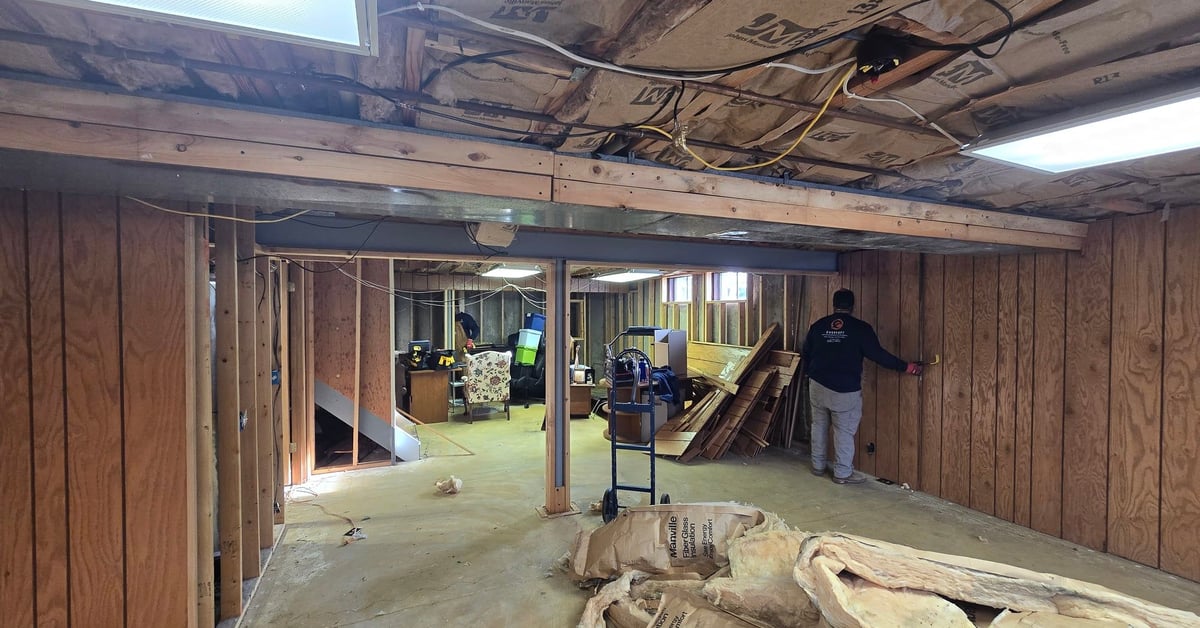
Basement Remodel In-Progress Renovation Project
This image showcases a basement renovation project in progress. The photo highlights the framing, insulation, and wall paneling being installed during the remodeling process.
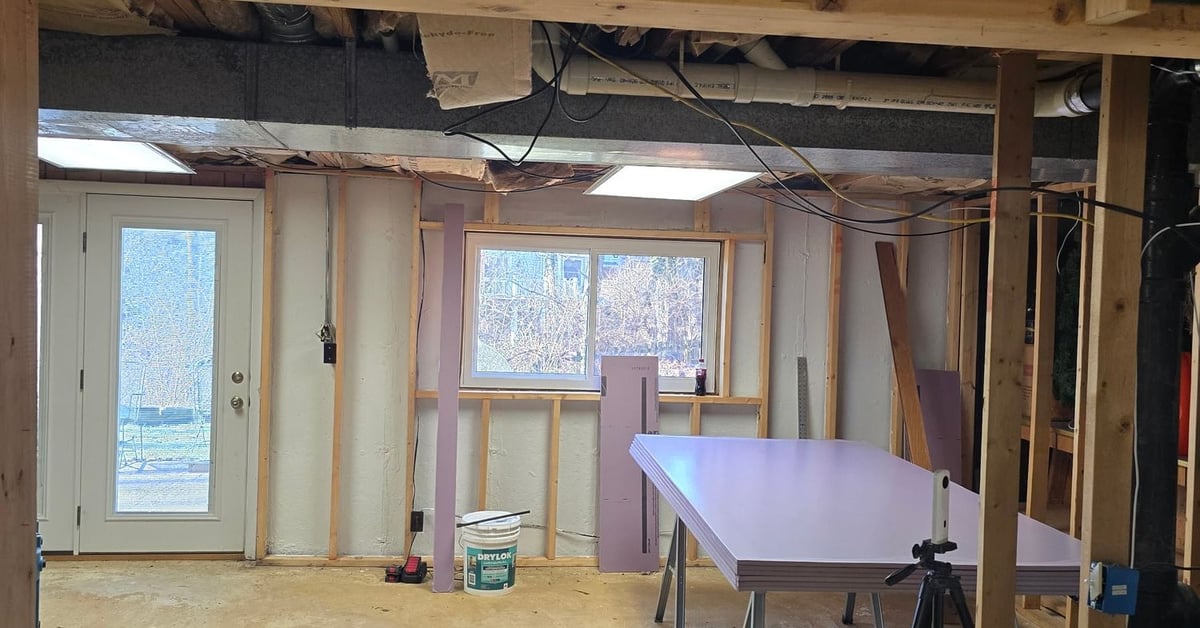
Basement Renovation Framing and Insulation
This image showcases the framing and insulation work during a basement renovation project. Our team ensures proper insulation and structural integrity for a comfortable and energy-efficient finished space.
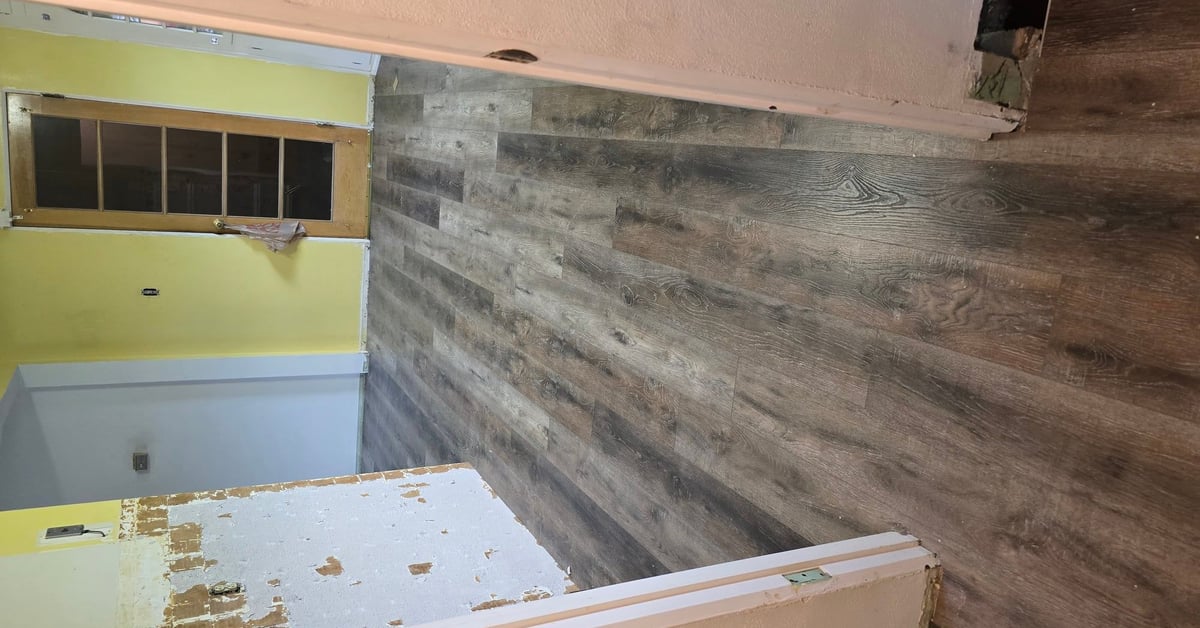
Basement Flooring Restoration Work in Progress
Overhead view into a basement area during renovation, featuring partially installed dark wood-grain laminate or vinyl plank flooring covering most of the floor space. Yellow painted drywall walls on both sides, an open wooden door with glass panels, a white bathtub or shower enclosure in the corner, exposed subfloor in patches, minor debris, and construction edges visible. Suggests water damage restoration with flooring replacement underway.
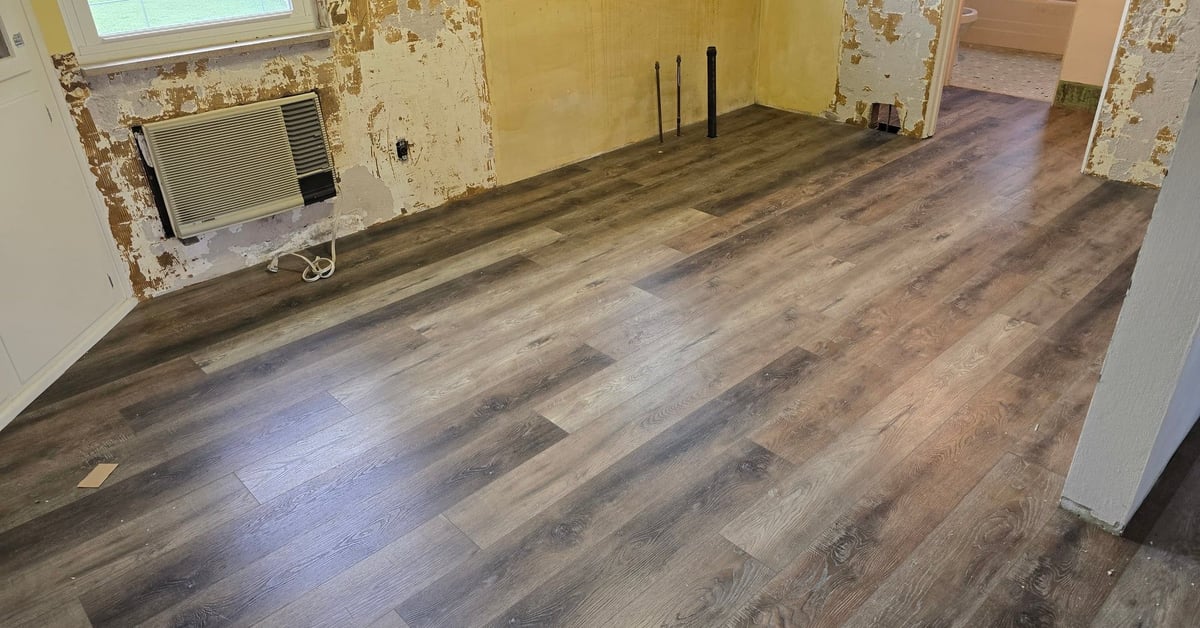
Water Damaged Bathroom Walls with New Flooring
A room undergoing restoration shows severely damaged walls with peeling yellowed plaster and exposed wooden studs, particularly around a window-mounted air conditioning unit. Freshly installed dark laminate flooring with a wood-grain pattern covers the entire floor. An open doorway reveals an adjacent bathroom featuring a white bathtub and tiled walls. Two metal poles stand in one corner, and minor debris is present, indicating active renovation work likely due to prior water damage.
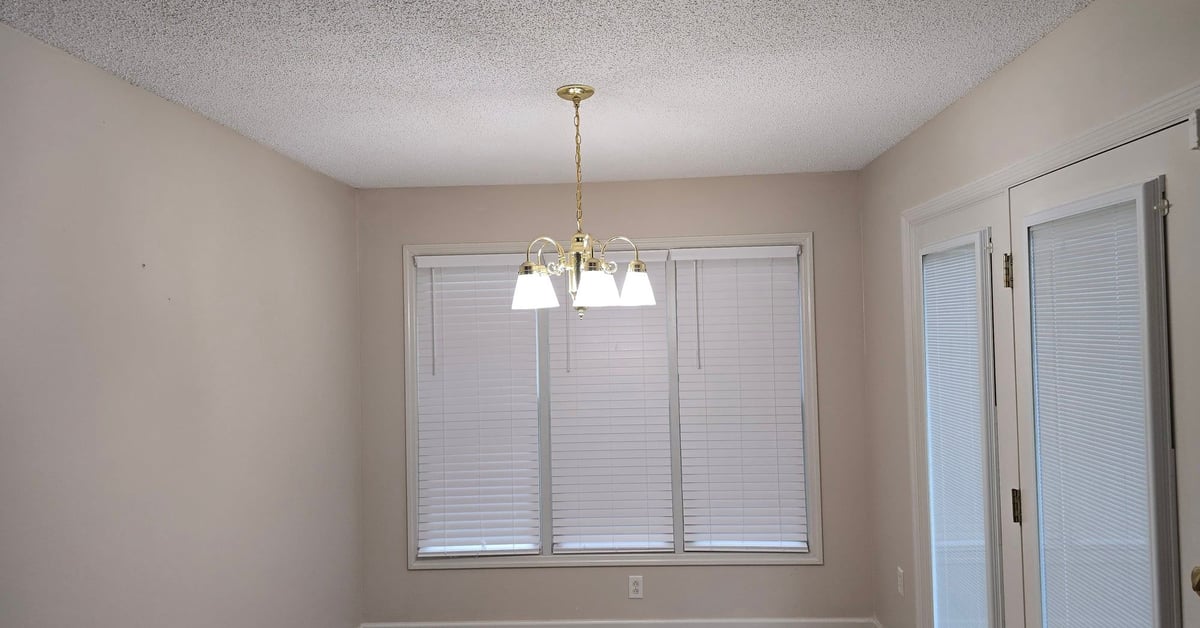
Empty Dining Room with Chandelier and Blinds
A spacious, empty dining room featuring light beige walls, a textured popcorn ceiling, a centered gold-toned four-arm chandelier with glass shades hanging from a chain, three large windows on the left covered with white horizontal blinds, a glass-paneled door on the right with blinds, and brown ceramic tile flooring. The room is clean, well-lit from natural light, and appears freshly restored with no visible damage or furnishings.
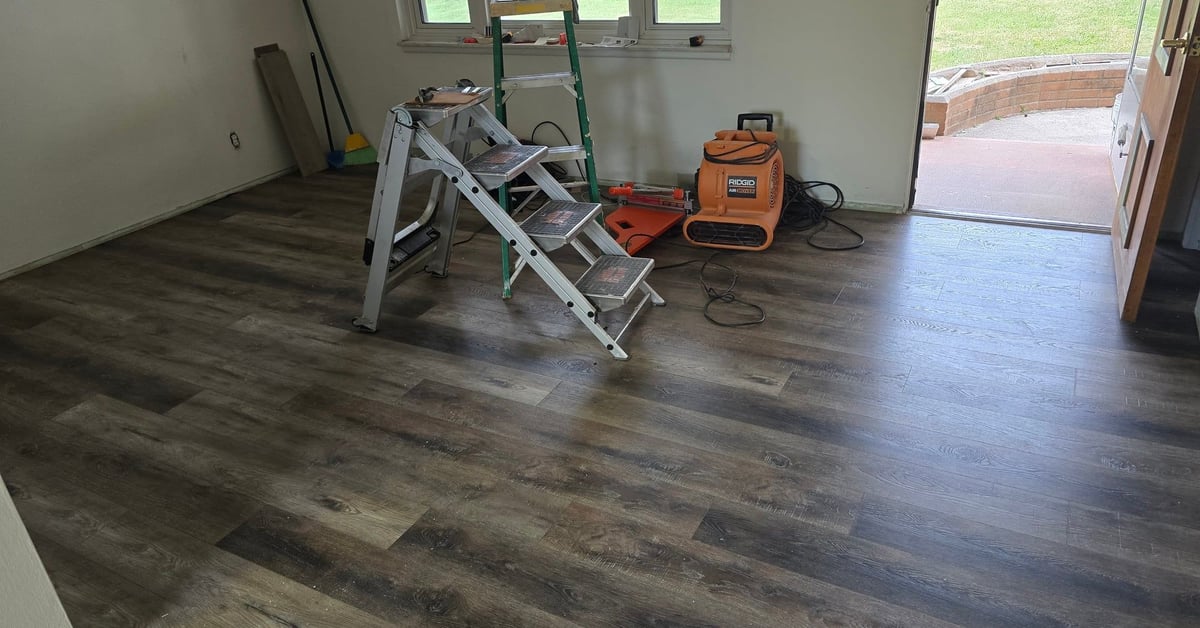
Room Restoration with New LVP Flooring and Equipment
Spacious empty room during restoration work, featuring freshly installed gray luxury vinyl plank (LVP) flooring throughout. An orange commercial air mover/dehumidifier is plugged in and operating in one corner, with orange extension cords nearby. Two aluminum ladders—one extended and one folded—are leaning against the wall, along with a broom, cardboard sheet, and minor wall patch. White walls, large window with view of grass outside, open door showing red truck parked on gravel driveway. Clean, well-lit space with visible electrical outlets and switch plate.
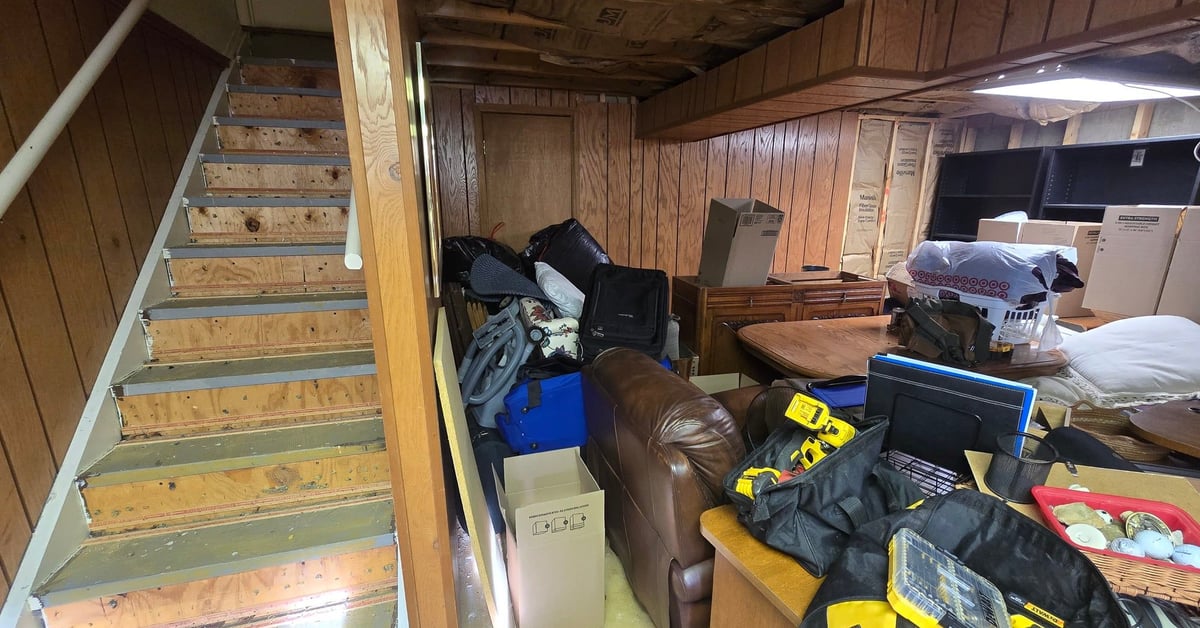
Cluttered Basement Before Restoration Work
A cluttered unfinished basement with wooden paneled walls, exposed wooden beams and pink insulation on the ceiling. A wooden staircase with railing descends from the left side. The floor space is filled with household items including a brown leather armchair, wooden desk cluttered with tools like a yellow drill and cases, multiple cardboard boxes, blue plastic bins, black garbage bags, pillows, baskets, and scattered debris. Fluorescent lighting illuminates the area, suggesting preparation for cleanup or restoration.
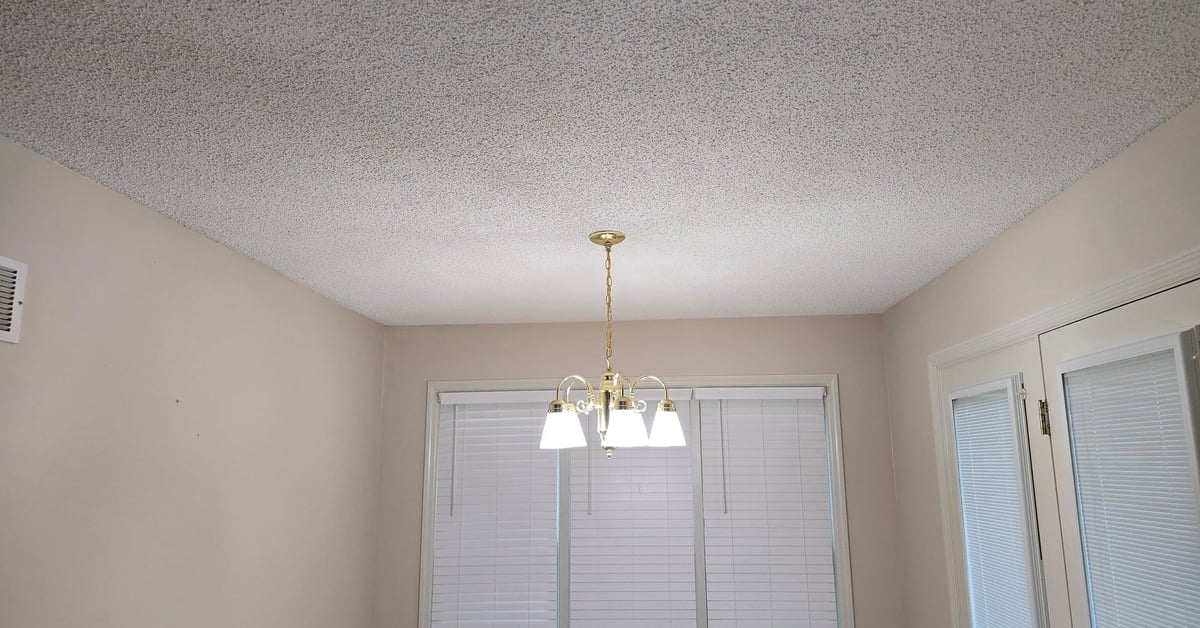
Clean dining room with chandelier and beige walls
A spacious, empty dining room featuring a textured popcorn ceiling, elegant gold chandelier with four bulb fixtures, light beige walls, large triple window covered with white horizontal blinds, and glass-paneled French doors. The room is well-lit, spotless, and appears freshly restored with no signs of damage or ongoing work.
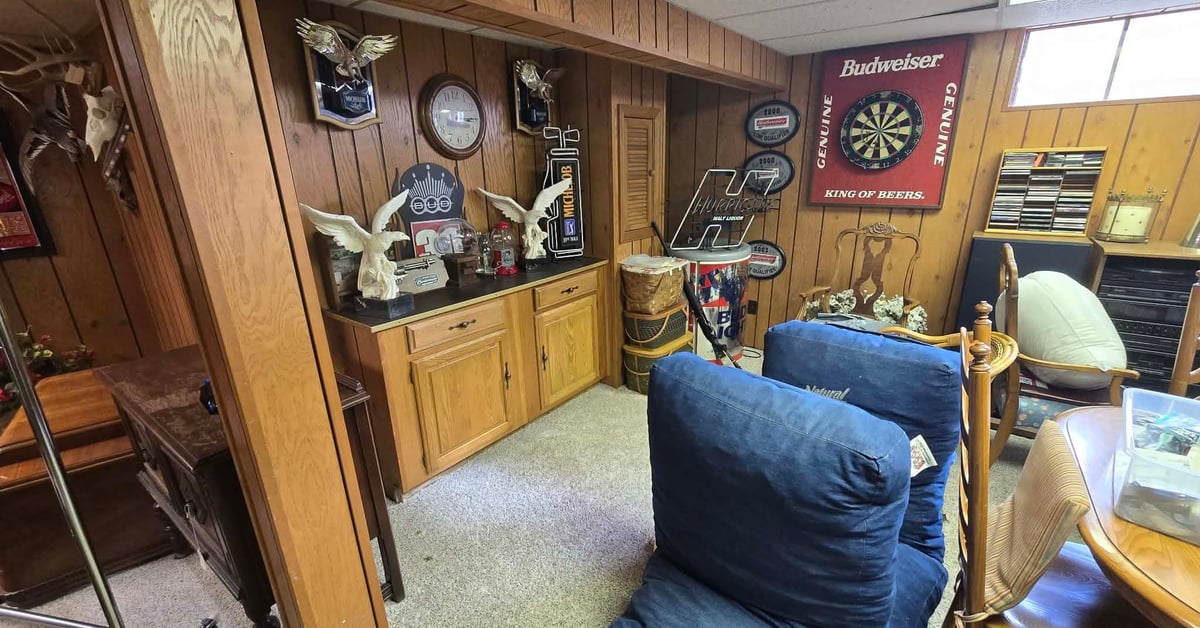
Cozy Wood-Paneled Basement Man Cave Bar
A finished basement recreation room with warm wood paneling on walls and ceiling. Features include mounted deer heads and antlers, Budweiser beer signs, dartboard, shelves displaying figurines, bottles, and collectibles, a bar area with stools, blue bean bag chairs, wooden table and chairs, and various rustic decor elements creating a classic man cave atmosphere.
What St. Louis Homeowners Say
Hear from homeowners across St. Louis who trusted us with their basement waterproofing needs. We are honored to have helped them protect their homes.
"Chad fixed my mold. He explained to me exactly how the mold happened and why it would not happen again. He was very kind to me. I explained I was suffering from a medical level of anxiety and he was very understanding. Every day, Chad made sure to communicate clearly and keep me informed throughout the entire process."
Bob Gaines
3 months ago
"Eversafe Restoration was incredible to work with. We had unexpected water damage and Chad responded quickly and professionally. He explained everything clearly and made sure we understood the repair process. The crew was efficient and thorough. Highly recommend!"
Andrea Herron
6 months ago
"They took care in giving me the best service. Very detailed oriented in repairing and finishing moisture damage in my home. They did such an excellent job, I won't think twice about calling Eversafe for anymore restoration needs I have in the future!"
Ryan McGovern
6 months ago
"11/10 would recommend! Great job, great price, and it took them no time at all."
Corey Holmes
3 months ago
"Did a great job."
Matt Guthrie
6 months ago
"Excellent service from start to finish. Professional and reliable."
Destiny Boschert
6 months ago
Basement Waterproofing Questions for St. Louis Homeowners
Get answers to the most common questions about basement waterproofing costs, methods, and solutions specific to the St. Louis area.
How much does it cost to waterproof a basement from the inside in St. Louis?
Interior basement waterproofing in St. Louis typically costs between $3,000 and $12,000 for most residential properties, with the final price depending on several key factors. The primary cost driver is linear footage of the perimeter drainage system needed. A small basement requiring 60 linear feet of French drain installation costs significantly less than a large finished basement needing 150 feet of drainage around the entire perimeter. Additional factors include whether concrete floor removal and replacement is required, the number and condition of existing sump pits, and whether the basement is finished or unfinished. Finished basements require careful removal and replacement of flooring, drywall, and trim, adding to overall costs. St. Louis homes present unique considerations due to our region's challenging soil conditions. The clay-heavy soils throughout the metro area expand when wet and contract when dry, creating hydrostatic pressure against foundation walls that many waterproofing systems must address. Older homes in neighborhoods like Tower Grove, Soulard, and the Central West End often have limestone or brick foundations that require specialized sealing techniques. While interior waterproofing represents a significant investment, compare it to the alternative costs. Foundation structural repair from water damage easily exceeds $15,000 to $30,000. Mold remediation after a chronically wet basement runs $5,000 to $15,000 or more. Professional waterproofing prevents these far more expensive problems while protecting your home's value and your family's health.
What are the signs I need basement leak repair?
Several warning signs indicate your St. Louis basement needs professional waterproofing attention. Efflorescence is one of the most common early indicators. This white, chalky, or powdery substance appears on basement walls when water seeps through concrete or masonry, deposits dissolved minerals, and then evaporates. If you notice efflorescence on your foundation walls, water is actively penetrating, even if you do not see visible moisture. Musty odors signal moisture problems even when you cannot see water. That distinctive basement smell results from mold and mildew growth on damp surfaces. In St. Louis's humid climate, even slightly elevated moisture levels create conditions for mold colonization. If your basement smells musty, moisture is present somewhere, and the source needs identification and repair. Visible cracks in foundation walls deserve immediate attention. Horizontal cracks indicate serious hydrostatic pressure from saturated soil pushing against your foundation. Vertical and diagonal cracks may result from settling but still provide pathways for water intrusion. Stair-step cracks in brick or block foundations follow mortar joints and often indicate both structural movement and water problems. Other warning signs include damp or wet carpet, particularly along exterior walls; peeling paint or bubbling on basement walls; rust stains on concrete floors near support posts or water heaters; and water stains or tide marks showing previous flooding levels. In St. Louis, where spring thunderstorms can drop inches of rain in hours, addressing these warning signs before the next heavy rain prevents far more serious damage.
Is basement waterproofing worth it in the St. Louis area?
Basement waterproofing is absolutely worth the investment for St. Louis homeowners, and our regional conditions make it even more valuable than in many other parts of the country. Missouri experiences some of the most dramatic weather patterns in the United States, with heavy spring thunderstorms, occasional flash flooding, and significant seasonal precipitation swings. St. Louis averages over 40 inches of rain annually, with spring months often bringing intense storms that overwhelm drainage systems. The financial benefits of waterproofing extend well beyond simply avoiding wet carpet. A properly waterproofed basement adds usable square footage to your home, effectively increasing living space at a fraction of new construction costs. For a 1,000 square foot basement, waterproofing that enables finishing the space can add $30,000 to $50,000 in home value, far exceeding the waterproofing investment. Property value protection is equally important. A wet basement is one of the most damaging issues during home inspections. Potential buyers either walk away or demand significant price reductions, often $10,000 to $20,000 or more, to address moisture problems. Homes with documented waterproofing systems sell faster and command better prices. Health benefits matter most to many families. Chronic basement moisture creates ideal conditions for mold growth, dust mites, and other allergens. In St. Louis's humid summers, an unwaterproofed basement can harbor significant mold colonies that affect indoor air quality throughout the home. For families with asthma, allergies, or respiratory sensitivities, waterproofing directly improves quality of life.
How long does a basement waterproofing system last?
The lifespan of basement waterproofing components varies significantly by type, making it important to understand what you are getting when you invest in waterproofing for your St. Louis home. Exterior waterproofing membrane systems, when properly installed, typically last the lifetime of the structure. These rubberized coatings applied directly to exterior foundation walls create a permanent barrier against water intrusion. However, exterior systems require excavation down to the foundation footer, making them more expensive to install but providing decades of protection without maintenance. Interior drainage systems including French drains and perimeter channels generally last 25 to 50 years or more. The perforated PVC pipe, gravel bed, and drainage channels installed beneath your basement floor have no moving parts and resist degradation. However, St. Louis's clay-heavy soils can introduce fine sediment into drainage systems over time, potentially reducing efficiency after several decades. Regular maintenance and occasional inspection keeps these systems functioning optimally. Sump pumps have shorter lifespans, typically 7 to 15 years depending on quality and usage frequency. In St. Louis, where sump pumps may run frequently during spring rains, pumps tend toward the shorter end of that range. Primary pumps should be inspected annually and replaced proactively before failure. Battery backup systems require battery replacement every 3 to 5 years, with the backup pump itself lasting 10 to 15 years. Eversafe Restoration provides comprehensive warranties on our waterproofing systems, including both workmanship and materials coverage. We use commercial-grade components rated for continuous duty and back our installations with guarantees that provide peace of mind for St. Louis homeowners.
Can you fix a basement wall crack from the inside?
Yes, most basement wall cracks can be effectively and permanently repaired from the inside using professional injection techniques, eliminating the need for expensive exterior excavation. The key is properly diagnosing the crack type and selecting the appropriate repair method. Non-structural cracks, including most vertical cracks less than one-quarter inch wide, respond excellently to epoxy injection. Epoxy is a rigid adhesive that bonds the crack back together with strength exceeding the original concrete. For cracks that may experience minor movement due to seasonal soil expansion in St. Louis's clay soils, flexible polyurethane injection provides a permanent seal that moves with the foundation. Polyurethane expands as it cures, filling even irregular crack geometry and creating a waterproof barrier. Structural cracks require more comprehensive approaches. Horizontal cracks, wide diagonal cracks, and cracks accompanied by wall bowing indicate significant pressure or foundation movement. While these cracks can be sealed from inside, addressing the underlying structural issue often requires additional reinforcement. Carbon fiber straps bonded to the wall surface provide tremendous strength to resist further movement. Steel I-beams anchored to the floor and ceiling can arrest and even reverse wall bowing over time. For St. Louis homes with older limestone, brick, or block foundations, crack repair often involves tuckpointing deteriorated mortar joints in addition to sealing active cracks. Our technicians assess each crack individually, determining whether it is actively leaking, whether structural concerns exist, and what repair method will provide the most durable result. Most interior crack repairs can be completed in a single day with minimal disruption to your home.
How do French drains work in St. Louis basements?
French drains installed in St. Louis basements are engineered drainage systems designed to intercept groundwater before it can flood your basement floor. Understanding how they work helps explain why they are so effective in our region's challenging soil conditions. Installation begins by removing a strip of concrete around the basement perimeter, typically 12 to 18 inches wide. Crews then excavate a trench down to, or slightly below, the footer level where water accumulates. A bed of washed gravel goes into the trench, followed by perforated PVC drainage pipe designed to collect water from all directions. Additional gravel covers the pipe, and a filter fabric may be placed to prevent soil from clogging the system. New concrete replaces the removed strip, leaving only a small reveal or no visible evidence of the drainage system. The system works by gravity and hydrostatic pressure principles. When groundwater saturates the soil around your foundation and creates pressure against basement walls and floor, that water seeks the path of least resistance. The gravel bed and perforated pipe provide an easier path than pushing through concrete, so water flows into the drainage system instead. The piping channels water to one or more sump pits where pumps discharge it away from your foundation. For St. Louis specifically, French drains address the hydrostatic pressure created by our clay-heavy soils. Clay expands dramatically when wet, creating enormous pressure that can cause basement floors to heave and crack. By providing a relief path for groundwater, French drains reduce this pressure, protecting not just against water intrusion but against structural damage to your basement floor and walls.
Do I need a battery backup for my sump pump?
Battery backup systems are essential for St. Louis homeowners relying on sump pumps for basement water protection, and our regional weather patterns make them even more critical than in many other areas. The primary purpose of battery backup is protection during power outages, which occur most frequently during the exact storms that send the most water toward your basement. Missouri experiences severe thunderstorms with high winds, lightning, and heavy rainfall that can knock out power for hours or even days while simultaneously producing the conditions that require your sump pump most urgently. Without battery backup, your primary pump becomes useless precisely when you need it most. During severe storms, St. Louis electric utilities often experience widespread outages affecting thousands of homes. April through June, our peak severe weather season, coincides with ground saturation from spring rains. A single night without power during a heavy rain event can result in several inches of basement flooding. Battery backup systems activate automatically when power fails, continuing to pump water while you wait for power restoration. Beyond power outages, battery backups provide redundancy against primary pump failure. Even quality sump pumps eventually wear out, and failures often occur during heavy pumping cycles when the pump is working hardest. A battery backup serves as a secondary pump that takes over if your primary pump fails for any reason. For St. Louis homeowners who travel, battery backup provides peace of mind. A severe storm passing through while you are on vacation could flood your basement before you even know power has failed. Battery backup systems protect your home even when you cannot be there to respond. Modern battery backup systems also include alarm features that alert you to pump activation, low battery, and high water conditions.
How do you stop water from coming through the basement floor?
Water coming up through basement floors is a common problem in St. Louis due to hydrostatic pressure from our clay-heavy soils and high water tables in many areas. Stopping floor water intrusion requires addressing the underlying pressure and providing controlled drainage pathways. Hydrostatic pressure occurs when saturated soil surrounding and beneath your foundation creates enormous upward force against the basement floor. Concrete is porous, and when pressure becomes sufficient, water forces its way through the slab, through cracks, and especially through the cold joint where the floor meets the foundation walls. During heavy rains or spring snowmelt, this pressure can become intense enough to crack floors or cause noticeable water pooling even in basements without visible damage. Interior drainage systems are the most effective solution for hydrostatic floor water. French drains installed around the perimeter intercept water at the floor-to-wall joint before it enters the basement. For severe cases, sub-slab drainage systems with drainage mat materials extend beneath portions of the floor, collecting water across a larger area and channeling it to sump pits for removal. Sealing the floor-to-wall joint, known as the cove joint, provides additional protection. This joint between poured floor and poured or block walls is inherently weaker than solid concrete and represents a primary entry point for water under pressure. Professional sealants and drainage channels specifically target this vulnerable area. Floor crack repair using epoxy or polyurethane injection seals individual cracks, though in St. Louis's active soil conditions, new cracks may develop over time if hydrostatic pressure is not addressed through drainage. A comprehensive waterproofing system addressing both drainage and sealing provides the most reliable long-term protection against floor water intrusion.
Still have questions?
We're here to help you find the answers.
Serving St. Louis from Saint Charles
Our Saint Charles headquarters provides basement waterproofing services throughout St. Louis city and county. We offer free on-site inspections and estimates for all waterproofing projects.
Hours
Monday - Friday: 9am - 6pm
Saturday: 9am - 5pm
Sunday: Closed
Ready for a Permanently Dry Basement?
Stop worrying about water every time it rains. Our comprehensive waterproofing solutions are designed for St. Louis soil conditions and backed by lifetime warranties. Schedule your free inspection today.
Protect Your St. Louis Home from Water Damage
Our Saint Charles team serves St. Louis with professional basement waterproofing, interior drainage systems, sump pump installation, and foundation crack repair. Call now for a free inspection or request your estimate online.