Flooded Basement? Emergency Cleanup in Under 60 Minutes
Water in your basement is an emergency. Our Saint Charles team responds 24/7 with commercial-grade pumps and structural drying equipment. We pump out flooded basements across St. Charles, O'Fallon, St. Peters, and the entire St. Louis metro.
Emergency Flooded Basement Pump Out & Extraction
When your basement floods, every minute counts. Standing water damages flooring, drywall, and belongings while creating the perfect environment for mold growth. Our Saint Charles emergency crews arrive fast with the heavy-duty equipment needed to remove water quickly and prevent further damage to your home.
Industrial-Grade Submersible Pumps
Our truck-mounted pumps remove thousands of gallons per hour, far faster than any rental equipment. We bring multiple pumps for severe flooding to extract water as quickly as possible.
Complete Water Extraction
Standing water is just the beginning. We extract water from concrete floors, saturated carpets, inside wall cavities, and from drywall that has wicked moisture several feet above the waterline.
24/7 Dispatch Throughout St. Louis Metro
Heavy Missouri rain events don't wait for business hours. Our crews dispatch around the clock to O'Fallon, St. Peters, Wentzville, Chesterfield, and throughout Saint Charles County.
Safety Inspection First
Before anyone enters your flooded basement, we assess electrical hazards and check for gas leaks. Your family's safety comes before property, and we never compromise on safety protocols.
Why Speed Matters
Within 1 Hour
Drywall begins absorbing water, furniture stains start, and contents begin damage.
Within 24 Hours
Drywall swells and deteriorates, metal begins rusting, mold spores activate.
Within 48 Hours
Mold growth begins, wood warping occurs, biohazard contamination spreads.
After 1 Week
Structural damage likely, extensive mold remediation required, restoration costs multiply.
We arrive in under 60 minutes to stop the damage timeline.
Common Causes of Basement Flooding in St. Louis Metro
Saint Charles County's unique geography and Missouri weather patterns create specific basement flooding challenges. Understanding the cause helps us provide the right solution and prevent future incidents.
Storm Water & Heavy Rain
Missouri's spring and summer thunderstorms can dump several inches of rain in hours. When the ground becomes saturated, hydrostatic pressure forces water through foundation walls and floor joints. Homes near creeks or in low-lying areas of O'Fallon and St. Peters face higher risk during severe weather events.
Treatment: Emergency extraction, dehumidification, foundation sealing
Sump Pump Failure
Your sump pump is your basement's last line of defense. When it fails due to mechanical issues, clogged intake, or power outages during storms, groundwater quickly floods your basement. Many Saint Charles homes rely solely on sump pumps, making this one of the most common emergency calls we receive.
Treatment: Extraction, pump replacement, battery backup installation
Sewage Backup (Category 3)
Sewage backups are the most hazardous basement flooding situation. They occur when municipal sewer lines become overwhelmed during storms or when tree roots invade lateral lines. This black water contains dangerous bacteria, viruses, and parasites that require specialized extraction and sanitization.
Treatment: Hazmat protocols, full sanitization, material removal
Burst or Frozen Pipes
Missouri winters bring freezing temperatures that can burst water supply lines, especially in unfinished basements with exposed plumbing. A burst pipe can release hundreds of gallons per hour, quickly flooding your basement. This clean water (Category 1) is easier to address but still requires rapid response.
Treatment: Water shut-off, extraction, structural drying
Water Heater Failure
Most basement water heaters hold 40 to 80 gallons of water. When tanks corrode and fail, they release all that water at once. Older water heaters in Saint Charles area homes (10+ years) are at higher risk. The water itself is clean, but the sudden release causes significant flooding.
Treatment: Water extraction, flooring restoration, content drying
Foundation Cracks & Seepage
Chronic basement water problems often stem from foundation cracks or deteriorating waterproofing. Saint Charles County's expansive clay soils shift seasonally, creating cracks that allow water entry. While not always an emergency, persistent seepage leads to mold, efflorescence, and structural damage over time.
Treatment: Crack injection, interior/exterior waterproofing, French drains
The St. Louis metro area faces unique basement flooding challenges due to its geography. Homes in the Missouri River floodplain, including parts of St. Charles, Chesterfield, and Wildwood, deal with higher groundwater tables and flood risk. The region's clay-heavy soil retains water and creates significant hydrostatic pressure against foundations during wet periods. Combined with Missouri's volatile weather patterns that bring heavy spring storms and occasional flash flooding, basement water damage is one of the most common emergency calls we respond to.
Comprehensive Wet Basement Restoration Process
Professional basement flood cleanup is more than pumping out water. Our IICRC-certified process ensures your basement is properly dried, sanitized, and restored to prevent mold growth and structural damage.
Emergency Assessment & Safety Check
Before anyone enters your flooded basement, our technicians assess electrical hazards and check for gas leaks. We identify the water source, categorize the water (clean, gray, or black water), and determine the scope of damage. This assessment drives our restoration plan and provides documentation for your insurance claim.
Water Extraction & Pump Out
Using commercial-grade submersible pumps and truck-mounted extractors, we remove standing water rapidly. Our equipment removes thousands of gallons per hour, far exceeding what rental equipment can achieve. We extract water from carpet, padding, inside wall cavities, and from porous materials that have absorbed moisture.
Damaged Material Removal
Water-damaged materials that cannot be saved must be removed to prevent mold growth and allow proper drying. This typically includes carpet padding (which cannot be dried), severely damaged drywall, saturated insulation, and any materials contaminated by sewage or gray water. We carefully remove only what's necessary, minimizing your restoration costs.
Advanced Dehumidification & Structural Drying
Removing standing water is only the first step. Moisture trapped in concrete, wood framing, and remaining materials must be extracted through professional drying. We deploy LGR (Low Grain Refrigerant) dehumidifiers that remove far more moisture than standard units, combined with industrial air movers to accelerate evaporation. We monitor moisture levels daily using professional meters and thermal imaging to ensure complete drying.
Sanitization & Antimicrobial Treatment
All flood water, even from clean sources, can introduce bacteria and contaminants. For gray water and sewage backups, thorough sanitization is critical for your family's health. We apply EPA-registered antimicrobial treatments to all affected surfaces to kill existing bacteria and mold spores while preventing new growth during the drying process.
Final Inspection & Restoration
Once moisture levels return to safe standards, we conduct a final inspection to verify complete drying. We provide moisture readings and documentation for your records and insurance. If needed, we can also handle reconstruction, replacing drywall, flooring, and other materials to return your basement to its pre-loss condition.
Professional Equipment Makes the Difference
Our trucks carry thousands of dollars in commercial restoration equipment, not the rental-grade tools available at hardware stores. This professional equipment extracts water faster, dries structures more completely, and prevents the secondary damage that leads to mold and structural issues.
Submersible Pumps
Industrial pumps that remove 3,000+ gallons per hour, clearing flooded basements in a fraction of the time.
LGR Dehumidifiers
Low Grain Refrigerant technology removes up to 30 gallons of moisture per day, even in humid Missouri summers.
Thermal Imaging
Infrared cameras detect hidden moisture behind walls and under floors that visual inspection cannot reveal.
Moisture Meters
Professional meters measure moisture content in wood, drywall, and concrete to verify complete drying.
How to Prevent Future Basement Flooding
After experiencing a basement flood, most homeowners want to ensure it never happens again. While we cannot control Missouri's weather, you can significantly reduce your flooding risk with proper maintenance and waterproofing measures.
Test Your Sump Pump Monthly
Pour water into the pit until the pump activates. If it doesn't turn on or drains slowly, call for service before the next storm.
Install a Battery Backup System
Power outages often accompany the storms that cause flooding. A battery backup keeps your sump pump running when you need it most.
Clean Gutters and Extend Downspouts
Clogged gutters overflow near your foundation. Extend downspouts at least 4-6 feet from your home to keep water away.
Check and Correct Grading
Soil should slope away from your foundation at one inch per foot for the first six feet. Regrade if water pools near your home.
Consider French Drain Installation
Interior French drains capture groundwater before it enters your living space, directing it to your sump pump for removal.
Seal Foundation Cracks
Even hairline cracks allow water entry. Seal visible cracks with hydraulic cement or epoxy injection for larger cracks.
Basement Waterproofing Services
In addition to flood cleanup, Eversafe offers comprehensive basement waterproofing solutions to prevent future flooding. Our services include:
24/7 Basement Flood Response in Saint Charles & St. Louis Metro
Our emergency crews respond to basement flooding throughout Saint Charles County and the greater St. Louis metro area. No matter where you are, we can typically arrive within 60 minutes.
Saint Charles County faces unique basement flooding challenges. Our proximity to the Missouri and Mississippi Rivers means higher groundwater tables, especially during spring flooding season. The region's clay-heavy soil retains water and creates hydrostatic pressure against foundations. Combined with Missouri's volatile spring and summer storms, basement flooding is a common emergency for homeowners throughout O'Fallon, St. Peters, Wentzville, and the surrounding communities.
Our local presence in Saint Charles means faster response times than restoration companies based in St. Louis. When you call Eversafe, you're calling a neighbor who understands the specific challenges of basement flooding in this area. We know the local neighborhoods, common home construction types, and typical flooding patterns that affect homes in our community.
Recent Basement Flood Restoration Projects
See our basement flood cleanup work throughout Saint Charles County. From minor water intrusion to complete basement flooding, we restore properties to better-than-before condition.
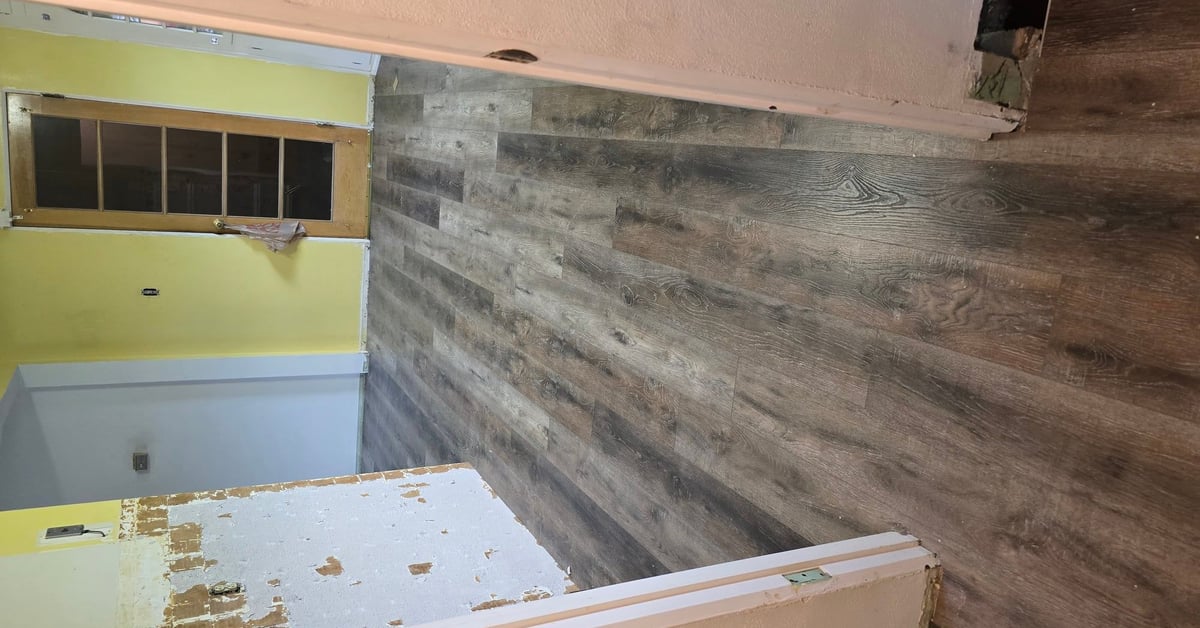
Basement Flooring Restoration Work in Progress
Overhead view into a basement area during renovation, featuring partially installed dark wood-grain laminate or vinyl plank flooring covering most of the floor space. Yellow painted drywall walls on both sides, an open wooden door with glass panels, a white bathtub or shower enclosure in the corner, exposed subfloor in patches, minor debris, and construction edges visible. Suggests water damage restoration with flooring replacement underway.
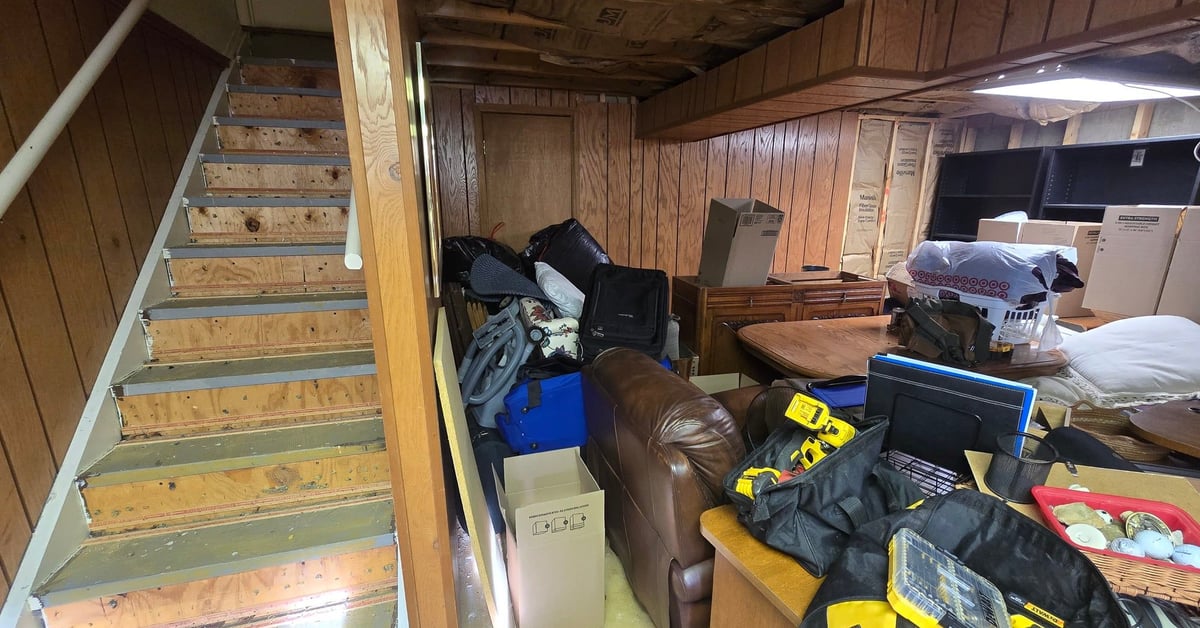
Cluttered Basement Before Restoration Work
A cluttered unfinished basement with wooden paneled walls, exposed wooden beams and pink insulation on the ceiling. A wooden staircase with railing descends from the left side. The floor space is filled with household items including a brown leather armchair, wooden desk cluttered with tools like a yellow drill and cases, multiple cardboard boxes, blue plastic bins, black garbage bags, pillows, baskets, and scattered debris. Fluorescent lighting illuminates the area, suggesting preparation for cleanup or restoration.
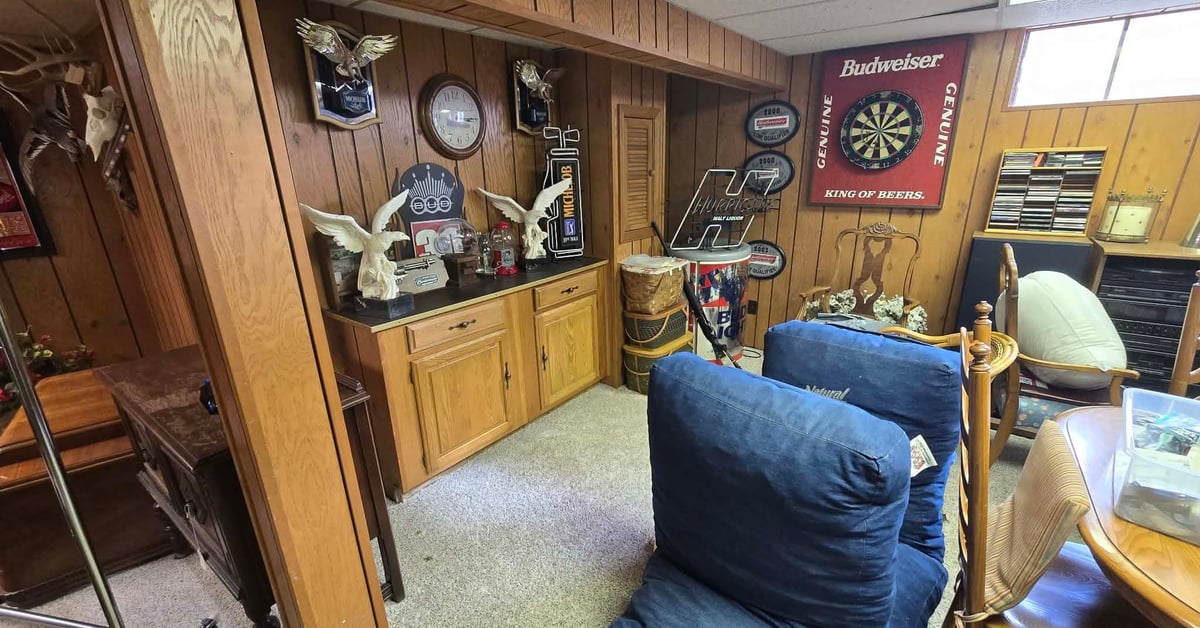
Cozy Wood-Paneled Basement Man Cave Bar
A finished basement recreation room with warm wood paneling on walls and ceiling. Features include mounted deer heads and antlers, Budweiser beer signs, dartboard, shelves displaying figurines, bottles, and collectibles, a bar area with stools, blue bean bag chairs, wooden table and chairs, and various rustic decor elements creating a classic man cave atmosphere.
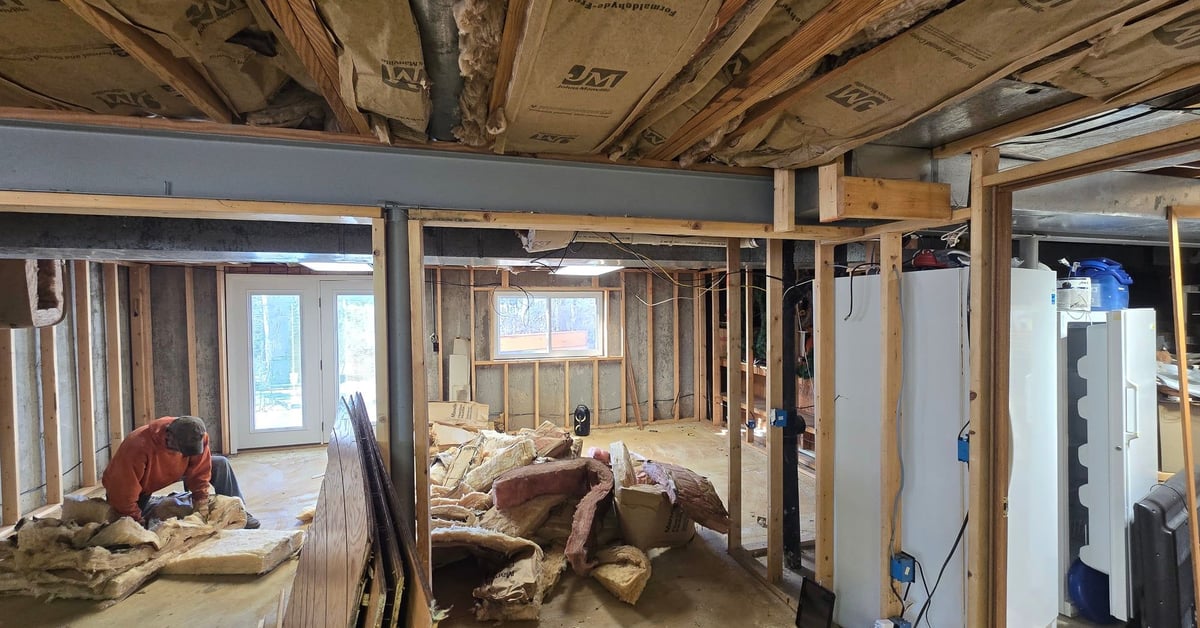
Worker Remodeling Basement with Framing and Insulation
In this basement renovation scene, a worker dressed in an orange uniform and protective gear kneels on the plywood subfloor, working on construction materials. The ceiling features exposed wooden joists wrapped in pink fiberglass insulation batts, some labeled. Walls are framed with wooden studs and metal beams, with partial drywall installation on some sections. Construction debris including wood scraps, insulation remnants, and tools litters the floor. Framed windows and doors allow natural daylight, and white cabinets or shelving units stand along one wall near blue storage bins.
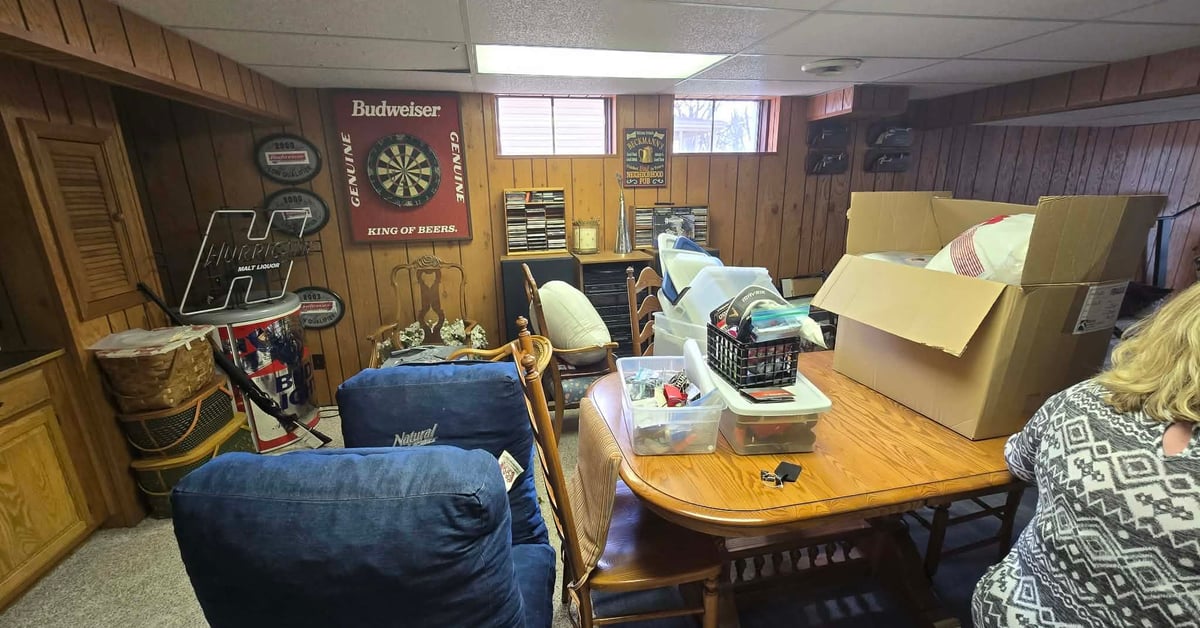
Cluttered Wood-Paneled Basement Rec Room
A basement recreation room with dark wood paneling on walls and ceiling, illuminated by fluorescent lights. Features include a dartboard with Budweiser branding, neon signs, shelves with beer memorabilia, wooden bar stools, blue upholstered armchairs, and an oval wooden table piled high with cardboard boxes, plastic storage bins, and miscellaneous items. A decorative barrel drum sits in one corner, and a woman with long blonde hair in a patterned top stands near the table. The space appears lived-in and cluttered, suggesting preparation for cleanup or restoration.
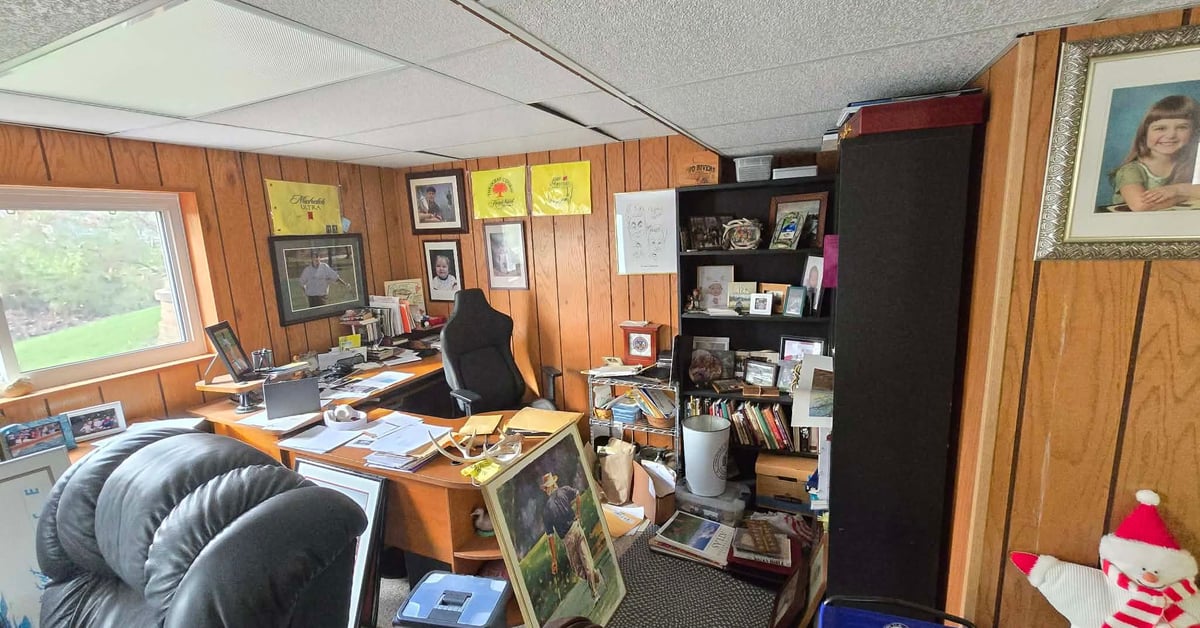
Cluttered Wood-Paneled Basement Home Office
A cluttered basement home office featuring wood-paneled walls, drop ceiling with fluorescent lighting, a large wooden desk with dual computer monitors, keyboard, papers, and office supplies, an ergonomic black gaming chair, additional leather chairs, overloaded bookshelves with books, photo frames, knick-knacks, and storage bins, framed pictures and posters on walls, a window with view of green grass outside, a Santa Claus plush doll, plants in frames, and various personal decorations scattered around the carpeted floor.
What Homeowners Say About Our Basement Flood Service
When your basement floods, you need a team you can trust. Here's what Saint Charles County homeowners say about their experience with Eversafe Restoration.
"Chad fixed my mold. He explained to me exactly how the mold happened and why it would not happen again. He was very kind to me. I explained I was suffering from a medical level of anxiety and he was very understanding. Every day, Chad made sure to communicate clearly and keep me informed throughout the entire process."
Bob Gaines
3 months ago
"Eversafe Restoration was incredible to work with. We had unexpected water damage and Chad responded quickly and professionally. He explained everything clearly and made sure we understood the repair process. The crew was efficient and thorough. Highly recommend!"
Andrea Herron
6 months ago
"They took care in giving me the best service. Very detailed oriented in repairing and finishing moisture damage in my home. They did such an excellent job, I won't think twice about calling Eversafe for anymore restoration needs I have in the future!"
Ryan McGovern
6 months ago
"11/10 would recommend! Great job, great price, and it took them no time at all."
Corey Holmes
3 months ago
"Did a great job."
Matt Guthrie
6 months ago
"Excellent service from start to finish. Professional and reliable."
Destiny Boschert
6 months ago
Basement Flood Cleanup FAQs
Get answers to common questions about basement flooding, water extraction, drying, and restoration services in Saint Charles County.
Why does my basement flood when it rains?
Basement flooding during rain is a common problem in the St. Louis metro area, and there are several reasons it happens. Hydrostatic pressure is the most common cause: when the soil around your foundation becomes saturated, water pressure builds up and forces water through cracks, joints, and porous concrete. Clogged or disconnected gutters and downspouts allow rainwater to pool near your foundation instead of draining away. Sump pump failure during heavy storms leaves your basement unprotected when you need it most. Foundation cracks, even small ones, provide a direct path for water entry. In Saint Charles County, our clay-heavy soil retains water longer than sandy soils, which increases hydrostatic pressure during and after rain events. Additionally, homes near the Missouri River floodplain face higher groundwater tables that contribute to basement flooding.
How much does basement flood repair cost in St. Charles?
Basement flood repair costs in St. Charles typically range from $1,500 to $10,000 or more, depending on several factors. The size of the flooded area is the primary factor: a small utility room will cost less than a finished basement. The category of water matters significantly. Clean water from a burst pipe (Category 1) costs less to address than sewage backup (Category 3), which requires extensive sanitization and disposal of contaminated materials. Materials needing replacement also impact costs: carpet, drywall, insulation, and flooring add to the total. For basic water extraction and drying of an unfinished basement, expect $1,500 to $3,500. A finished basement with carpet and drywall that needs removal and replacement can run $5,000 to $15,000. We provide free estimates and work directly with your insurance company to maximize your coverage. Most Saint Charles homeowners end up paying only their deductible.
Is basement flooding covered by homeowners insurance?
Whether basement flooding is covered depends on the cause and your specific policy. Standard homeowners insurance typically covers sudden and accidental water damage, such as a burst pipe or failed water heater. However, flooding from external sources like heavy rain, river overflow, or groundwater seepage is generally NOT covered by standard policies. You need separate flood insurance, usually through the National Flood Insurance Program (NFIP), for those situations. Many policies offer sump pump failure riders that cover damage when your sump pump fails or is overwhelmed during a storm. Sewage backup coverage is another add-on that protects against sewer line backups. At Eversafe, we offer direct insurance billing and work with adjusters to document your damage properly. We know exactly what documentation insurance companies need and can help you understand what's covered before we begin work.
How long does it take to dry a flooded basement?
Properly drying a flooded basement typically takes 3 to 5 days with professional equipment, though some situations require longer. Several factors affect drying time: the amount of water and how long it sat before extraction, the types of materials involved (concrete dries slower than wood), the humidity levels in and around your home, and the equipment used. We use commercial-grade LGR (Low Grain Refrigerant) dehumidifiers that extract significantly more moisture than household units. Our industrial air movers create airflow that accelerates evaporation from wet surfaces. We monitor moisture levels daily with professional meters and thermal imaging cameras to track progress and ensure we reach safe moisture content. Rushing the drying process can lead to mold growth, warped flooring, and structural damage, so we never cut corners. Your basement is dry when it reaches the proper moisture equilibrium, not before.
Can I save the carpet in my flooded basement?
Whether you can save your basement carpet depends on the category of water and how long it was saturated. For clean water (Category 1) from a burst pipe or supply line, carpet can often be saved if extraction begins within 24 to 48 hours. We extract the water, pull up the carpet, remove and discard the padding (padding cannot be saved), clean and sanitize the carpet, then dry and reinstall it. For gray water (Category 2) from washing machines or dishwashers, carpet can sometimes be saved with thorough cleaning and antimicrobial treatment, but it depends on saturation time. For black water (Category 3) from sewage backups or floodwater, carpet must be discarded. This water contains harmful bacteria, viruses, and other contaminants that cannot be fully removed from carpet fibers. Even with clean water, if carpet has been wet for more than 48 to 72 hours, mold has likely begun growing in the fibers and backing, making replacement the safer choice.
What should I do immediately after my basement floods?
When you discover a flooded basement, take these immediate steps to protect yourself and minimize damage. First, if water is more than an inch deep and could reach electrical outlets, do NOT enter the basement. Turn off power at the main breaker only if you can do so safely from a dry location. If you smell gas, leave immediately and call your gas company. Once the area is safe, try to identify and stop the water source if possible: shut off the main water valve for pipe failures, or unplug the source appliance. Call Eversafe immediately at (636) 219-9302 for emergency extraction. While waiting for our team, document the damage with photos and videos for your insurance claim. Move valuables and furniture to dry areas if you can do so safely. Do NOT use household vacuums to remove water, as they are not designed for water extraction and pose electrocution risks. Do NOT enter standing water if electrical systems may be compromised.
How do you prevent a basement from flooding again?
Preventing future basement flooding requires addressing both the immediate causes and underlying vulnerabilities. Sump pump maintenance is critical: test your pump monthly, clean the pit annually, and install a battery backup system for power outages during storms. Consider a second primary pump if your basement floods frequently. French drain installation along your basement perimeter captures groundwater before it enters your living space, directing it to the sump pit for removal. Outside your home, ensure proper grading so soil slopes away from your foundation at a rate of one inch per foot for the first six feet. Clean and repair gutters and downspouts, adding extensions to discharge water at least four feet from your foundation. Seal visible cracks in foundation walls and floors with hydraulic cement or professional-grade sealants. For persistent problems, exterior waterproofing with membrane systems provides the most comprehensive protection. We offer basement waterproofing services including French drain installation and sump pump upgrades to permanently solve your flooding issues.
Are there mold risks after a basement flood?
Yes, mold growth is a serious risk after any basement flood, and the window to prevent it is narrow. Mold can begin growing within 24 to 48 hours of water exposure in the right conditions: moisture, warmth, and organic materials like drywall, carpet, and wood framing. Saint Charles summers provide ideal temperatures for mold growth, making quick action essential. Professional water extraction and drying significantly reduce mold risk by removing moisture before mold can establish. We apply EPA-registered antimicrobial treatments to all affected surfaces to kill existing spores and prevent new growth. Thorough dehumidification is crucial because elevated humidity levels above 60% can support mold growth even after standing water is removed. Our drying process continues until moisture levels in materials return to normal ranges. If your basement flood was caused by sewage or sat for more than 48 hours, we recommend mold testing after restoration to ensure no hidden growth. Early intervention saves you from the higher costs and health risks of full mold remediation later.
Still have questions?
We're here to help you find the answers.
Basement Flood Emergency Response Saint Charles
Our crews dispatch from Saint Charles for rapid emergency response throughout the St. Louis metro. Call (636) 219-9302 for immediate help.
Hours
Monday - Friday: 9am - 6pm
Saturday: 9am - 5pm
Sunday: Closed
Flooded Basement? Get Help Now.
Every hour your basement stays flooded, the damage gets worse. Our Saint Charles emergency crews respond 24/7 with commercial-grade extraction equipment. Call now or request an emergency callback.