Understanding a Mold Remediation Estimate
For a St. Louis or St. Charles property, a useful estimate starts with the assessed conditions and a clear written scope—not an assumed regional price range.
What shapes the scope and cost?
The affected area is one factor, but materials, access, containment needs, moisture conditions, removal, and project requirements also matter. An attic with restricted access, a finished basement, and an open work area may need different plans even when the visible affected area is similar.
Eversafe uses a source-removal approach. Work may include containment, engineering controls, HEPA-filtered air filtration, removal of contaminated materials when required, HEPA vacuuming, detailed physical cleaning, moisture control, and measures to prevent cross-contamination.
Compare the work—not only the total
Check which materials and rooms are included, what will be removed, which cleaning and moisture-control work is proposed, how access is handled, and whether repair or replacement is included. Ask how changes in documented conditions would be addressed before additional work is authorized.
Separate testing, source repairs, and reconstruction
Laboratory testing is not automatically required before remediation. Post-remediation testing is not automatically included in the standard remediation scope or price. If specifically requested or required, testing or verification may be separately coordinated; an independent professional's findings remain separate from remediation.
Correcting a roof or plumbing leak, replacing insulation or finishes, and reconstruction are not automatically part of a remediation estimate. Identify responsibilities and included work in writing. Ongoing moisture conditions need to be addressed as part of planning, without promising that mold can never return.
Understand insurance responsibilities
Eversafe can provide supporting project documentation. Coverage and payment remain subject to the policy and carrier determination. Deductibles, depreciation, exclusions, limits, upgrades, non-covered work, and changes outside an approved scope may affect customer responsibility.
Information to have ready
For an assessment, describe the affected rooms and materials, when moisture was noticed, any known source, access limitations, prior work, and requirements from an owner, property manager, carrier, or consultant. Avoid disturbing materials just to obtain photographs.
Contact Eversafe to discuss your property, or read about our source-removal mold remediation approach.
Mold Remediation Project Photographs
Selected photographs from Eversafe’s portfolio.
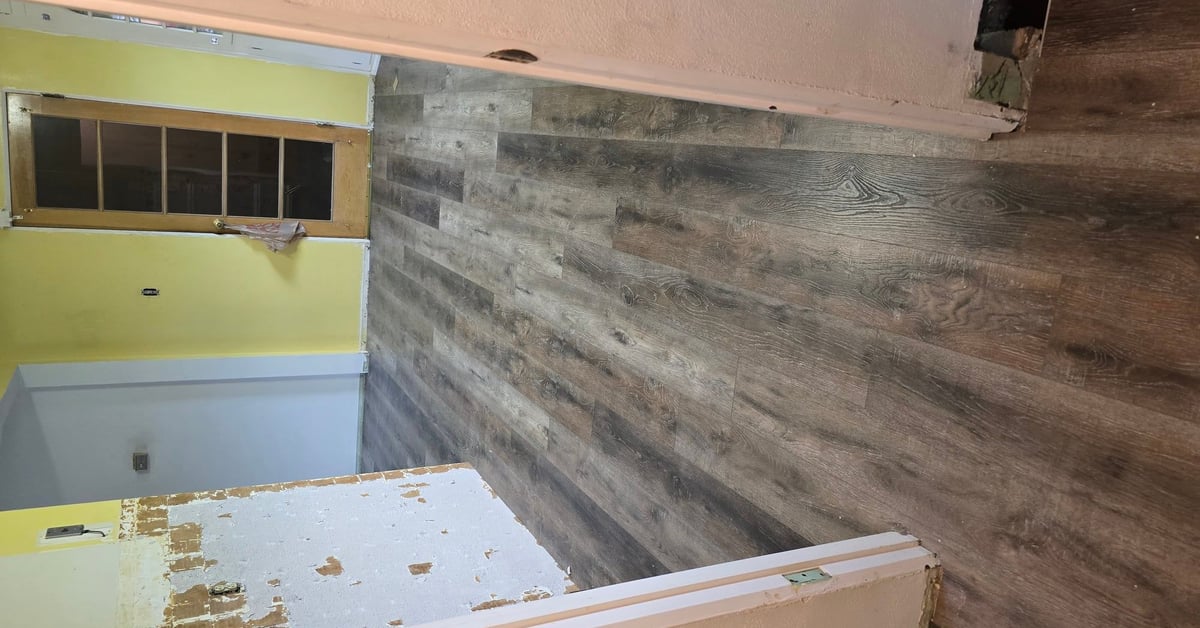
Basement Flooring Restoration Work in Progress
Overhead view into a basement area during renovation, featuring partially installed dark wood-grain laminate or vinyl plank flooring covering most of the floor space. Yellow painted drywall walls on both sides, an open wooden door with glass panels, a white bathtub or shower enclosure in the corner, exposed subfloor in patches, minor debris, and construction edges visible. Suggests water damage restoration with flooring replacement underway.
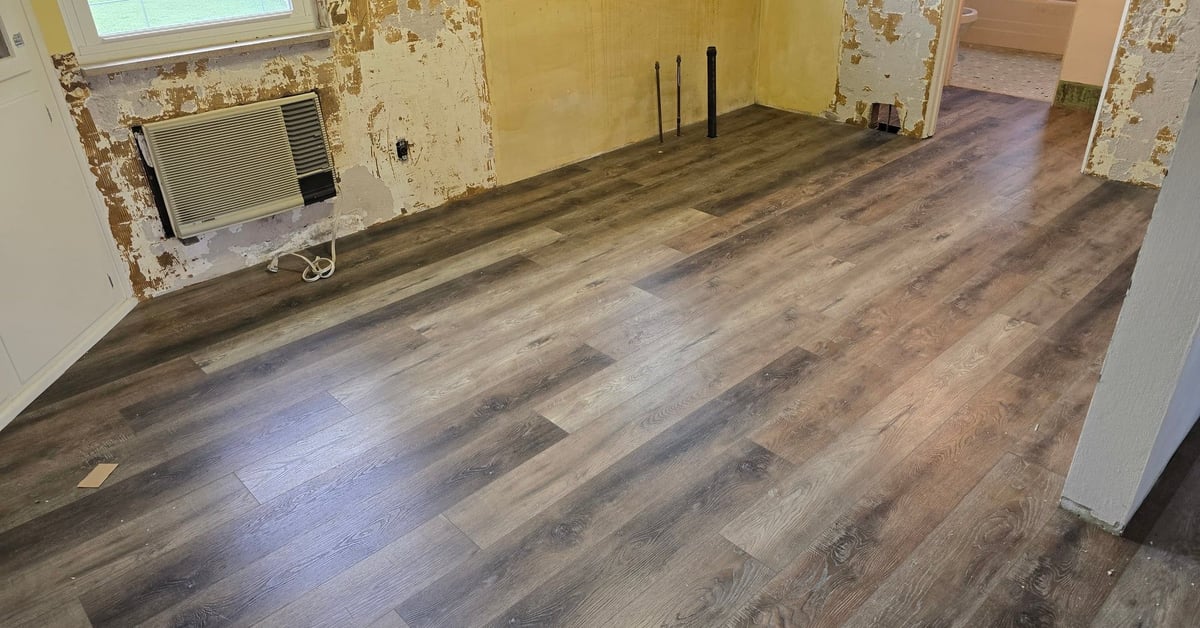
Water Damaged Bathroom Walls with New Flooring
A room undergoing restoration shows severely damaged walls with peeling yellowed plaster and exposed wooden studs, particularly around a window-mounted air conditioning unit. Freshly installed dark laminate flooring with a wood-grain pattern covers the entire floor. An open doorway reveals an adjacent bathroom featuring a white bathtub and tiled walls. Two metal poles stand in one corner, and minor debris is present, indicating active renovation work likely due to prior water damage.
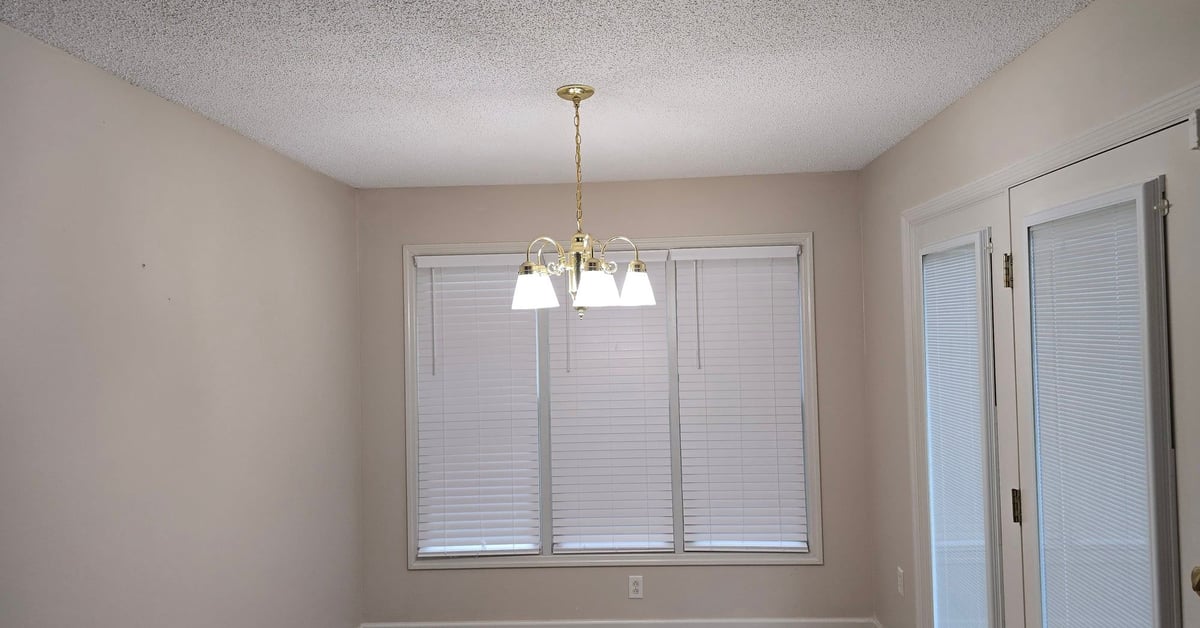
Empty Dining Room with Chandelier and Blinds
A spacious, empty dining room featuring light beige walls, a textured popcorn ceiling, a centered gold-toned four-arm chandelier with glass shades hanging from a chain, three large windows on the left covered with white horizontal blinds, a glass-paneled door on the right with blinds, and brown ceramic tile flooring. The room is clean, well-lit from natural light, and appears freshly restored with no visible damage or furnishings.
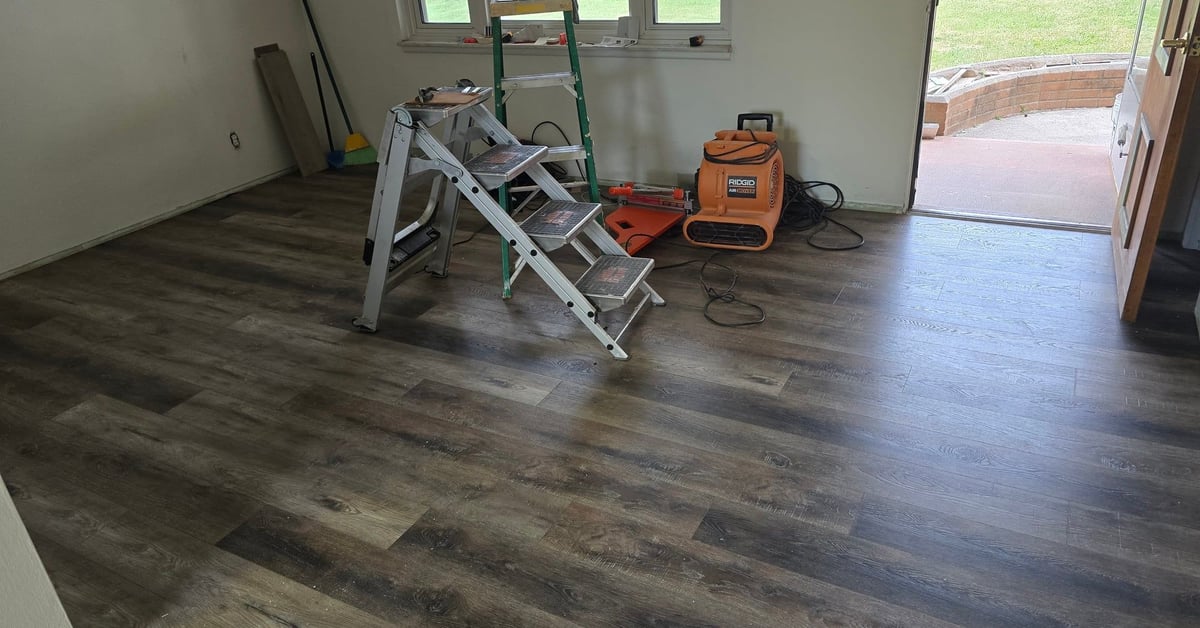
Room Restoration with New LVP Flooring and Equipment
Spacious empty room during restoration work, featuring freshly installed gray luxury vinyl plank (LVP) flooring throughout. An orange commercial air mover/dehumidifier is plugged in and operating in one corner, with orange extension cords nearby. Two aluminum ladders—one extended and one folded—are leaning against the wall, along with a broom, cardboard sheet, and minor wall patch. White walls, large window with view of grass outside, open door showing red truck parked on gravel driveway. Clean, well-lit space with visible electrical outlets and switch plate.
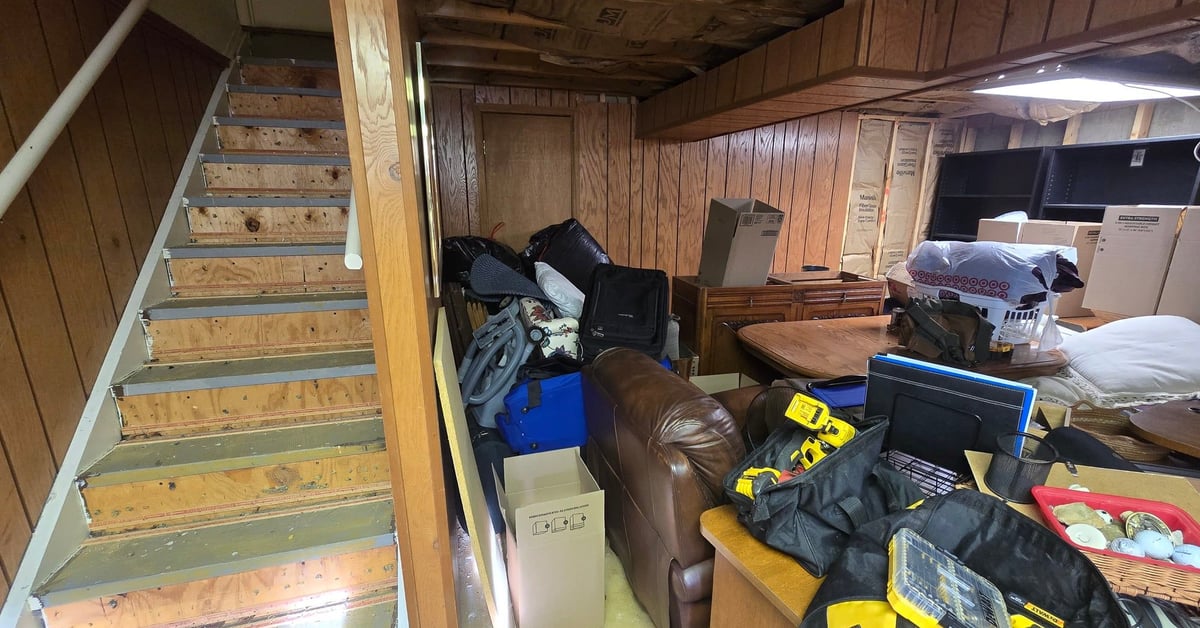
Cluttered Basement Before Restoration Work
A cluttered unfinished basement with wooden paneled walls, exposed wooden beams and pink insulation on the ceiling. A wooden staircase with railing descends from the left side. The floor space is filled with household items including a brown leather armchair, wooden desk cluttered with tools like a yellow drill and cases, multiple cardboard boxes, blue plastic bins, black garbage bags, pillows, baskets, and scattered debris. Fluorescent lighting illuminates the area, suggesting preparation for cleanup or restoration.
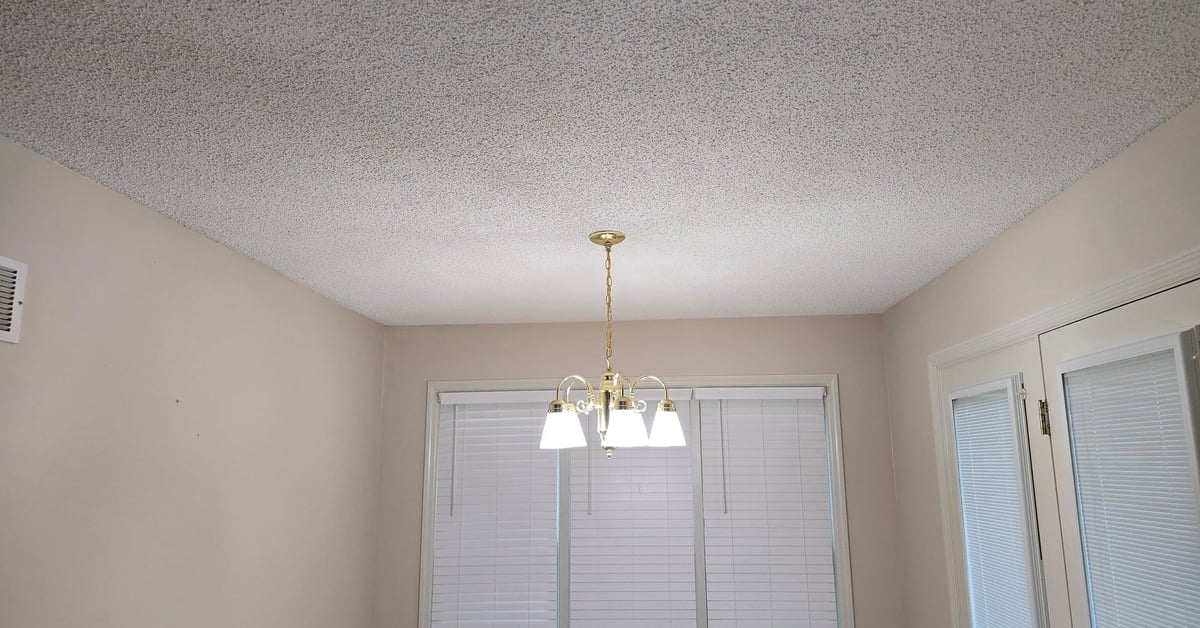
Clean dining room with chandelier and beige walls
A spacious, empty dining room featuring a textured popcorn ceiling, elegant gold chandelier with four bulb fixtures, light beige walls, large triple window covered with white horizontal blinds, and glass-paneled French doors. The room is well-lit, spotless, and appears freshly restored with no signs of damage or ongoing work.
Customer Reviews
Selected customer experiences, in their own words.
Selected customer reviews
"Chad fixed my mold. He explained to me exactly how the mold happened and why it would not happen again. He was very kind to me. I explained I was suffering from a medical level of anxiety and he was very understanding. Every day, Chad made sure to communicate clearly and keep me informed throughout the entire process."
Bob Gaines
3 months ago
"Eversafe Restoration was incredible to work with. We had unexpected water damage and Chad responded quickly and professionally. He explained everything clearly and made sure we understood the repair process. The crew was efficient and thorough. Highly recommend!"
Andrea Herron
6 months ago
"They took care in giving me the best service. Very detailed oriented in repairing and finishing moisture damage in my home. They did such an excellent job, I won't think twice about calling Eversafe for anymore restoration needs I have in the future!"
Ryan McGovern
6 months ago
"11/10 would recommend! Great job, great price, and it took them no time at all."
Corey Holmes
3 months ago
"Did a great job."
Matt Guthrie
6 months ago
"Excellent service from start to finish. Professional and reliable."
Destiny Boschert
6 months ago
Mold Remediation Estimate Questions
Can Eversafe quote a fixed price per square foot?
A general website rate cannot account for access, affected materials, moisture conditions, containment, removal, and project requirements. An estimate should describe the actual assessed scope rather than rely on a universal price per square foot.
Does mold color determine the price?
Eversafe scopes source-removal remediation around documented conditions and project requirements, not color-based marketing or an automatic surcharge for a named species.
Is post-remediation testing included?
Post-remediation testing is not automatically included in the standard mold remediation scope or price. When requested or required, testing or verification may be separately coordinated. Independent findings remain separate from Eversafe’s remediation work.
Are repairs included in the estimate?
Only when specified. Distinguish containment, removal, physical cleaning, moisture control, testing, and repair or replacement so the estimate makes clear what is and is not included.
Will my insurance cover the work?
Coverage and payment are determined by the applicable policy and carrier. Eversafe can provide estimates, photographs, moisture documentation, invoices, drying records, and other supporting records, but cannot promise coverage or limit your responsibility to a deductible.
Still have questions?
We're here to help you find the answers.