Certified Black Mold Removal in St. Louis & St. Charles
Protect your family from toxic Stachybotrys exposure. IICRC-certified technicians with Microbial Remediation Supervisor credentials. 1-year mold guarantee included with every remediation.
Black Mold is a Serious Health Hazard
Stachybotrys chartarum, commonly known as black mold, produces mycotoxins that can cause severe respiratory problems, neurological symptoms, and immune system suppression. If you suspect black mold in your St. Louis or St. Charles home, do not attempt to clean it yourself. Disturbing black mold without proper containment can release dangerous spores throughout your entire home.
Health Risks of Black Mold Exposure
Understanding the dangers of black mold is the first step to protecting your family. Stachybotrys mycotoxins can affect every member of your household, including pets.
Respiratory Problems
Black mold spores irritate the respiratory system, causing chronic coughing, wheezing, and shortness of breath. Asthma sufferers experience more frequent and severe attacks. Prolonged exposure can lead to permanent lung damage.
- Chronic coughing and wheezing
- Asthma attacks and flare-ups
- Sinus congestion and infections
Neurological Symptoms
Mycotoxins from black mold can cross the blood-brain barrier, causing cognitive impairment often described as brain fog. Memory problems, difficulty concentrating, and mood changes are common among exposed individuals.
- Persistent headaches
- Memory and concentration issues
- Dizziness and disorientation
Immune Suppression
Long-term black mold exposure weakens the immune system, making you more susceptible to infections and illness. Individuals with existing immune conditions face heightened risks from mycotoxin exposure.
- Chronic fatigue
- Frequent infections
- Skin rashes and irritation
Missouri's humid summers and cold winters create the perfect conditions for black mold growth in St. Louis and St. Charles homes. Basements are particularly vulnerable due to groundwater seepage, foundation cracks, and poor ventilation. The clay-heavy soil in our region holds moisture against foundations, making basement waterproofing and dehumidification essential for mold prevention.
Children, elderly residents, and those with compromised immune systems are most vulnerable to black mold health effects. If anyone in your household is experiencing unexplained respiratory symptoms, allergic reactions, or cognitive changes, particularly symptoms that improve when away from home, you should schedule a professional mold inspection immediately.
Identifying Black Mold in Your Home
Knowing what to look for can help you catch black mold infestations early, before they spread throughout your home and cause serious health problems.
Visual Warning Signs
Stachybotrys chartarum typically appears as dark greenish-black patches with a distinctive slimy or wet texture when actively growing. When dry, it becomes powdery and soot-like. Unlike common mildew, which grows in thin layers, black mold often appears in thick, dense colonies.
- Dark green to black coloration, often with greenish tints
- Slimy, wet texture that becomes powdery when dry
- Grows in circular patterns or irregular patches
Common Growth Areas in St. Louis Homes
Black mold requires consistent moisture and organic material to grow. In St. Louis and St. Charles homes, these conditions are most often found in specific areas that homeowners should regularly inspect.
- Behind wallpaper and drywall, especially in bathrooms
- Under sinks with slow leaks or drips
- Around leaky window frames and door seals
- Basement walls and floors, especially near floor drains
- HVAC systems and air ducts with condensation
Smell and Sensory Warning Signs
Often, you will smell black mold before you see it. The distinctive odor can alert you to hidden mold growth behind walls or under flooring where visual inspection is not possible.
- Strong musty, earthy odor that persists despite cleaning
- Smell intensifies in humid conditions or after rain
- Damp, stale air quality in specific rooms
When to Schedule Professional Testing
Visual identification alone cannot confirm Stachybotrys. Professional laboratory testing is essential for accurate identification and to determine safe remediation protocols.
- After any water damage event or flooding
- When family members have unexplained health symptoms
- During real estate transactions
- If you notice persistent musty odors
Safe & Thorough Toxic Black Mold Remediation
Our IICRC-certified technicians follow strict protocols developed specifically for toxic mold remediation. Every step is designed to protect your family and ensure complete elimination.
Inspection & Testing
We begin with a comprehensive inspection using thermal imaging to detect hidden moisture. Air samples and surface swabs are sent to an accredited laboratory for species identification and spore count analysis.
Containment Setup
Strict containment using 6-mil poly-sheeting and zip-poles isolates the affected area. We establish negative air pressure with HEPA-filtered air scrubbers to prevent spore migration to clean areas of your home.
Removal & Treatment
Contaminated materials are carefully removed and bagged for safe disposal. Structural surfaces are treated with EPA-registered biocides that penetrate porous materials to eliminate mold roots completely.
Clearance Testing
Post-remediation air quality testing verifies spore counts are at safe levels. Only after receiving lab clearance do we remove containment. Your report documents everything for insurance and peace of mind.
Our remediation protocol meets or exceeds IICRC S520 standards for mold remediation. We use commercial-grade HEPA air filtration that captures particles as small as 0.3 microns with 99.97% efficiency, ensuring that mold spores released during removal are captured rather than dispersed. Our biocide applications use EPA-registered antimicrobial products specifically formulated for Stachybotrys elimination on porous building materials.
Throughout the process, we maintain detailed documentation including moisture readings, photographs, air sample results, and materials removed. This documentation is essential for insurance claims and provides you with a complete record of the remediation work performed. We coordinate directly with your insurance company and provide all required documentation to support your claim.
Why IICRC Certification Matters for Black Mold Removal
Not all mold remediation companies are created equal. IICRC certification ensures your technicians have completed rigorous training in microbial remediation and follow industry-standard protocols that protect your health and your home.
Microbial Remediation Supervisor Certified
Our lead technicians hold the highest IICRC certification for mold work, ensuring expert oversight of every project.
Continuing Education Required
IICRC certification requires ongoing education to stay current with the latest remediation techniques and safety protocols.
Insurance Company Recognized
Most insurance companies require IICRC-certified contractors for mold remediation claims, ensuring your coverage is protected.
1-Year Mold Guarantee
Our confidence in our work, backed by written warranty
Don't Risk Your Family's Health. Call Now.
Black mold spreads quickly and becomes more dangerous the longer it remains. Our certified technicians are standing by to inspect your St. Louis or St. Charles home and provide a safe, thorough remediation plan.
Black Mold Remediation Projects
See examples of our black mold remediation work throughout St. Louis and St. Charles County. From basement infestations to attic contamination, we restore properties to safe, healthy conditions.
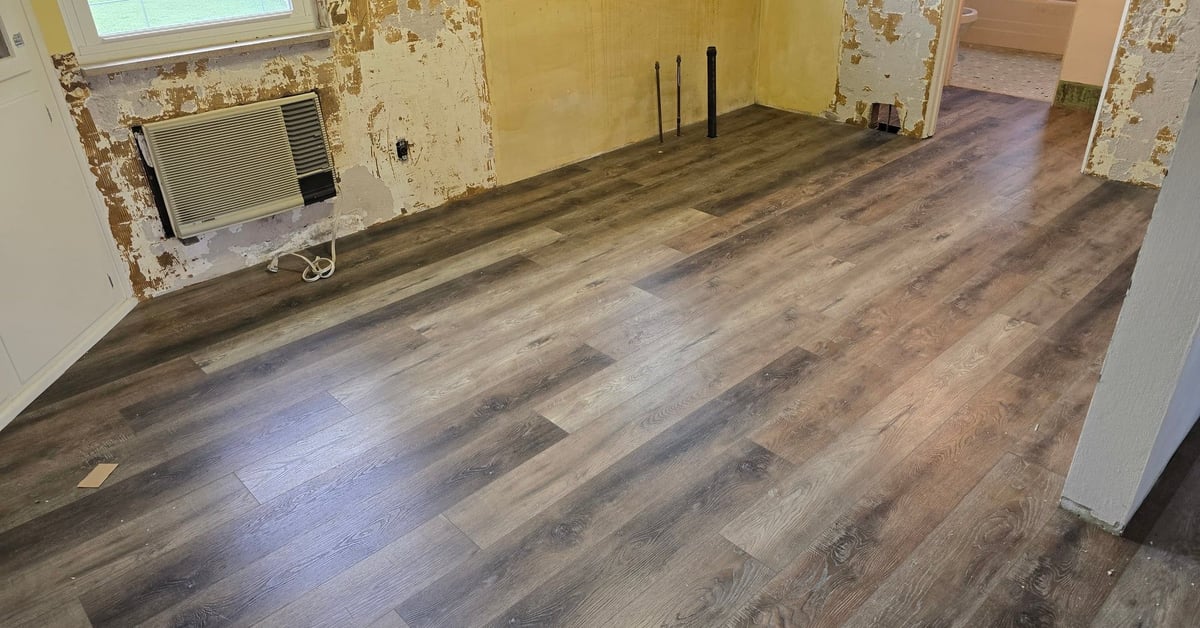
Water Damaged Bathroom Walls with New Flooring
A room undergoing restoration shows severely damaged walls with peeling yellowed plaster and exposed wooden studs, particularly around a window-mounted air conditioning unit. Freshly installed dark laminate flooring with a wood-grain pattern covers the entire floor. An open doorway reveals an adjacent bathroom featuring a white bathtub and tiled walls. Two metal poles stand in one corner, and minor debris is present, indicating active renovation work likely due to prior water damage.
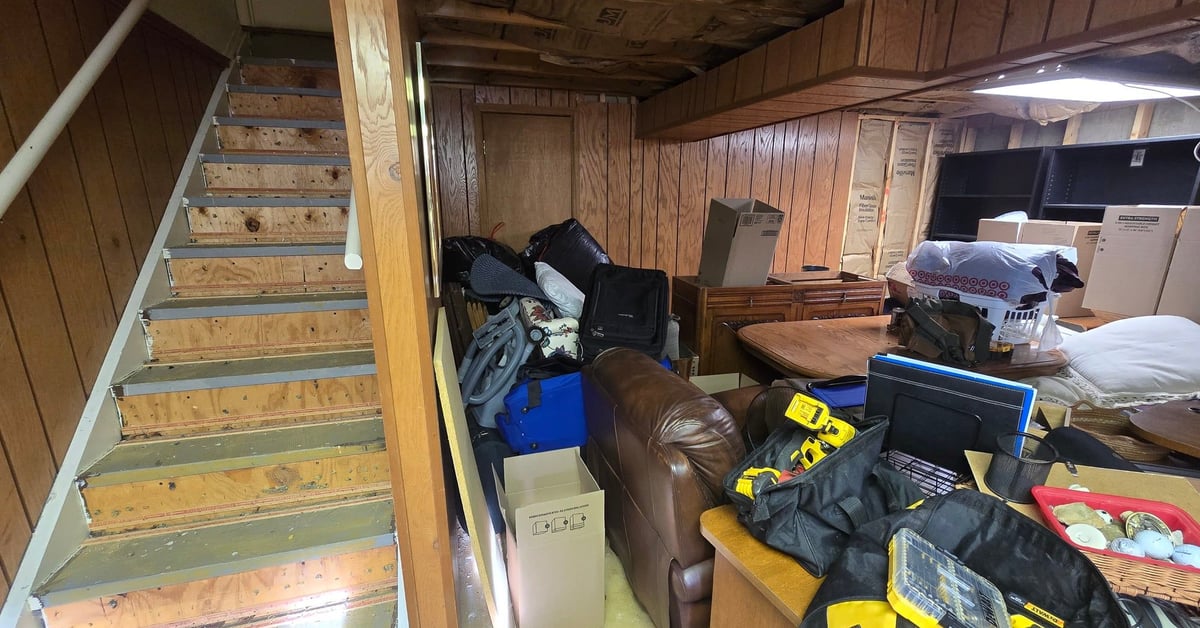
Cluttered Basement Before Restoration Work
A cluttered unfinished basement with wooden paneled walls, exposed wooden beams and pink insulation on the ceiling. A wooden staircase with railing descends from the left side. The floor space is filled with household items including a brown leather armchair, wooden desk cluttered with tools like a yellow drill and cases, multiple cardboard boxes, blue plastic bins, black garbage bags, pillows, baskets, and scattered debris. Fluorescent lighting illuminates the area, suggesting preparation for cleanup or restoration.
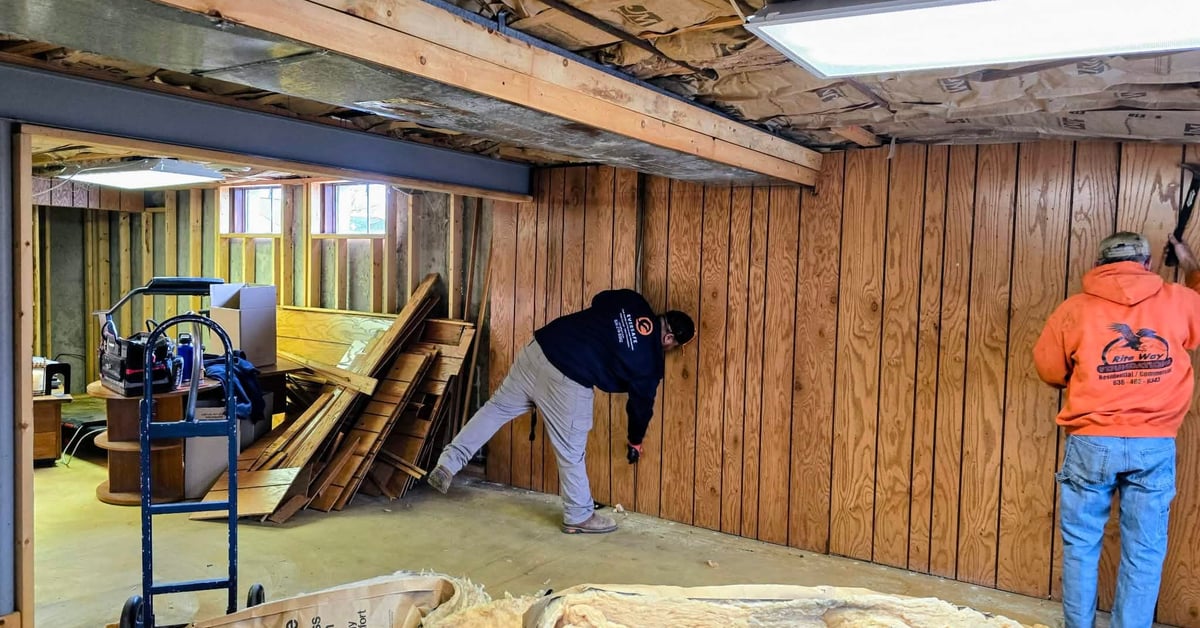
Workers Performing Basement Mold Remediation
In a dimly lit basement with wood-paneled walls partially removed, two workers from Eversafe Restoration LLC are actively engaged in remediation work. One technician, dressed in a blue hoodie, gray pants, and gloves, is crouched low, inspecting or removing sections of wood paneling and exposed pink fiberglass insulation from the wall. The other worker, wearing an orange hoodie and blue jeans, stands nearby observing. Scattered debris including wood scraps, insulation pieces, and plywood sheets lie on the concrete floor. Overhead, exposed wooden beams, yellow electrical wiring, and ductwork are visible under fluorescent lighting. This scene depicts ongoing mold remediation or water damage restoration efforts.
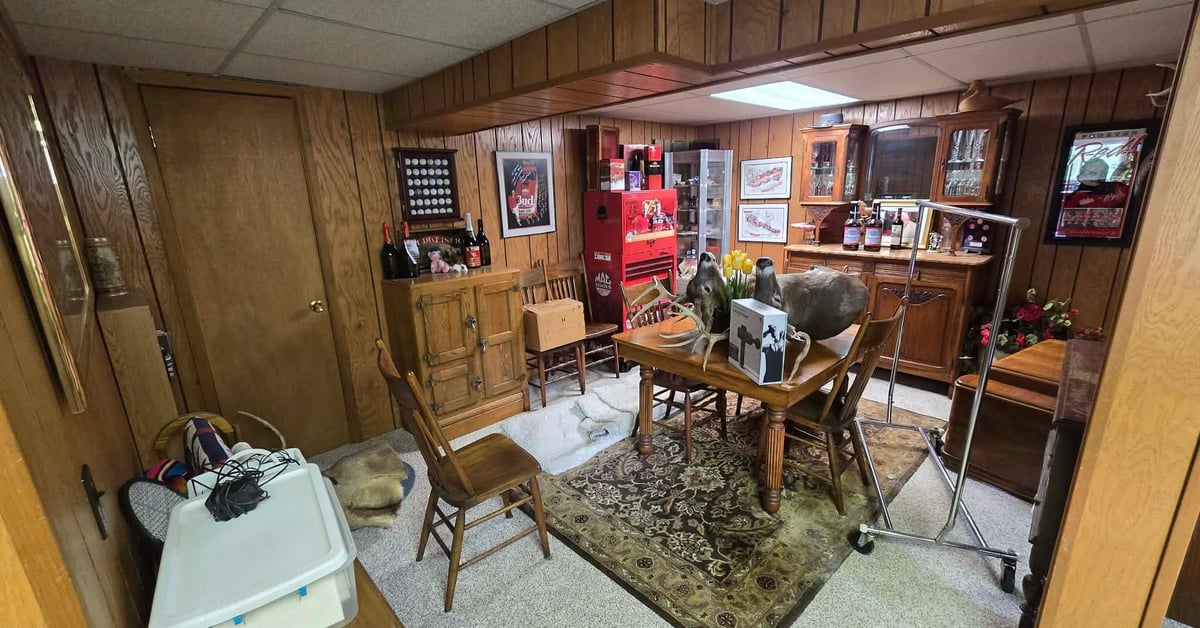
Cluttered Wood-Paneled Basement Bar Before Restoration
A detailed view of a finished basement recreation room with dark wood paneling on walls and ceiling, featuring a vintage red Coca-Cola vending machine, wooden bar cabinets stocked with liquor bottles, glasses, and memorabilia, a wooden dining table with four chairs, an office printer on a stand, area rugs, potted plants, framed posters, shelves with collectibles, and a clothes rack. The space appears lived-in and cluttered, suggesting a need for cleanup and restoration, likely due to potential water damage common in basements.
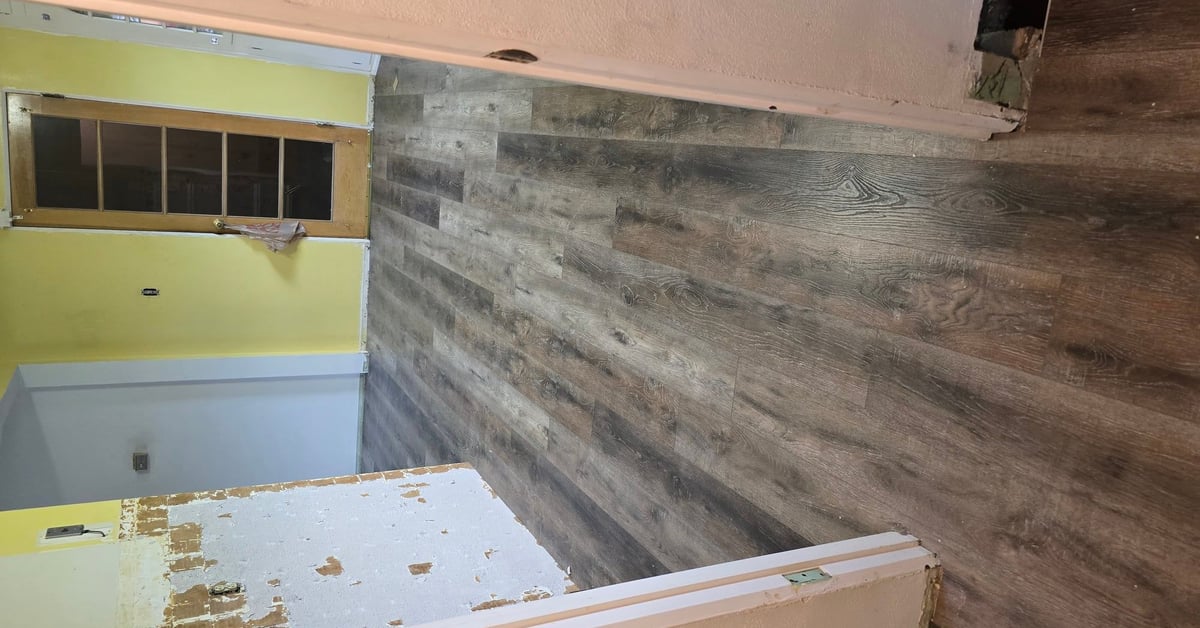
Basement Flooring Restoration Work in Progress
Overhead view into a basement area during renovation, featuring partially installed dark wood-grain laminate or vinyl plank flooring covering most of the floor space. Yellow painted drywall walls on both sides, an open wooden door with glass panels, a white bathtub or shower enclosure in the corner, exposed subfloor in patches, minor debris, and construction edges visible. Suggests water damage restoration with flooring replacement underway.
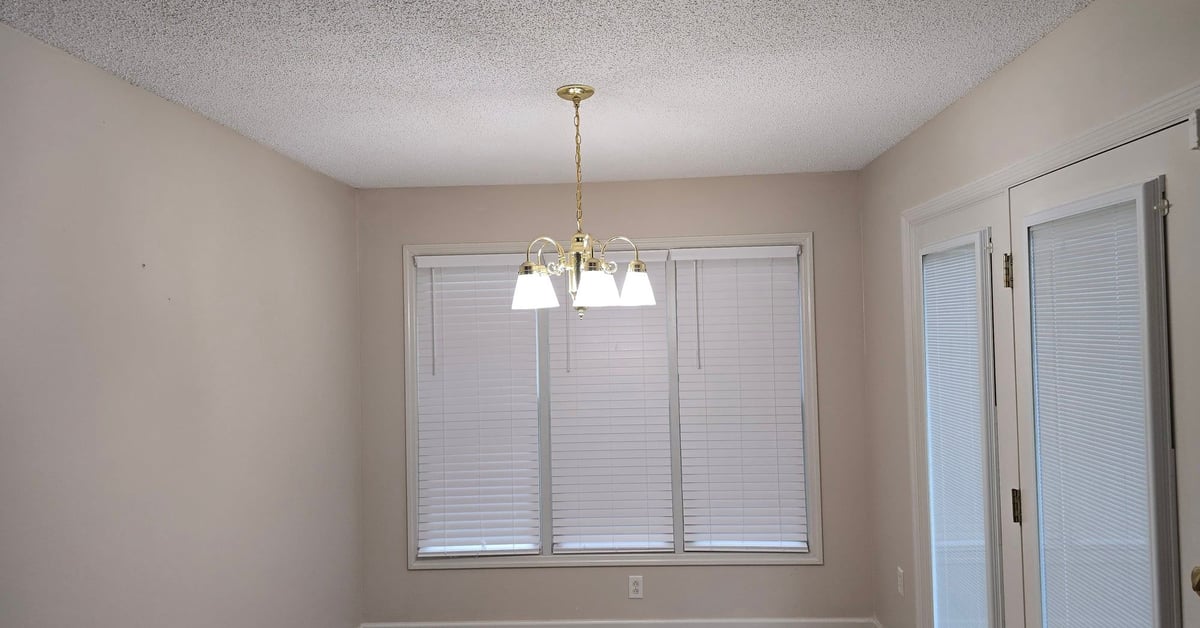
Empty Dining Room with Chandelier and Blinds
A spacious, empty dining room featuring light beige walls, a textured popcorn ceiling, a centered gold-toned four-arm chandelier with glass shades hanging from a chain, three large windows on the left covered with white horizontal blinds, a glass-paneled door on the right with blinds, and brown ceramic tile flooring. The room is clean, well-lit from natural light, and appears freshly restored with no visible damage or furnishings.
What St. Louis Homeowners Say About Our Mold Remediation
Read reviews from families throughout St. Louis and St. Charles who trusted us to safely remove black mold from their homes.
"Chad fixed my mold. He explained to me exactly how the mold happened and why it would not happen again. He was very kind to me. I explained I was suffering from a medical level of anxiety and he was very understanding. Every day, Chad made sure to communicate clearly and keep me informed throughout the entire process."
Bob Gaines
3 months ago
"Eversafe Restoration was incredible to work with. We had unexpected water damage and Chad responded quickly and professionally. He explained everything clearly and made sure we understood the repair process. The crew was efficient and thorough. Highly recommend!"
Andrea Herron
6 months ago
"They took care in giving me the best service. Very detailed oriented in repairing and finishing moisture damage in my home. They did such an excellent job, I won't think twice about calling Eversafe for anymore restoration needs I have in the future!"
Ryan McGovern
6 months ago
"11/10 would recommend! Great job, great price, and it took them no time at all."
Corey Holmes
3 months ago
"Did a great job."
Matt Guthrie
6 months ago
"Excellent service from start to finish. Professional and reliable."
Destiny Boschert
6 months ago
Black Mold Removal: Frequently Asked Questions
Get answers to common questions about black mold identification, health risks, and our certified remediation process.
What are the common black mold symptoms in a house?
Black mold symptoms in a house manifest in both the building and its occupants. Physical signs in the home include persistent musty or earthy odors that cleaning cannot eliminate, dark greenish-black patches on walls, ceilings, or around windows, and visible water stains or discoloration. Health symptoms in residents are often the first warning sign and include respiratory distress such as wheezing, coughing, and shortness of breath. Asthma sufferers may experience more frequent and severe attacks. Many people report headaches, difficulty concentrating, and cognitive fog. Skin irritation, eye redness, and chronic fatigue are also common. If multiple family members experience these symptoms that improve when away from home, black mold exposure should be investigated immediately.
How do you identify black mold vs. regular mold?
Identifying black mold (Stachybotrys chartarum) versus common household molds requires attention to several distinguishing characteristics. Black mold typically appears as dark greenish-black patches with a slimy or wet texture when actively growing, though it becomes powdery and soot-like when dry. Regular molds like Cladosporium or Penicillium may appear green, blue, gray, or white and often have a fuzzy texture. Black mold prefers materials with high cellulose content like drywall paper, ceiling tiles, and wood that have remained wet for extended periods. However, visual identification alone is not reliable because several mold species appear dark in color. Professional laboratory testing through air sampling or surface swabs is the only definitive way to confirm Stachybotrys presence. We recommend professional testing whenever you suspect toxic mold, especially before beginning remediation.
How much does a black mold removal service cost?
Black mold removal costs in the St. Louis metro area typically range from $1,500 to $9,000 or more, depending on several factors. The square footage of the affected area is the primary cost driver, with larger infestations requiring more extensive containment and labor. The complexity of containment also impacts pricing; mold in easily accessible areas costs less to remediate than mold behind walls, under flooring, or in HVAC systems. Material replacement costs for drywall, insulation, flooring, or other building materials that cannot be salvaged add to the total. Our pricing includes containment setup, mold removal, biocide application, HEPA air scrubbing, and post-remediation clearance testing. We provide free inspections and detailed estimates before any work begins. Many homeowners insurance policies cover mold remediation when it results from a covered water damage event, potentially reducing your out-of-pocket costs to just your deductible.
Is black mold dangerous for my pets?
Yes, black mold poses serious health risks to pets, and in many cases, animals are more vulnerable than humans due to their smaller size and different respiratory systems. Dogs and cats may exhibit respiratory symptoms including coughing, wheezing, runny nose, and difficulty breathing. Smaller animals like birds, hamsters, and guinea pigs are particularly susceptible and can develop severe respiratory distress quickly. Neurological symptoms in pets exposed to black mold mycotoxins include tremors, loss of coordination, changes in behavior, and in severe cases, seizures. Pets that spend more time on floors or in basements where mold concentrations are higher may show symptoms before humans do. If you notice your pets exhibiting unexplained illness, especially combined with signs of moisture damage in your home, have your property tested for mold. During remediation, pets should be removed from the home entirely to protect their sensitive lungs from airborne spores.
Can I stay in my home during black mold remediation?
Whether you can stay in your home during black mold remediation depends on the scope of the project and the location of the affected areas. For small, localized remediation projects affecting less than 100 square feet in areas like a bathroom or utility room, you can typically remain in the home. We establish strict containment zones using 6-mil poly-sheeting, zip-poles, and negative air pressure to prevent spores from spreading to living areas. However, for extensive remediation involving multiple rooms, HVAC systems, or whole-house treatment, we recommend temporary relocation for safety. Individuals with compromised immune systems, respiratory conditions, allergies, pregnant women, infants, and elderly family members should relocate during any black mold remediation regardless of size. We can provide documentation for temporary housing claims if your insurance policy includes additional living expenses coverage. Your safety is our priority, and we will always give you an honest assessment of whether staying is advisable for your specific situation.
How do I prevent black mold from coming back?
Preventing black mold recurrence requires addressing the moisture conditions that allowed it to grow initially. First, fix all plumbing leaks immediately, no matter how minor. Even small drips under sinks or behind toilets create enough moisture for mold to thrive. Monitor indoor humidity levels using a hygrometer and keep relative humidity below 50 percent, ideally between 30 and 50 percent. In the humid St. Louis summers, this may require running dehumidifiers, especially in basements. Ensure proper ventilation in bathrooms, kitchens, and laundry rooms by using exhaust fans and opening windows when possible. Consider applying antimicrobial paints and primers in high-moisture areas during renovations. Address foundation drainage issues, gutter problems, and grading around your home to prevent water intrusion. After remediation, we provide a detailed prevention plan specific to your home and offer our 1-year mold guarantee, so if mold returns in treated areas within one year, we will remediate it at no additional charge.
Does bleach kill black mold?
While bleach can kill mold on hard, non-porous surfaces like tile, glass, or bathtubs, it is ineffective and potentially counterproductive for black mold removal on porous materials like drywall, wood, and fabric. Bleach is primarily water with a small percentage of sodium hypochlorite. On porous surfaces, the chlorine component remains on the surface while the water penetrates deep into the material. This water can actually feed the mold roots (hyphae) that have grown into the substrate, causing the mold to return more aggressively. Additionally, bleach does not remove the mold structure or dead spores, which can still cause allergic reactions. Professional black mold remediation uses EPA-registered fungicides and biocides specifically designed to penetrate porous materials and eliminate mold at the root level. These professional-grade products combined with proper containment, HEPA filtration, and physical removal of contaminated materials are the only way to ensure complete and lasting black mold elimination.
How long does the black mold removal process take?
The black mold removal process typically takes 3 to 7 days from start to finish, though timeline varies based on the extent of contamination and complexity of the project. Day one involves assessment, documentation, and containment setup. The following days focus on removing contaminated materials, applying biocides, and running HEPA air scrubbers continuously. Structural drying adds 2 to 3 days if moisture issues are present. Once remediation is complete, we conduct post-remediation verification, which includes visual inspection and air quality testing. Laboratory analysis of air samples requires an additional 24 to 48 hours for results. Only after receiving clearance test results confirming spore counts are at normal levels do we remove containment barriers. For larger projects or those involving HVAC system contamination, the process may extend to 10 days or more. We provide a detailed timeline during our initial assessment and keep you informed throughout the process. Our goal is thorough remediation, not rushing through the job.
Still have questions?
We're here to help you find the answers.
Protect Your Family from Black Mold Today
Free inspections. IICRC-certified technicians. 1-year mold guarantee. Serving St. Louis and St. Charles 24/7.