Professional Attic Mold Remediation in Wentzville & St. Peters
IICRC-certified attic mold removal specialists. We eliminate mold from rafters and sheathing, replace contaminated insulation, and fix ventilation problems to prevent regrowth. Free attic inspections throughout St. Charles County.
Why Attic Mold is So Common in St. Louis Homes
The St. Louis metro area's climate creates perfect conditions for attic mold growth. Our hot, humid summers push moisture-laden air into attic spaces, while cold winters cause condensation on roof sheathing when warm indoor air rises into unheated attics. Temperature swings of 50 degrees or more between seasons stress building materials and ventilation systems, making proper attic maintenance essential for Missouri homeowners.
What Causes Attic Mold in Missouri Homes?
Attic mold is not random. It results from specific moisture conditions that can be identified and corrected. Understanding these causes is the first step toward permanent remediation.
Inadequate Attic Ventilation
Blocked soffit vents, missing ridge vents, or improperly sized ventilation allows moisture to accumulate. In the St. Louis climate, attics need continuous airflow to remove humid air before it condenses on cold roof sheathing during winter months.
- Blocked or painted-over soffit vents
- Insufficient ridge or gable venting
- Insulation blocking airflow at eaves
Exhaust Fans Venting to Attic
Bathroom exhaust fans, dryer vents, and kitchen range hoods that terminate in the attic rather than outside the home pump warm, moisture-laden air directly into the attic space. This is one of the most common causes of attic mold we encounter in St. Charles County homes.
- Bathroom fans dumping steam into attic
- Dryer vents disconnected or leaking
- Kitchen exhaust not vented to exterior
Roof Leaks & Ice Damming
Missouri's freeze-thaw cycles create ice dams when snow melts, runs down the roof, and refreezes at the cold eaves. This forces water under shingles and into the attic. Even small roof leaks around flashing, pipe boots, and skylights introduce moisture that feeds mold growth.
- Ice dam water intrusion at eaves
- Failed flashing around chimneys
- Cracked pipe boot seals
The St. Louis climate presents unique challenges for attic moisture management. Summer humidity levels regularly exceed 70 percent, while winter temperatures drop well below freezing. This 100-plus degree temperature swing between seasons, combined with our significant rainfall and occasional ice storms, stresses attic systems beyond what they were designed to handle if not properly maintained and ventilated.
Many homes in Wentzville, St. Peters, O'Fallon, and throughout St. Charles County were built during periods when building codes were less stringent about attic ventilation requirements. Older homes may have inadequate venting by modern standards, while even newer construction can develop problems when insulation is added without maintaining proper airflow paths or when bathroom remodels add exhaust fans that are improperly vented.
Professional Attic Mold Removal & Rafter Cleaning
Our IICRC-certified technicians follow a comprehensive protocol designed specifically for attic environments, addressing both the mold growth and the underlying moisture conditions.
Comprehensive Inspection
We begin with a thorough attic inspection using moisture meters, thermal imaging, and visual assessment to map the extent of mold growth and identify all moisture sources. Air samples are collected for laboratory analysis to identify mold species and spore counts.
Containment & Protection
We seal the attic access point and establish negative air pressure to prevent spores from migrating into living spaces. All contaminated insulation is carefully removed and bagged for proper disposal, minimizing disturbance of existing mold colonies.
Mold Removal & Treatment
Rafters, joists, and sheathing are treated using HEPA vacuuming, media blasting with dry ice or soda blast for deep cleaning, and EPA-registered antimicrobial application. Severely damaged wood is removed and replaced with treated lumber.
Restoration & Prevention
After clearance testing confirms successful remediation, we install new insulation with proper ventilation baffles, correct ventilation deficiencies, reroute improperly vented exhaust fans, and apply encapsulating sealants to prevent regrowth.
Advanced Treatment Methods for Wood Surfaces
Attic wood surfaces require specialized treatment methods that differ from standard mold remediation because the wood must remain structurally sound while being thoroughly cleaned.
HEPA Vacuuming
Removes loose spores from wood surfaces using vacuums with 99.97% filtration efficiency at 0.3 microns.
Media Blasting
Dry ice or soda blasting removes staining and surface contamination without damaging wood fibers or creating water issues.
Antimicrobial Sealants
EPA-registered encapsulating coatings seal treated wood and prevent future mold growth even if moisture levels rise temporarily.
What Sets Our Attic Remediation Apart
Solving the Root Cause: Attic Ventilation & Moisture
Removing mold without addressing why it grew guarantees it will return. Our remediation includes comprehensive ventilation assessment and correction to ensure lasting results.
Complete Ventilation Assessment
We inspect and evaluate all components of your attic ventilation system to identify deficiencies contributing to moisture accumulation.
- Soffit vent inspection for blockages and adequate net free area
- Ridge vent and gable vent capacity verification
- Intake/exhaust balance calculation for your attic square footage
- Insulation baffle assessment at eaves
Exhaust Fan Rerouting
Bathroom fans, dryer vents, and kitchen exhausts that terminate in the attic are the most common cause of attic mold we see. We correct these issues as part of every attic remediation project.
- Reroute bathroom exhaust fans through roof to exterior
- Repair or replace disconnected dryer vent ducting
- Install proper roof caps with backdraft dampers
Roof Leak & Ice Dam Identification
We trace all signs of water intrusion to their source, identifying roof issues that may require repair by a qualified roofing contractor.
- Thermal imaging to detect moisture behind sheathing
- Inspection of flashing, pipe boots, and roof penetrations
- Ice dam damage assessment at eaves
Air Sealing & Vapor Barrier Installation
Warm, moist air rising from living spaces is a major contributor to attic moisture problems. We seal air bypasses and install vapor barriers where necessary to control moisture migration.
- Seal gaps around ceiling light fixtures and can lights
- Foam seal plumbing and electrical penetrations
- Weatherstrip and insulate attic access hatches
- Seal top plates of interior partition walls
How to Identify Attic Mold in Your Home
Attic mold often goes undetected because most homeowners rarely inspect their attic space. Knowing the warning signs helps you catch problems early.
Visual Warning Signs in the Attic
- Dark staining on wood surfaces
Black, dark green, or gray patches on rafters, joists, and the underside of roof sheathing indicate active or past mold growth.
- White or gray fuzzy growth
Some mold species appear white or light gray with a fuzzy or frosted texture, especially in early stages or during cold weather.
- Water stains or discoloration
Ring-shaped stains on wood or insulation indicate past water intrusion and potential mold conditions.
- Wet or matted insulation
Insulation that appears darker, compressed, or damp is likely contaminated and harboring mold growth.
Signs You May Notice in Living Spaces
- Musty odors in upper floors
A persistent musty or earthy smell in bedrooms, bathrooms, or hallways on the top floor often indicates attic mold.
- Ceiling stains or discoloration
Yellow or brown stains on ceilings below the attic may indicate water intrusion and possible mold above.
- Unexplained allergy symptoms
Family members experiencing respiratory issues, sneezing, or allergic reactions that worsen at home may be reacting to attic mold spores.
- High humidity on upper floors
Condensation on windows, sticky feeling air, or elevated humidity readings in upper-floor rooms can indicate moisture issues originating in the attic.
Free Attic Mold Inspection
Not sure if you have attic mold? We provide free inspections throughout Wentzville, St. Peters, O'Fallon, and the St. Louis metro area. Our technicians will assess your attic, check moisture levels, and provide a detailed report of our findings.
Protect Your Home from Attic Mold Damage
Attic mold affects your family's health, your home's air quality, and your roof's structural integrity. Our certified technicians are ready to inspect your attic and provide a comprehensive remediation plan.
Attic Mold Remediation Projects
See examples of our attic mold remediation work throughout St. Charles County. From minor surface mold to extensive contamination requiring complete insulation replacement, we restore attics to safe, healthy conditions.
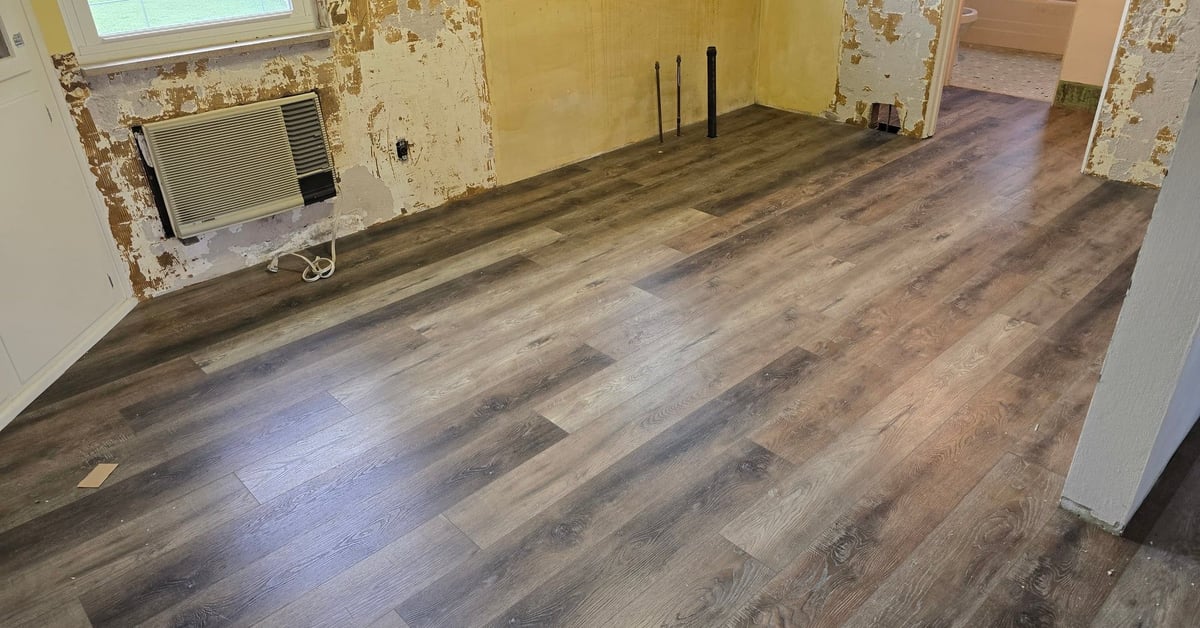
Water Damaged Bathroom Walls with New Flooring
A room undergoing restoration shows severely damaged walls with peeling yellowed plaster and exposed wooden studs, particularly around a window-mounted air conditioning unit. Freshly installed dark laminate flooring with a wood-grain pattern covers the entire floor. An open doorway reveals an adjacent bathroom featuring a white bathtub and tiled walls. Two metal poles stand in one corner, and minor debris is present, indicating active renovation work likely due to prior water damage.
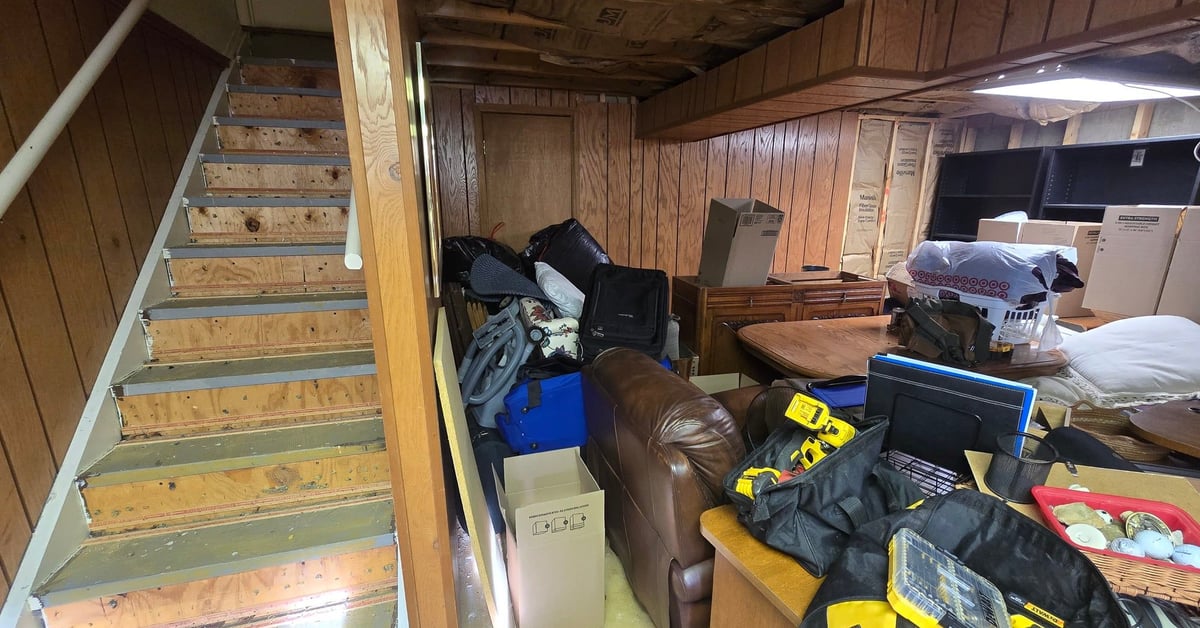
Cluttered Basement Before Restoration Work
A cluttered unfinished basement with wooden paneled walls, exposed wooden beams and pink insulation on the ceiling. A wooden staircase with railing descends from the left side. The floor space is filled with household items including a brown leather armchair, wooden desk cluttered with tools like a yellow drill and cases, multiple cardboard boxes, blue plastic bins, black garbage bags, pillows, baskets, and scattered debris. Fluorescent lighting illuminates the area, suggesting preparation for cleanup or restoration.
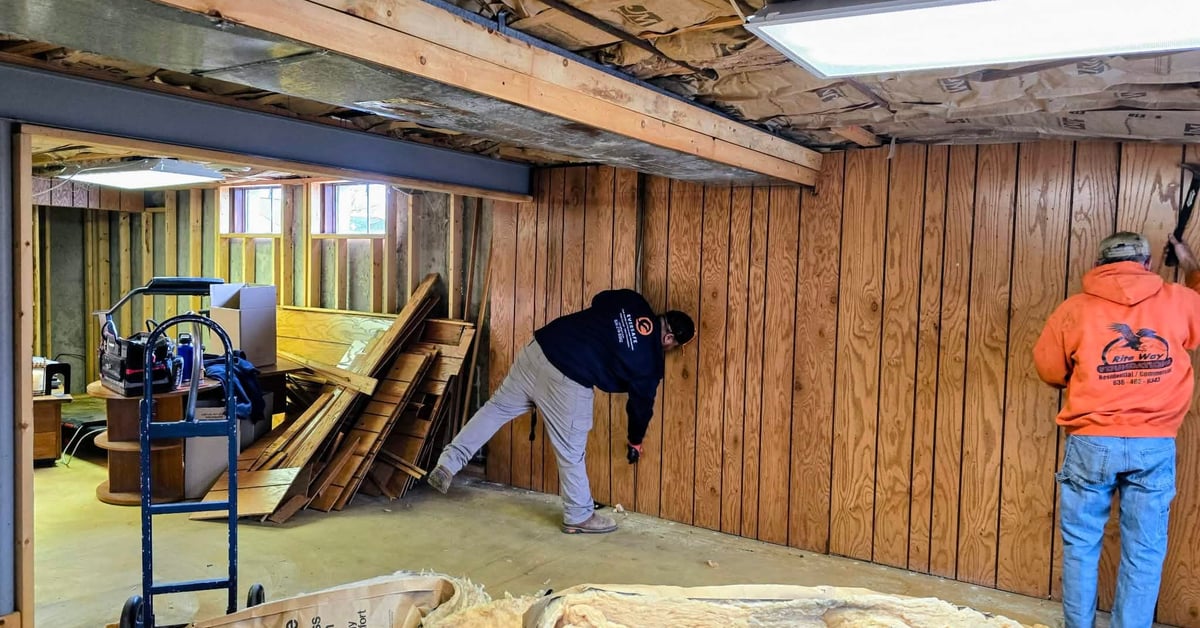
Workers Performing Basement Mold Remediation
In a dimly lit basement with wood-paneled walls partially removed, two workers from Eversafe Restoration LLC are actively engaged in remediation work. One technician, dressed in a blue hoodie, gray pants, and gloves, is crouched low, inspecting or removing sections of wood paneling and exposed pink fiberglass insulation from the wall. The other worker, wearing an orange hoodie and blue jeans, stands nearby observing. Scattered debris including wood scraps, insulation pieces, and plywood sheets lie on the concrete floor. Overhead, exposed wooden beams, yellow electrical wiring, and ductwork are visible under fluorescent lighting. This scene depicts ongoing mold remediation or water damage restoration efforts.
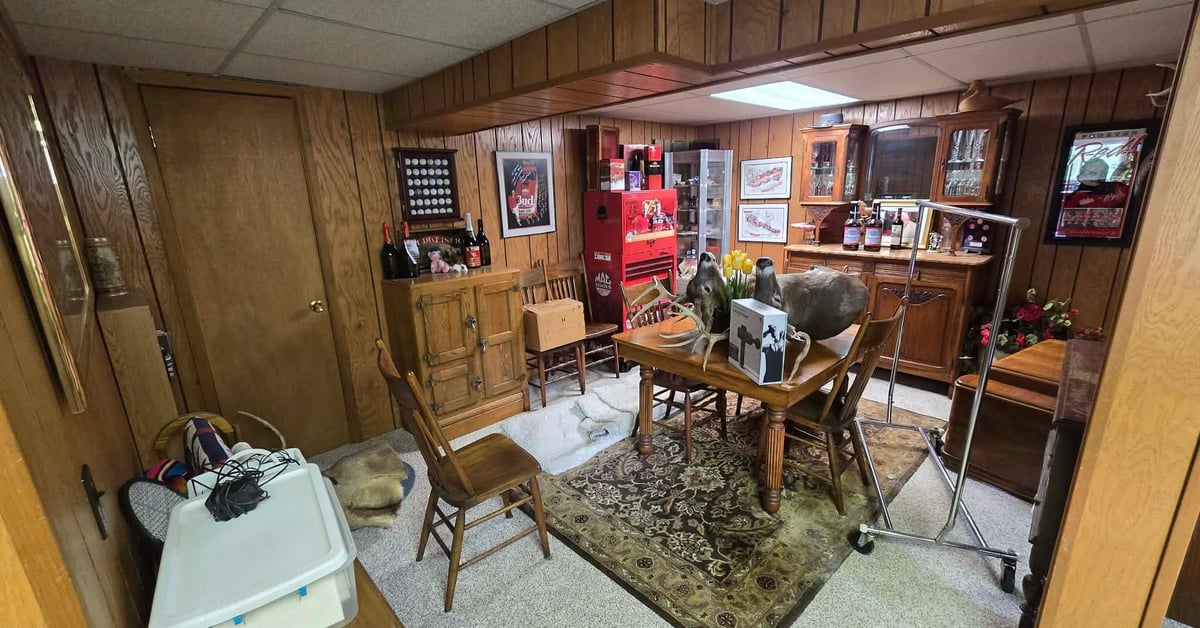
Cluttered Wood-Paneled Basement Bar Before Restoration
A detailed view of a finished basement recreation room with dark wood paneling on walls and ceiling, featuring a vintage red Coca-Cola vending machine, wooden bar cabinets stocked with liquor bottles, glasses, and memorabilia, a wooden dining table with four chairs, an office printer on a stand, area rugs, potted plants, framed posters, shelves with collectibles, and a clothes rack. The space appears lived-in and cluttered, suggesting a need for cleanup and restoration, likely due to potential water damage common in basements.
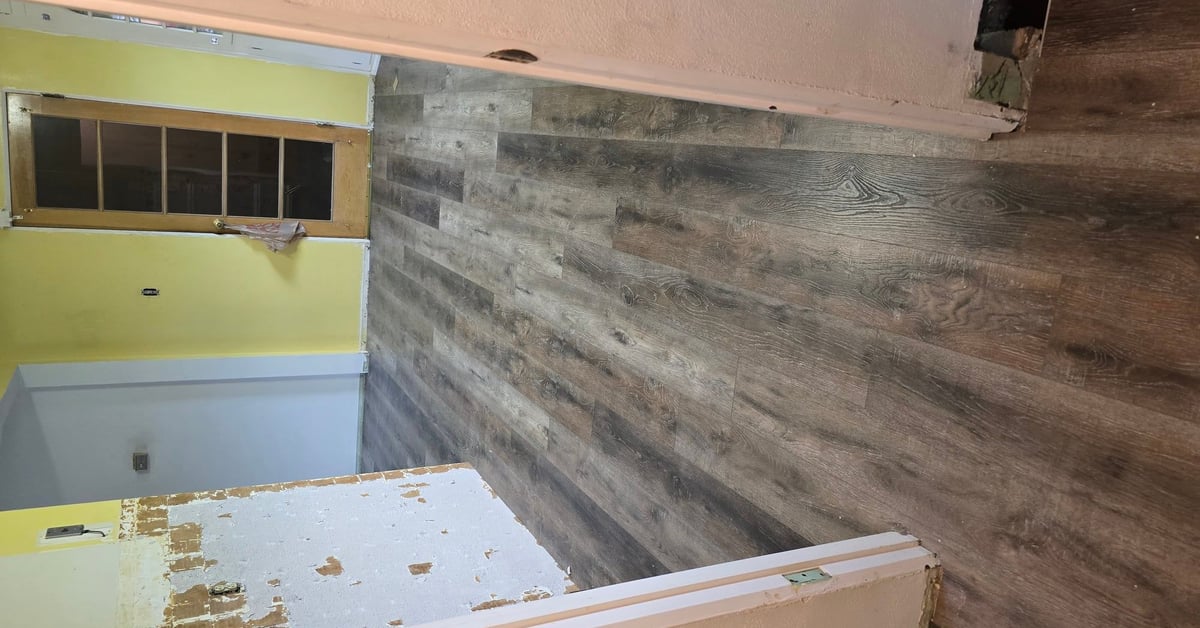
Basement Flooring Restoration Work in Progress
Overhead view into a basement area during renovation, featuring partially installed dark wood-grain laminate or vinyl plank flooring covering most of the floor space. Yellow painted drywall walls on both sides, an open wooden door with glass panels, a white bathtub or shower enclosure in the corner, exposed subfloor in patches, minor debris, and construction edges visible. Suggests water damage restoration with flooring replacement underway.
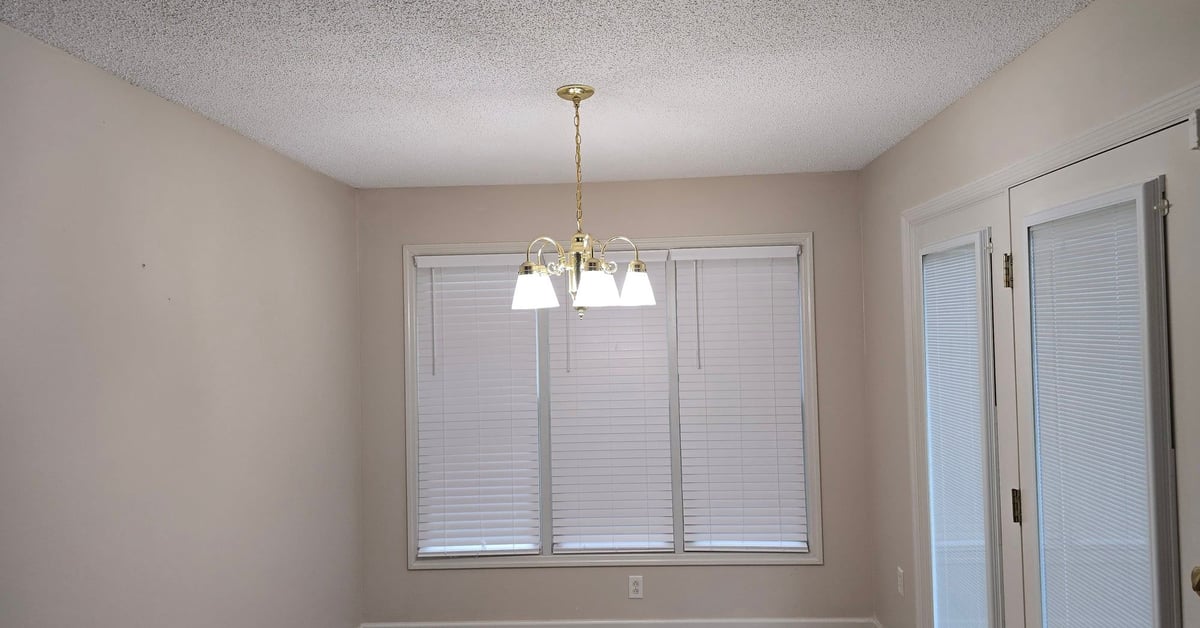
Empty Dining Room with Chandelier and Blinds
A spacious, empty dining room featuring light beige walls, a textured popcorn ceiling, a centered gold-toned four-arm chandelier with glass shades hanging from a chain, three large windows on the left covered with white horizontal blinds, a glass-paneled door on the right with blinds, and brown ceramic tile flooring. The room is clean, well-lit from natural light, and appears freshly restored with no visible damage or furnishings.
What St. Charles County Homeowners Say
Read reviews from families in Wentzville, St. Peters, O'Fallon, and throughout St. Charles County who trusted us with their attic mold remediation.
"Chad fixed my mold. He explained to me exactly how the mold happened and why it would not happen again. He was very kind to me. I explained I was suffering from a medical level of anxiety and he was very understanding. Every day, Chad made sure to communicate clearly and keep me informed throughout the entire process."
Bob Gaines
3 months ago
"Eversafe Restoration was incredible to work with. We had unexpected water damage and Chad responded quickly and professionally. He explained everything clearly and made sure we understood the repair process. The crew was efficient and thorough. Highly recommend!"
Andrea Herron
6 months ago
"They took care in giving me the best service. Very detailed oriented in repairing and finishing moisture damage in my home. They did such an excellent job, I won't think twice about calling Eversafe for anymore restoration needs I have in the future!"
Ryan McGovern
6 months ago
"11/10 would recommend! Great job, great price, and it took them no time at all."
Corey Holmes
3 months ago
"Did a great job."
Matt Guthrie
6 months ago
"Excellent service from start to finish. Professional and reliable."
Destiny Boschert
6 months ago
Attic Mold Removal: Frequently Asked Questions
Get answers to common questions about attic mold causes, removal costs, prevention, and our certified remediation process.
Can I remove attic mold myself?
While small areas of surface mold (less than 10 square feet) can sometimes be addressed by homeowners, we strongly recommend against DIY attic mold removal for several important reasons. First, attic work presents significant safety hazards including fall risks from navigating trusses and rafters, respiratory dangers from inhaling concentrated mold spores in enclosed spaces, and heat exhaustion in Missouri summers when attic temperatures can exceed 140 degrees Fahrenheit. Second, improper removal techniques can spread spores throughout your home via the stack effect, where warm air naturally rises from living spaces into the attic. Without proper containment and negative air pressure, disturbed spores travel downward through ceiling penetrations, light fixtures, and HVAC returns, contaminating previously clean areas. Third, household bleach is ineffective on porous materials like wood rafters and sheathing because the water in bleach penetrates the wood while the chlorine stays on the surface, actually feeding mold roots deeper in the substrate. Professional remediation uses EPA-registered fungicides specifically formulated to penetrate wood fibers and eliminate mold at the source. Finally, proper personal protective equipment including full-face respirators, Tyvek suits, and HEPA filtration equipment represents a significant investment that most homeowners do not have access to. Our IICRC-certified technicians have the training, equipment, and experience to safely and completely remediate attic mold.
How much does attic mold removal cost?
Attic mold removal costs in the St. Louis metro area typically range from $1,500 to $6,000 or more, depending on several key factors. The square footage of the affected area is the primary cost driver, with most attic remediation projects ranging from 500 to 1,500 square feet of treatment area. Severity of growth significantly impacts pricing because light surface growth on rafters requires different treatment than deep-set mold that has penetrated the wood sheathing. Insulation replacement adds considerable cost if your fiberglass batt or blown cellulose insulation is contaminated. Removing and disposing of old insulation, cleaning the space, and installing new insulation can add $2,000 to $4,000 depending on attic size and insulation type. Ventilation repairs are often necessary to prevent recurrence and may include adding soffit vents, ridge vents, powered attic ventilators, or correcting improperly vented bathroom fans. These repairs typically range from $500 to $2,000. We provide free attic inspections and detailed written estimates before any work begins. Many homeowners insurance policies cover mold remediation when it results from a covered event like roof damage or ice dam water intrusion, potentially reducing your out-of-pocket costs to just your deductible. We work directly with insurance adjusters and provide all required documentation.
What causes mold to grow in an attic?
Attic mold growth in St. Louis and St. Charles County homes is primarily caused by moisture accumulation in an enclosed space, and understanding these causes is essential for effective remediation and prevention. Poor ventilation is the leading cause of attic mold. Attics need balanced airflow with intake vents (typically in soffits) and exhaust vents (ridge vents, gable vents, or powered ventilators). When this balance is disrupted by blocked soffit vents, insufficient venting, or improper vent installation, warm moist air becomes trapped. Improperly vented exhaust fans are extremely common in Missouri homes. When bathroom exhaust fans, dryer vents, or kitchen range hoods vent directly into the attic rather than through the roof to the exterior, they pump warm humid air directly into the attic space. This creates ideal conditions for mold growth, especially during cold months when moisture condenses on cold roof sheathing. Roof leaks from damaged shingles, failed flashing, or ice dams allow water intrusion that saturates wood and insulation. In the St. Louis climate, our freeze-thaw cycles create ice dams when snow melts, refreezes at the eaves, and forces water under shingles. Missouri's humid summers combined with cold winters create significant temperature differentials that promote condensation. When warm moist air from living spaces rises into a cold attic, moisture condenses on the underside of roof sheathing. This is why attic mold often appears worst near the roof peak and on north-facing slopes that receive less sun.
Is attic mold dangerous to my family?
Yes, attic mold poses real health risks to your family, even when the mold is located in an unoccupied attic space. The stack effect, a natural phenomenon where warm air rises through a building, creates continuous air movement from lower floors up through ceiling penetrations, light fixtures, recessed can lights, HVAC ductwork, and attic access doors into the attic and out through roof vents. However, this same airflow can carry mold spores in reverse when attic mold colonies release spores that become airborne. Even with attic insulation in place, spores can migrate into living spaces through gaps around ceiling fixtures, bathroom exhaust fan housings, and any penetration through the ceiling plane. Family members with respiratory conditions, allergies, or compromised immune systems are most vulnerable to mold exposure. Common symptoms include persistent coughing, sneezing, watery eyes, skin irritation, headaches, and fatigue. Children and elderly family members are particularly susceptible. Asthma sufferers may experience increased frequency and severity of attacks. If family members experience symptoms that improve when away from home and worsen upon return, mold exposure should be investigated. Additionally, the musty odor from attic mold can permeate into upper-floor bedrooms and bathrooms, reducing indoor air quality and creating an unpleasant living environment. Professional remediation not only removes the mold but includes air quality testing to verify that spore counts have returned to normal levels throughout your home.
Should I replace insulation if I have attic mold?
In most cases of significant attic mold growth, we recommend replacing contaminated insulation for several important reasons. Fiberglass batt insulation and blown cellulose are porous materials that readily absorb and retain mold spores. Even after the visible mold on rafters and sheathing is removed, spores trapped within the insulation continue to release into the air and can seed new growth if moisture conditions return. Attempting to clean or treat insulation in place is generally ineffective because the spores are distributed throughout the material, not just on the surface. The labor required to attempt cleaning often exceeds the cost of removal and replacement. Additionally, contaminated insulation typically has reduced R-value due to compression from moisture exposure and may have developed odors that persist even after treatment. Replacing insulation after mold remediation provides multiple benefits. New insulation restores proper thermal efficiency, reducing heating and cooling costs. Installation of insulation with proper air sealing techniques prevents the warm moist air infiltration from living spaces that contributed to the original mold problem. Many homeowners choose this opportunity to upgrade insulation depth and type, improving energy efficiency beyond original specifications. Our attic mold remediation process includes complete removal and disposal of contaminated insulation, thorough cleaning and treatment of the attic cavity, and professional installation of new insulation with proper ventilation baffles to maintain airflow at soffit vents.
How do I know if I have black mold in my attic?
Identifying mold in your attic requires understanding what to look for and when to inspect this often-overlooked space. Visual signs include dark staining on the underside of roof sheathing, rafters, and joists. This staining may appear black, dark green, or gray and often follows a pattern along the wood grain or in circular colonies. In early stages, attic mold may have a white or gray frosted appearance, particularly during cold months when active growth is slower. Pay special attention to areas near the roof peak where warm air accumulates, around roof penetrations like plumbing vents and chimneys, and on north-facing roof slopes that stay colder and wetter. Olfactory signs are often the first indicator of attic mold problems. A persistent musty or earthy smell in upper-floor bedrooms, bathrooms, or hallways may indicate mold growth in the attic above. This smell may intensify during humid weather or when the HVAC system runs. Secondary indicators include water stains on ceilings below the attic, peeling paint or bubbling wallpaper in upper floors, or visible moisture on attic-access door frames. However, visual identification alone cannot confirm the specific type of mold present. What appears to be black mold may be common surface molds that are less concerning, while molds that appear less threatening may actually be more problematic. We recommend professional inspection with laboratory testing to accurately identify mold species and determine appropriate remediation protocols. Our free attic inspections include moisture meter readings, visual assessment, and recommendations for testing if mold is suspected.
Does attic mold affect my roof's lifespan?
Yes, attic mold can significantly impact your roof's lifespan and structural integrity, making remediation both a health priority and a property protection investment. Mold growth indicates chronic moisture exposure, and this moisture causes wood rot in roof sheathing, rafters, and trusses. The same conditions that promote mold growth accelerate wood decay fungi that break down the structural fibers of lumber. Over time, this weakens the roof structure, potentially leading to sagging sheathing, compromised load-bearing capacity, and in severe cases, structural failure. Roof sheathing affected by mold and moisture damage loses its ability to properly hold roofing nails and provide a solid substrate for shingles. This can cause shingles to work loose, leading to premature roof failure and water intrusion. When it comes time for roof replacement, contractors may discover that sheathing requires replacement, adding significant cost to the project. Insurance companies are increasingly aware of mold-related damage. Some policies exclude mold damage entirely, while others limit coverage. If mold damage is discovered during a claim for roof damage, insurers may deny claims for related structural repairs if the mold indicates pre-existing conditions or maintenance failures. Additionally, untreated attic mold is a significant issue in real estate transactions. Home inspectors routinely check attics, and mold findings can derail sales, require price reductions, or mandate remediation before closing. Addressing attic mold proactively protects your property value and avoids the stress of dealing with mold issues during a home sale.
How do you prevent attic mold from coming back?
Preventing attic mold recurrence requires addressing the root moisture causes, not just treating the existing growth. Our comprehensive approach includes several key strategies. First, we correct ventilation deficiencies by ensuring proper balance between intake and exhaust venting. This typically involves clearing blocked soffit vents, adding soffit baffles to maintain airflow when insulation is installed near eaves, and verifying adequate ridge vent or gable vent exhaust capacity. The general rule is one square foot of net free ventilation area per 150 square feet of attic floor space, split evenly between intake and exhaust. Second, we address improperly vented exhaust fans by rerouting bathroom fans, dryer vents, and range hoods to terminate outside the building envelope, not into the attic. This single correction eliminates a major moisture source in many homes. Third, we identify and repair roof leaks, including subtle issues like failed pipe boot flashings, cracked chimney flashing, and ice dam damage at eaves. Fourth, we seal air bypasses from conditioned living spaces into the attic. These include gaps around light fixtures, wiring and plumbing penetrations, attic access hatches, and top plates of interior walls. Air sealing prevents warm moist air from migrating into the attic cavity. After remediation, we apply EPA-registered antimicrobial encapsulants to treated wood surfaces. These products create a barrier that inhibits future mold growth even if moisture levels temporarily rise. Finally, we recommend periodic attic inspections, especially after severe weather events, to catch any new moisture issues before mold can establish. Our 1-year mold guarantee means if mold returns in treated areas within 12 months, we will remediate it at no additional charge.
Still have questions?
We're here to help you find the answers.
Get Your Free Attic Mold Inspection Today
Free inspections. IICRC-certified technicians. 1-year mold guarantee. Serving Wentzville, St. Peters, O'Fallon, and all of St. Charles County.