Foundation Crack Repair & Basement Sealing in Saint Charles
Stop basement leaks permanently with professional epoxy injection and specialized sealants. Lifetime warranty on repairs. Serving O'Fallon, St. Peters, Wentzville, and the greater St. Louis metro.
Professional Foundation Crack Repair for Saint Charles County Homes
Foundation cracks are one of the most common problems facing homeowners throughout Saint Charles County and the greater St. Louis metropolitan area. Whether you have noticed a thin hairline crack in your basement wall, discovered water seeping through during heavy rains, or spotted a concerning horizontal crack that seems to be growing wider, understanding your options for professional repair is essential to protecting your home's structural integrity and your family's health.
At Eversafe Restoration, we specialize in foundation crack repair using industry-leading techniques including high-pressure epoxy injection, flexible polyurethane foam sealing, and structural carbon fiber reinforcement. Our technicians are trained specifically for the unique soil conditions and climate challenges that Missouri homes face, from the expansive clay soils that put tremendous pressure on foundation walls to the freeze-thaw cycles that cause concrete to crack and deteriorate over time.
Unlike general contractors who may offer crack repair as a side service, foundation waterproofing is our core business. We use commercial-grade materials, specialized injection equipment, and proven techniques developed specifically for residential foundation repair. Every repair comes with our lifetime warranty because we stand behind the quality of our work.
Types of Foundation Cracks and What They Mean
Not all foundation cracks are created equal. Understanding the type of crack you have helps determine the appropriate repair method and urgency level.
Vertical Cracks
Vertical cracks run straight up and down the wall and are the most common type of foundation crack. They typically result from concrete shrinkage during curing or minor foundation settling. Most vertical cracks are not structural concerns, but they can allow water infiltration and should be sealed to prevent moisture problems and potential mold growth.
Horizontal Cracks
Horizontal cracks are the most serious type of foundation damage. They indicate that your foundation wall is under extreme lateral pressure from the surrounding soil, particularly Missouri's expansive clay soils that swell dramatically when wet. Left untreated, horizontal cracks can lead to wall failure and require immediate professional assessment.
Diagonal Cracks
Diagonal cracks typically run at a 30 to 75 degree angle and often start from corners of windows, doors, or where the wall meets the floor. They usually indicate differential settlement, where one part of your foundation is settling faster than another. While less urgent than horizontal cracks, diagonal cracks should be evaluated to determine if settling is ongoing or has stabilized.
Stair-Step Cracks
Stair-step cracks follow the mortar joints in block or brick foundations, creating a zigzag pattern that resembles stairs. This pattern indicates that the mortar joints are failing under pressure, typically from soil movement or settling. Stair-step cracks require professional assessment as they can indicate significant structural movement.
Hairline Cracks
Hairline cracks are very thin, typically less than 1/16 inch wide, and are extremely common in poured concrete foundations. They usually develop within the first few years after construction as the concrete cures and shrinks. While often cosmetic, hairline cracks can widen over time and eventually allow water infiltration if left untreated.
Wet or Leaking Cracks
Any crack showing signs of water infiltration, moisture staining, mineral deposits (efflorescence), or active leaking requires prompt attention regardless of its size or orientation. Water entering through foundation cracks can damage flooring, walls, and belongings, create conditions for mold growth, and in freeze-thaw cycles, cause the crack to expand further.
Professional Epoxy Injection & Crack Sealing
We use commercial-grade materials and proven techniques to permanently repair foundation cracks in Saint Charles County homes.
High-Pressure Epoxy Injection
Our primary method for structural crack repair uses high-pressure injection to force epoxy resin through the entire depth of your foundation wall. The epoxy fills every void within the crack, cures to a hardness greater than the surrounding concrete, and permanently welds the crack back together. This method is ideal for dormant cracks that are not actively moving and provides both structural restoration and complete water barrier protection.
Polyurethane Foam Solutions
For cracks that may experience seasonal movement or are actively leaking during the repair visit, we use flexible polyurethane foam injection. The foam expands to fill the entire crack cavity, can be injected even while water is flowing, and remains flexible after curing to accommodate minor foundation movement. Polyurethane is especially effective for cracks in Missouri homes that experience expansion and contraction with our dramatic temperature swings.
Interior and Exterior Sealing Methods
We tailor our sealing approach to Missouri's unique clay soil conditions. Interior injection repairs are the most common and cost-effective option, completed without disrupting your landscaping. When exterior conditions warrant, we offer exterior membrane application with proper drainage systems. Our no-dig injection technology can access the exterior side of cracks from inside your basement in many cases, giving you the benefits of exterior sealing without the excavation costs.
Structural Reinforcement for Bowing Walls
For foundation walls showing signs of bowing, bulging, or structural distress, crack sealing alone is not sufficient. We install carbon fiber reinforcement straps that permanently stabilize the wall and prevent further inward movement. These high-tensile-strength straps are bonded directly to your foundation wall, are virtually maintenance-free, and do not require exterior excavation. Combined with crack injection, carbon fiber provides a complete structural repair solution.
Our Crack Repair Process
What to expect when you choose Eversafe
Free Inspection & Assessment
We evaluate all cracks, determine their cause, check for structural concerns, and measure moisture levels.
Transparent Quote
You receive a detailed, written estimate with no hidden fees. We explain exactly what repairs are needed and why.
Surface Preparation
We install injection ports along the crack and seal the surface with a structural paste to ensure proper injection pressure.
Low-Pressure Injection
Using specialized equipment, we inject epoxy or polyurethane through each port until material emerges from the next port, confirming complete fill.
Cleanup & Warranty
Ports are removed, surfaces smoothed, and you receive your lifetime transferable warranty documentation.
Why Foundation Cracks Occur in St. Charles County
Understanding the unique geological and climate conditions that affect Missouri foundations helps you protect your home investment.
Impact of Expansive Clay Soils
The St. Louis metro area, including Saint Charles County, sits on some of the most expansive clay soils in the Midwest. These soils, rich in montmorillonite clay, can swell up to 30% when saturated with water and shrink dramatically during dry periods. This constant expansion and contraction exerts tremendous pressure on your foundation walls, pushing inward when wet and pulling away when dry. Over time, this cycling creates cracks, especially horizontal cracks that indicate lateral pressure. Understanding our local soil conditions is crucial for selecting the right repair method.
Seasonal Freeze-Thaw Cycles
Missouri experiences significant temperature swings, with winter temperatures dropping well below freezing and summer temperatures exceeding 100 degrees. When water enters existing hairline cracks and freezes, it expands by approximately 9%, acting like a wedge that forces the crack wider. Each freeze-thaw cycle throughout winter causes incremental crack growth. A small hairline crack can become a significant structural concern over just a few winters. This is why sealing cracks before winter is particularly important for Saint Charles homeowners.
Hydrostatic Pressure and Water Intrusion
During heavy rainfall or spring snowmelt, water saturates the soil surrounding your foundation. Because water cannot compress, it creates hydrostatic pressure against your basement walls, seeking any path of least resistance to escape. Foundation cracks become water highways, with water being forced through under pressure. Poor drainage, clogged gutters, improper grading, and high water tables all contribute to increased hydrostatic pressure. Addressing these factors is essential for long-term crack repair success.
The combination of expansive clay soils, dramatic temperature swings, and heavy seasonal rainfall makes foundation crack prevention and repair especially important for homes in Saint Charles, O'Fallon, St. Peters, Wentzville, Chesterfield, and throughout the St. Louis metropolitan area. Unlike regions with more stable soils and climates, Missouri foundations experience constant stress that requires professional-grade repair solutions designed for these specific conditions.
At Eversafe Restoration, our technicians understand these local challenges because we live here too. We have repaired thousands of foundation cracks throughout Saint Charles County and know exactly what works in our soil conditions and climate. Our repair methods are specifically selected to withstand Missouri's expansive clays and temperature extremes.
When to Worry About Foundation Cracks
Learn to recognize the warning signs that indicate your foundation crack needs immediate professional attention.
Call Immediately If You Notice
- Horizontal cracks running along your basement wall, especially at the midpoint height
- Cracks wider than 1/4 inch or cracks that are wider at one end than the other
- Wall bowing or bulging inward, even slightly visible curvature
- Stair-step crack patterns following mortar joints in block foundations
- Water actively flowing through the crack, not just seeping or damp
- Doors or windows in your home that suddenly stick or do not close properly
- Cracks that grow noticeably wider or longer over weeks or months
Usually Not Urgent (But Monitor)
- Hairline vertical cracks less than 1/16 inch wide that have not changed in size
- Cracks in homes less than 3 years old that are clearly from concrete curing
- Cosmetic cracks in parging (the coating on block walls) that do not extend into the block itself
- Dry cracks that show no signs of moisture, staining, or efflorescence
- Cracks at pipe or wire penetrations that are common and expected
- Stable cracks that have remained the same size for years
Even low-urgency cracks should be monitored and eventually sealed to prevent water infiltration and potential mold growth. Schedule a free inspection for peace of mind.
Our Foundation Crack Repair Projects
See the quality of our crack repair work throughout Saint Charles County. From hairline cracks to major structural repairs, we restore foundations to like-new condition.
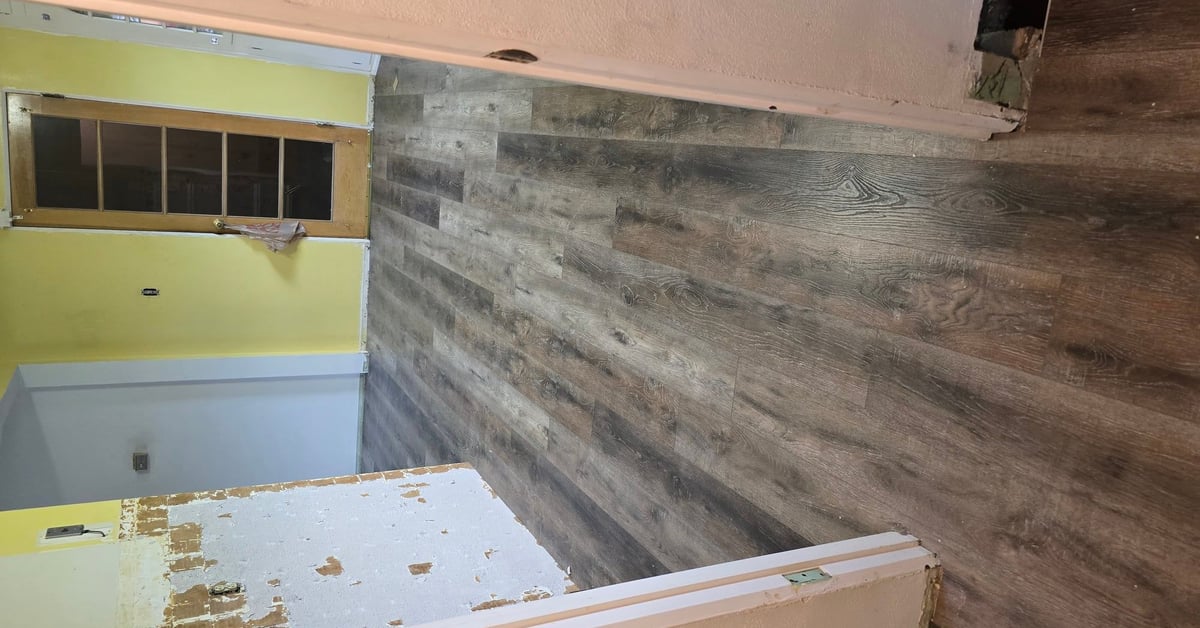
Basement Flooring Restoration Work in Progress
Overhead view into a basement area during renovation, featuring partially installed dark wood-grain laminate or vinyl plank flooring covering most of the floor space. Yellow painted drywall walls on both sides, an open wooden door with glass panels, a white bathtub or shower enclosure in the corner, exposed subfloor in patches, minor debris, and construction edges visible. Suggests water damage restoration with flooring replacement underway.
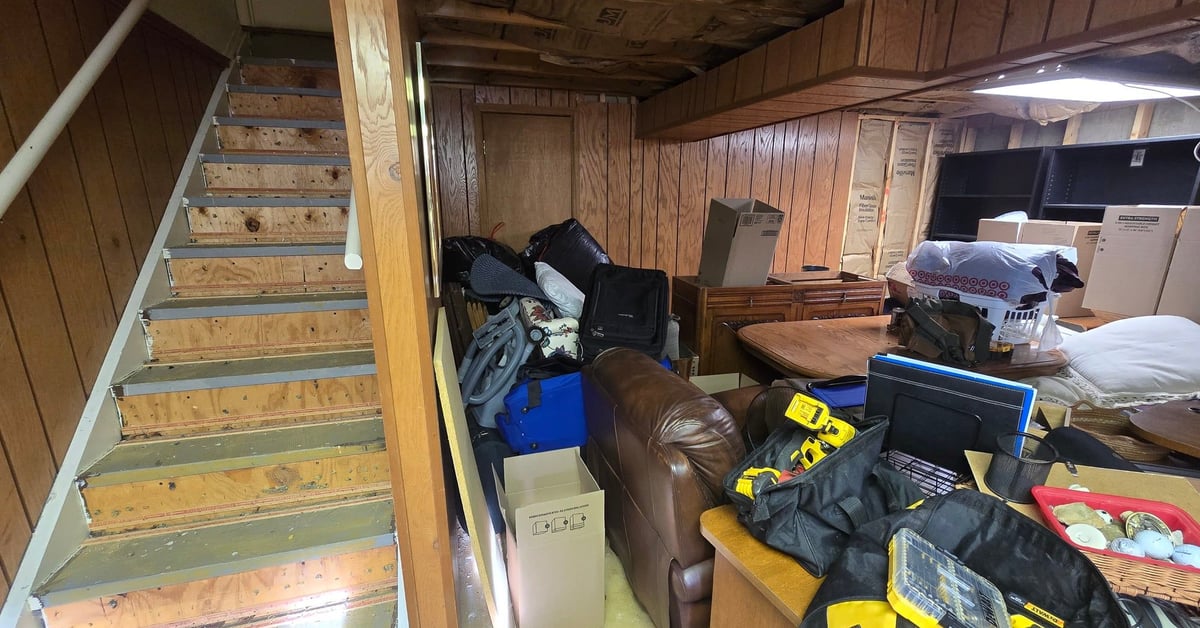
Cluttered Basement Before Restoration Work
A cluttered unfinished basement with wooden paneled walls, exposed wooden beams and pink insulation on the ceiling. A wooden staircase with railing descends from the left side. The floor space is filled with household items including a brown leather armchair, wooden desk cluttered with tools like a yellow drill and cases, multiple cardboard boxes, blue plastic bins, black garbage bags, pillows, baskets, and scattered debris. Fluorescent lighting illuminates the area, suggesting preparation for cleanup or restoration.
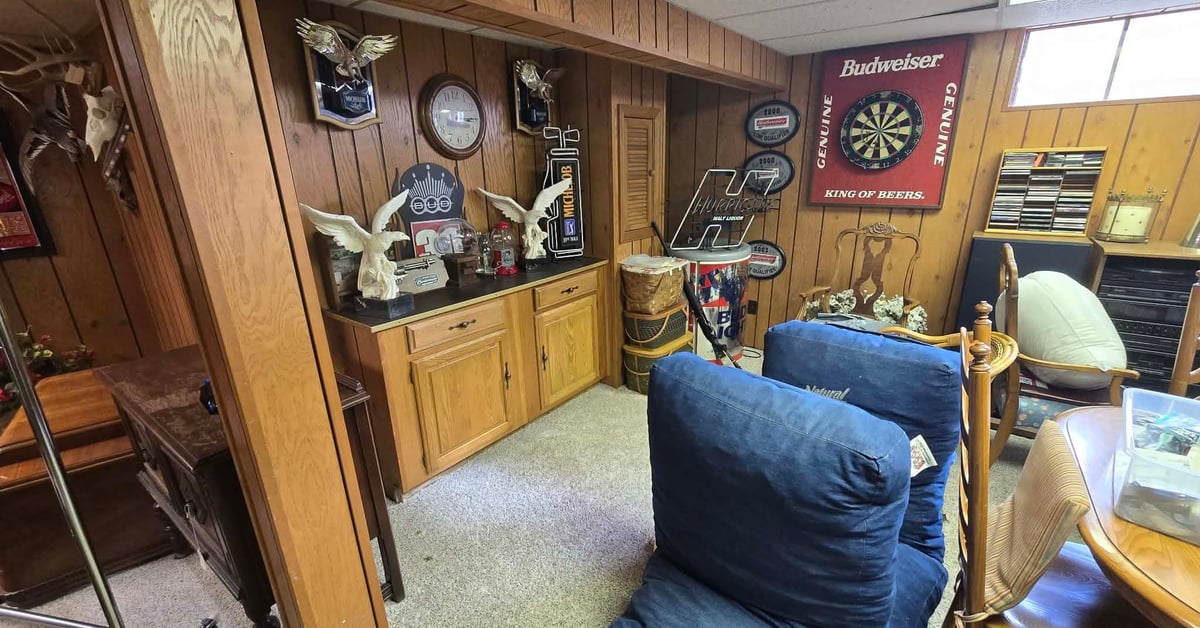
Cozy Wood-Paneled Basement Man Cave Bar
A finished basement recreation room with warm wood paneling on walls and ceiling. Features include mounted deer heads and antlers, Budweiser beer signs, dartboard, shelves displaying figurines, bottles, and collectibles, a bar area with stools, blue bean bag chairs, wooden table and chairs, and various rustic decor elements creating a classic man cave atmosphere.
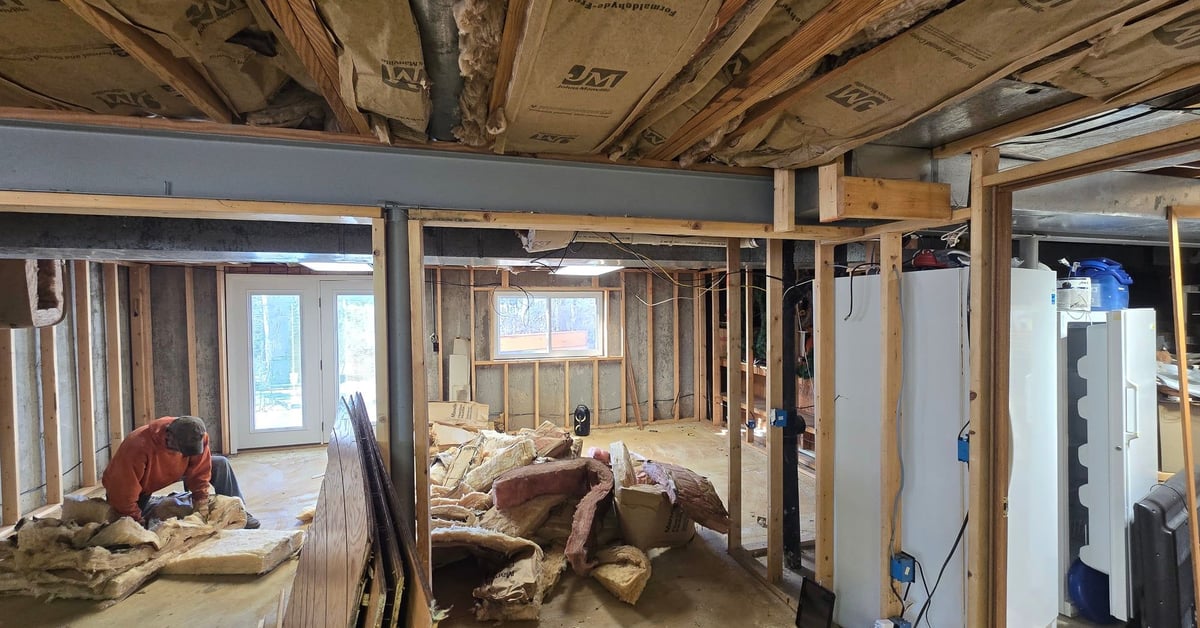
Worker Remodeling Basement with Framing and Insulation
In this basement renovation scene, a worker dressed in an orange uniform and protective gear kneels on the plywood subfloor, working on construction materials. The ceiling features exposed wooden joists wrapped in pink fiberglass insulation batts, some labeled. Walls are framed with wooden studs and metal beams, with partial drywall installation on some sections. Construction debris including wood scraps, insulation remnants, and tools litters the floor. Framed windows and doors allow natural daylight, and white cabinets or shelving units stand along one wall near blue storage bins.
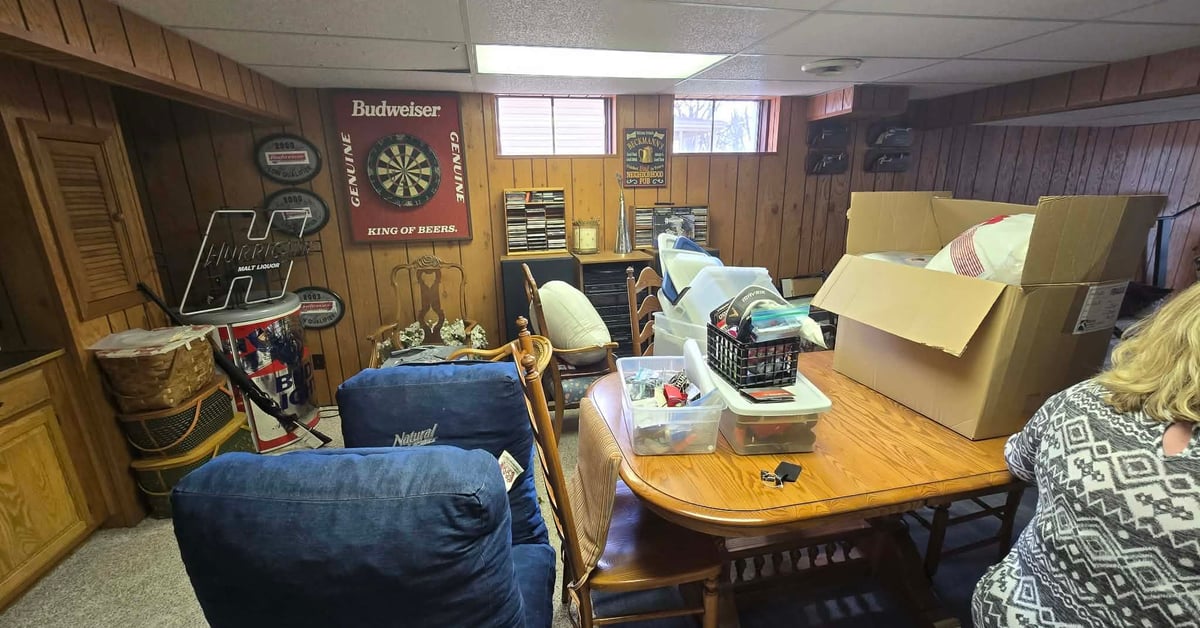
Cluttered Wood-Paneled Basement Rec Room
A basement recreation room with dark wood paneling on walls and ceiling, illuminated by fluorescent lights. Features include a dartboard with Budweiser branding, neon signs, shelves with beer memorabilia, wooden bar stools, blue upholstered armchairs, and an oval wooden table piled high with cardboard boxes, plastic storage bins, and miscellaneous items. A decorative barrel drum sits in one corner, and a woman with long blonde hair in a patterned top stands near the table. The space appears lived-in and cluttered, suggesting preparation for cleanup or restoration.
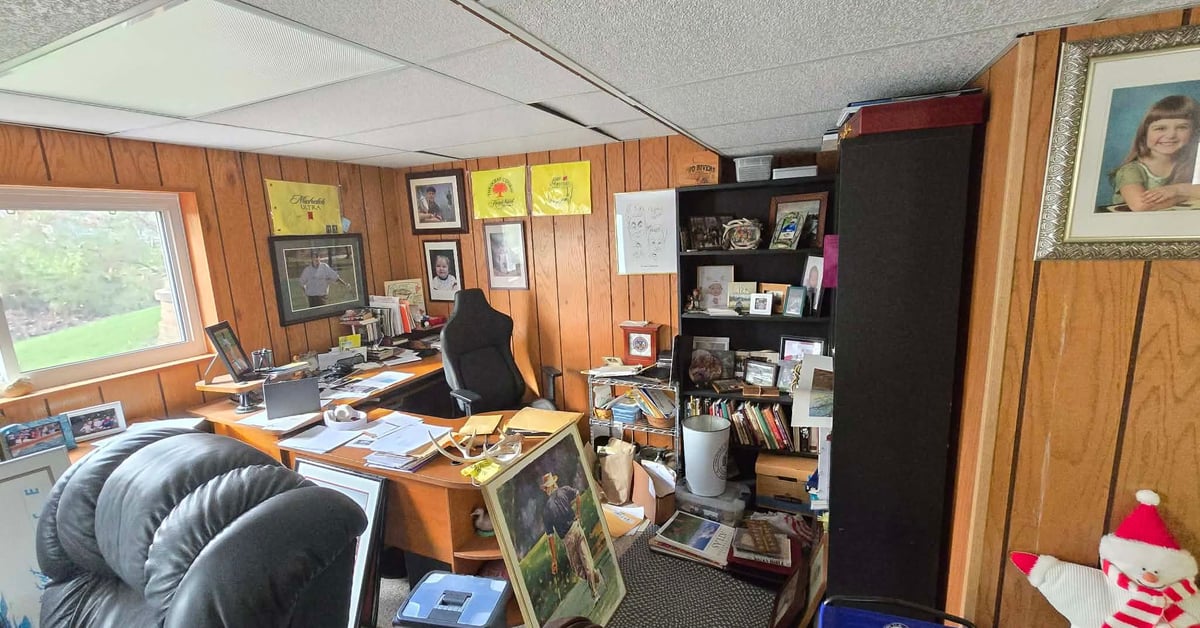
Cluttered Wood-Paneled Basement Home Office
A cluttered basement home office featuring wood-paneled walls, drop ceiling with fluorescent lighting, a large wooden desk with dual computer monitors, keyboard, papers, and office supplies, an ergonomic black gaming chair, additional leather chairs, overloaded bookshelves with books, photo frames, knick-knacks, and storage bins, framed pictures and posters on walls, a window with view of green grass outside, a Santa Claus plush doll, plants in frames, and various personal decorations scattered around the carpeted floor.
What Saint Charles Homeowners Say
Read reviews from homeowners throughout Saint Charles, O'Fallon, St. Peters, and the St. Louis metro who have trusted us with their foundation repairs.
"Chad fixed my mold. He explained to me exactly how the mold happened and why it would not happen again. He was very kind to me. I explained I was suffering from a medical level of anxiety and he was very understanding. Every day, Chad made sure to communicate clearly and keep me informed throughout the entire process."
Bob Gaines
3 months ago
"Eversafe Restoration was incredible to work with. We had unexpected water damage and Chad responded quickly and professionally. He explained everything clearly and made sure we understood the repair process. The crew was efficient and thorough. Highly recommend!"
Andrea Herron
6 months ago
"They took care in giving me the best service. Very detailed oriented in repairing and finishing moisture damage in my home. They did such an excellent job, I won't think twice about calling Eversafe for anymore restoration needs I have in the future!"
Ryan McGovern
6 months ago
"11/10 would recommend! Great job, great price, and it took them no time at all."
Corey Holmes
3 months ago
"Did a great job."
Matt Guthrie
6 months ago
"Excellent service from start to finish. Professional and reliable."
Destiny Boschert
6 months ago
Foundation Crack Repair FAQ
Get answers to common questions about foundation crack repair, epoxy injection, and basement waterproofing in Saint Charles County.
Are foundation cracks in my basement normal?
Small hairline cracks are common in Saint Charles homes and typically result from normal concrete curing and minor settling during the first few years after construction. These thin vertical cracks, usually less than 1/8 inch wide, are generally cosmetic concerns. However, horizontal cracks are red flags that indicate serious lateral pressure from Missouri's expansive clay soils pushing against your foundation walls. Cracks wider than 1/4 inch, stair-step patterns in block foundations, or any crack actively leaking water require immediate professional attention. At Eversafe Restoration, we provide free foundation inspections to help homeowners distinguish between normal settling cracks and structural concerns that need repair.
How much does it cost to fix a foundation crack?
Foundation crack repair in the Saint Charles area typically costs between $250 and $800 per crack for standard epoxy or polyurethane injection. The final price depends on several factors: crack length and width, accessibility (cracks behind finished walls cost more to access), whether the crack is actively leaking, and whether structural reinforcement is needed. A single vertical hairline crack might cost $250 to $400, while a longer horizontal crack requiring structural carbon fiber reinforcement could run $600 to $1,200. Compare this to full basement waterproofing systems that range from $5,000 to $15,000. We always provide free estimates with transparent pricing before any work begins.
Is epoxy injection better than polyurethane for cracks?
Both materials are professional-grade solutions, but they serve different purposes. Epoxy injection is the superior choice for structural repairs because it cures harder than the surrounding concrete, actually restoring structural integrity to the wall. It bonds the crack together permanently and is ideal for dormant cracks that are not actively moving. Polyurethane foam injection is better for water-stopping and flexible sealing. It expands to fill the entire crack void, remains flexible after curing (important for cracks that may shift seasonally), and can stop active water leaks during injection. At Eversafe, we assess each crack individually and often use a combination approach: polyurethane to stop active water intrusion, followed by epoxy for structural bonding.
Can I seal foundation cracks from the inside?
Yes, interior crack injection is the most common and cost-effective repair method for Saint Charles homeowners. Our technicians can inject epoxy or polyurethane directly into cracks from inside your basement, filling them completely from front to back through the full wall thickness. This approach is effective for most vertical and diagonal cracks, does not require exterior excavation, and can be completed in a few hours. Exterior sealing is recommended when cracks are combined with significant water infiltration from outside sources, when multiple cracks exist along the same wall section, or when the exterior waterproofing membrane has failed. We also offer no-dig exterior injection methods for certain situations that access cracks from inside without major excavation.
How long does a foundation crack repair last?
When performed correctly with professional-grade materials, epoxy crack injection is designed to last the lifetime of your structure. The cured epoxy actually becomes stronger than the surrounding concrete, so the repaired area will not fail at the same location. We back our crack repairs with a lifetime transferable warranty that covers the repaired crack against future leakage. However, the longevity of any foundation repair also depends on addressing the root causes of cracking. We recommend maintaining proper gutter drainage (directing water at least 6 feet from the foundation), ensuring yard grading slopes away from your home, and keeping trees with aggressive root systems at a safe distance. These measures prevent new cracks from forming and protect your investment.
Will a foundation crack lead to mold?
Any crack that allows moisture into your basement creates conditions for mold growth. Mold spores are present everywhere, but they need moisture to colonize and spread. Even small amounts of water seeping through foundation cracks increase humidity levels in your basement and can lead to mold growth on nearby drywall, wood framing, carpet, and stored belongings. The danger is especially high in Saint Charles due to our humid summers. Mold can begin growing within 24 to 48 hours of water intrusion. What makes foundation crack moisture particularly problematic is that it often goes unnoticed behind finished basement walls. By the time you see visible mold, extensive hidden growth may already exist. Sealing foundation cracks promptly eliminates this moisture source and prevents the health risks and expensive remediation costs associated with mold infestation.
Does insurance cover foundation crack repair?
Standard homeowners insurance policies typically do not cover foundation crack repair because cracks are classified as maintenance issues resulting from normal wear, settling, or soil conditions. However, there are exceptions. If a foundation crack was caused by a sudden, accidental event covered by your policy, such as a burst pipe causing water damage to your foundation, that specific damage may be covered. Some policies also cover damage from certain natural disasters depending on your coverage. Flood insurance, which is separate from standard homeowners insurance, may cover foundation damage from flooding events. We recommend reviewing your policy and speaking with your insurance agent. Eversafe Restoration can provide detailed documentation of damage for insurance claims when applicable, and we work with your adjuster to support legitimate claims.
How do I know if a crack is structural?
Several warning signs indicate a foundation crack may be structural rather than cosmetic. Horizontal cracks are the most concerning because they indicate lateral pressure from soil pushing against your foundation wall, which can eventually cause wall failure. Cracks wider than 1/4 inch, or cracks that are wider at one end than the other, suggest active movement. Stair-step crack patterns in block or brick foundations follow mortar joints and indicate differential settling or lateral pressure. Cracks accompanied by wall bowing, bulging, or leaning inward are serious structural concerns. Water actively flowing through a crack under pressure, rather than seeping, indicates significant hydrostatic pressure. If you observe any of these signs, we recommend a professional inspection promptly. Our team can assess whether the crack needs simple sealing, structural reinforcement with carbon fiber straps, or referral to a structural engineer for severe cases.
Still have questions?
We're here to help you find the answers.
Worried About a Foundation Crack?
Do not let a small crack become a big problem. Schedule your free foundation inspection today and get expert advice on the best repair solution for your Saint Charles home.